THE CLASSIC COLLECTION✦Found in the Philippines: The Story of a Woman’s LettersCLASSIC FREE BOOKS
Found in the Philippines: The Story of a Woman’s Letters
Charles King
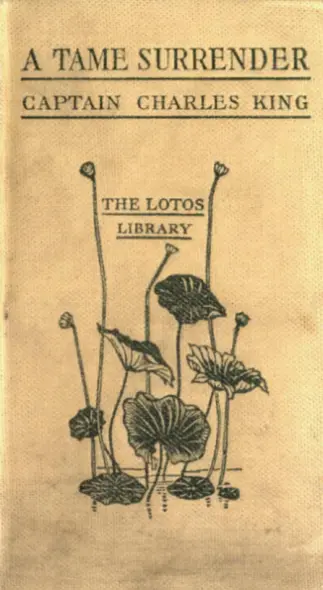
THE CLASSIC COLLECTION · 1895
"A Tame Surrender: A Story of The Chicago Strike" by Captain Charles King is a historical novel written in the late 19th century. The story revolves around Miss Florence Allison, a spirited young woman navigating her relationships and societal expectations amid the backdrop of the Chicago Strike. The novel explores themes of love, social class, and the dynamics between characters influenced by the turmoil of labor disputes. The opening of the novel introduces the main character, Miss Florence Allison, and her various encounters, including a chance meeting with Mr. Floyd Forrest aboard a steamer, which spurs a developing bond between them. Through lively descriptions, the narrative paints Florence as a well-loved, carefree young woman and contrasts her with the reserved, introspective Forrest. As their connection deepens, the story hints at conflicts related to societal expectations and familial expectations, setting the stage for further developments as they navigate their intertwined fates against the backdrop of the looming strike in Chicago.
Introduction adapted from the source catalogue; source summaries may be automatically generated.
Free to read · English · 62,660 words · No account needed
MAKE TIME FOR A GOOD BOOK
On by default. Untick to stop anonymous reading totals. Each page counts after 10 seconds in view. How this works.
Anonymous counting is on unless you have switched it off.
Elmendorf was an astonished man. He had confidently told Mrs. Lawrence that the objectionable lieutenant had been ordered off under a cloud of official censure and forbidden to return. He really believed it. It was one of his peculiarities that he invariably attached a sinister explanation to every action of his fellow men and women whose social station, at least, was superior to his own, when other explanation was withheld. He had sneeringly told Miss Wallen that unless the gentleman resigned from the army and returned to be the husband of Miss Allison, he would not return at all. He believed this too. He was so constituted mentally that he believed Forrest guilty of anything that could be alleged against him, believed that Miss Allison was interested in him to a certain extent, but would probably lose her interest when once the gallant himself was well out of the way, believed that he could even convince her, as he had convinced her aunt, that Forrest was totally unworthy her regard, provided Forrest himself did not return; and, lo and behold! Forrest had returned, and returned with Miss Allison herself, brought back on their train,--in their carriage, as he learned from Aunt Lawrence,--and apparently more influential with the father and daughter than ever before. Not until luncheon-time that day did he know of this, and the news came like a dash of ice-water on shivering skin. It was plain that Mrs. Lawrence looked to him to defend his statement and name his authorities then and there; for Miss Allison did not come down to luncheon, Cary was speedily excused and permitted to go about his own affairs, and then Mrs. Lawrence whirled upon the tutor with the tidings that not only was Mr. Forrest back, but that Florence had brought him back; that Mr. Allison, so far from objecting, had approved--had invited him to lunch with his fellow-magnates at the club and to dine en famille in the evening. As for Mr. Forrest being under the ban of official censure, Mrs. Lawrence declared she couldn't understand it, in view of the fact that he was with the general and his staff when the party encountered them at Wichita, and that the general himself had authorized his return to Chicago. "Authorized!" said Elmendorf, with his ready sneer; "ordered, very probably, with the view of having him tried by court-martial here where the witnesses are ready; and Mr. Forrest has had the effrontery to saddle himself on respectable company by way of establishing high connection to start with. I have heard of just such expedients before. My informants are men who thoroughly know the ins and outs of military affairs in the department, and they are not likely to be mistaken." All the same the tutor was glad to get away and to go post-haste to the Pullman building, hoping to catch his one intimate in the clerical force and to dodge the officials with whom he stood in evil odor. Luck often follows audacity. In the elevator he met two officers to whom he had been presented during the earlier days of his tutorship, when he was still cordially received. These gentlemen had been away on duty in the interim, and, knowing nothing of his lapse from grace, greeted him as pleasantly as ever, invited him into the aide-de-camps' offices, and there made him at home in the absence of the usual occupants. They knew nothing of Forrest's movements beyond the fact that he had not been with his regiment at all. One of the two was Major Cranston; the other was Lieutenant-Colonel Kenyon, of Forrest's own regiment. "I suppose you know he--left here under very sudden--rather summary, orders some two months ago," suggested Elmendorf; "and it created, as you can readily imagine, some little comment in society." No, Kenyon hadn't heard, and he eyed the speaker sharply from under his bushy, overhanging brows. Cranston, however, promptly replied that there was nothing in the least remarkable in it. Officers were frequently hurried off on sudden orders, and there was no reason why society should be exercised over it. Elmendorf promptly disavowed any intention of casting the faintest aspersion on Mr. Forrest, whom he at least had found to be certainly quite the equal of his comrades in most things pertaining to the officer and gentleman, although there were some things, perhaps, which to a humble civilian like himself might call for explanation. He was merely stating a fact, one which he regretted, of course, as he did all the idle talk that circulated in superficial circles of society. He was glad to find officers of such prominence as Kenyon and Cranston so ready to stand up for Forrest, as some men--he preferred not to mention names--had been less outspoken, at least, in his behalf. And then Kenyon impatiently arose and went out, Cranston met a brace of cavalrymen going back to their regiment after a leave, and Elmendorf drifted away in search of his clerk and found him.
Your reading position is saved on this browser. Take it to another device with a library code. Reading pages adapt to text, rather than matching a printed edition.
Charles King

Charles King

Charles King

Charles King
BEHIND THE BOOK
This eBook is for the use of anyone anywhere in the United States and most other parts of the world at no cost and with almost no restrictions whatsoever. You may copy it, give it away or re-use it under the terms of the Project Gutenberg License included with this eBook or online at www.gutenberg.org. If you are not located in the United States, you will have to check the laws of the country where you are located before using this eBook. Read the source licence.
The original source file, including credits and licence, is retained by this library. Request an original-format copy at no charge. Please include the book title and Project Gutenberg identifier #23927.
KEEP YOUR CURIOSITY GOING
Cécile Tormay

Moritz Busch
Coulson Kernahan
John L. Ransom

Maurice Baring
Frances Wright