THE CLASSIC COLLECTION✦Found in the Philippines: The Story of a Woman’s LettersCLASSIC FREE BOOKS
Found in the Philippines: The Story of a Woman’s Letters
Charles King
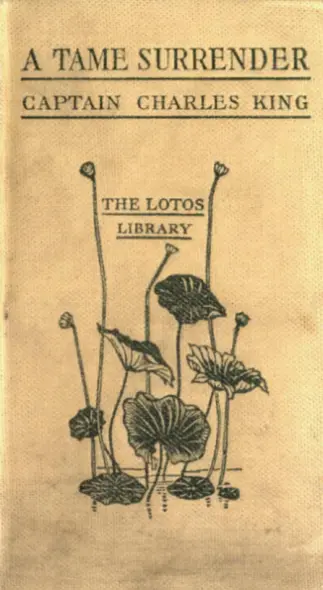
THE CLASSIC COLLECTION · 1895
"A Tame Surrender: A Story of The Chicago Strike" by Captain Charles King is a historical novel written in the late 19th century. The story revolves around Miss Florence Allison, a spirited young woman navigating her relationships and societal expectations amid the backdrop of the Chicago Strike. The novel explores themes of love, social class, and the dynamics between characters influenced by the turmoil of labor disputes. The opening of the novel introduces the main character, Miss Florence Allison, and her various encounters, including a chance meeting with Mr. Floyd Forrest aboard a steamer, which spurs a developing bond between them. Through lively descriptions, the narrative paints Florence as a well-loved, carefree young woman and contrasts her with the reserved, introspective Forrest. As their connection deepens, the story hints at conflicts related to societal expectations and familial expectations, setting the stage for further developments as they navigate their intertwined fates against the backdrop of the looming strike in Chicago.
Introduction adapted from the source catalogue; source summaries may be automatically generated.
Free to read · English · 62,660 words · No account needed
MAKE TIME FOR A GOOD BOOK
On by default. Untick to stop anonymous reading totals. Each page counts after 10 seconds in view. How this works.
Anonymous counting is on unless you have switched it off.
That evening Wells's letters seemed interminable. It was nearly half-past six when he finished dictating, and with aching heart and burning face Miss Wallen closed her desk and silently went for her cloak and overshoes. For over half an hour Mr. Forrest had stood to his guns across the room, making much pretence of being busy with the atlas and his notes, but time and again his eyes wandered, following his thoughts, to the other two,--Wells rapidly dictating, his stenographer with bowed head, determinedly wielding her pencil. When Wells finally started, the lieutenant arose and strolled out with him, closing the door behind them. "I shall see Miss Wallen home," said he, in low tone. "She's had more than enough indignity for one day."
"I'd do it if you couldn't, Mr. Forrest, even though they're waiting for me at home. That girl's a lady, by Jupiter! You've no idea how she's studied and developed ever since she's been here; and it's a damned outrage that such fellows should be allowed to annoy her."
"Such fellows won't, another time," said Forrest, quietly. "Elmendorf was back of this, for some reason that I mean to fathom."
"That's all very well as far as the Irishman's concerned, Mr. Forrest,--he's had his fill,--but look out for that other. I'm no judge of character, now, if he isn't a snake."
When Forrest re-entered the room Miss Wallen had turned out the electric lights over her desk and was standing by the window, her face bowed in her thin white hands. Forrest's overcoat and hat always hung in the closet without. He had gone with Wells, closing the door. She was, as she supposed, at last alone, and the reaction had come. All the weary months of work, work, work, all the patient slaving to provide for the improvident, all the brave, cheery, hopeful, uncomplaining days of honest toil and honest effort, only to end in such a scene of shame and mortification as this! What could Mr. Wells think of his secretary, chased to her desk with the liquor-bills of her kindred! What would not Mr. Forrest think! A weaker woman would have found refuge and comfort in a passion of tears, but her eyes seemed burning. Leaning against the open casement, she stood there fairly quivering with wrath and the sense of indignity and wrong. She, too, had recognized Elmendorf's nasal whine in the anteroom, and felt well assured that he was in some way responsible for Donnelly's action. Mart had had much to say of late of the foreigner's convincing logic and thrillingly eloquent appeals to the workingman. There was the man to wring the neck of capital and bring the bloated bond-holders to terms, said he. Mart never missed a meeting where Elmendorf was to speak, and had more than once been brought home, fuddled, in the cab which conveyed the agitator back to the scene of his labors in the Allison homestead. The cab was paid for by the Union, and Elmendorf didn't mind having it wait outside while he assisted Mart within and stopped to condole with Mrs. Wallen the elder, or Mrs. Wallen junior, and to inquire significantly, if he did not see her, where Miss Wallen was; he always supposed the library closed at nine o'clock, and was not aware, he said, that anybody except the janitor was permitted to remain there later. He knew very well that the librarian was sometimes there until nearly midnight. He knew well that it was there and in the evenings, mainly, that Miss Wallen worked at the transcript of Forrest's reports. "At least," as he said to himself, and suggested to others, "that is the ostensible purpose of her frequently prolonged visits." He often walked by the lighted windows of the sanctum and occasionally slipped into the dark hall-way, so the watchman later said. The same irrepressible propensity to meddle in the affairs of everybody in the household where he was employed, in the councils of the various labor unions, in the meetings of political associations, in the official duties or off-hand chats of the men at military head-quarters, in the management of the Lambert Library, seemed to follow him in his casual intercourse with this obscure little household. One night when towards ten o'clock Miss Wallen came blithely down the corridor stairs, she was surprised to find the tutor awaiting her. "As I know Mr. Forrest to be otherwise engaged to-night, Miss Wallen, I have ventured to offer my services as escort," said he, and though she shrank from and could not bear him, there was no reason at that time for denying him; but when he presently began talking of Forrest in his suggestive, insinuating way, and excusing his references to the lieutenant on the ground of his extreme regard for her widowed mother, her impoverished but amiable relatives, and her own refined, intellectual, and accomplished self, she shrank still more and strove to silence him,--a difficult matter. She had, however, a trait that proved simply exasperating to a man of Elmendorf's calibre,--a faculty of listening in absolute silence where she did not desire to confirm or approve,--and when he had spent much breath and nearly half an hour in descanting upon his impressions of the demoralizing tendencies of military associations in general and of idle officers in particular, it rasped him to find that she did not seem to consider his views worthy the faintest comment; nor would she nor did she invite him in. When her mother reproved her for this, Miss Wallen smiled, and said, "Next time I will, and then you might ask him for the three weeks' lodging he hasn't paid," and Mart said she ought to be ashamed of speaking so of a man who had done everything for her. She'd never have got that library place at all if it hadn't been for Elmendorf, no matter what her fine friends might have told her. Oh, Mart knew all about it; needn't try to pull the wool over his eyes! Another time had Elmendorf come, and again had he talked more of what he had done for her and the rights it gave him to tender her counsel, and this time his references to Forrest took a graver form and became offensive. It was then, indignant, she refused to hear more of it, and that night Elmendorf went away gritting his teeth, and now had come this contemptible essay to humiliate her before her employer. Oh, it was cowardly! shameful! She threw up her arms, clinching her little white hands and stamping as slender a foot as ever walked in a machine-made shoe, and then, ejaculating, as women will, in moments of supreme exasperation, "If I were only a man!" whirled about and beheld one.
Your reading position is saved on this browser. Take it to another device with a library code. Reading pages adapt to text, rather than matching a printed edition.
Charles King

Charles King

Charles King

Charles King
BEHIND THE BOOK
This eBook is for the use of anyone anywhere in the United States and most other parts of the world at no cost and with almost no restrictions whatsoever. You may copy it, give it away or re-use it under the terms of the Project Gutenberg License included with this eBook or online at www.gutenberg.org. If you are not located in the United States, you will have to check the laws of the country where you are located before using this eBook. Read the source licence.
The original source file, including credits and licence, is retained by this library. Request an original-format copy at no charge. Please include the book title and Project Gutenberg identifier #23927.
KEEP YOUR CURIOSITY GOING
Cécile Tormay

Moritz Busch
Coulson Kernahan
John L. Ransom

Maurice Baring
Frances Wright