THE CLASSIC COLLECTION✦OakleighCLASSIC FREE BOOKS
Oakleigh
Ellen Douglas Deland
THE CLASSIC COLLECTION · 1897
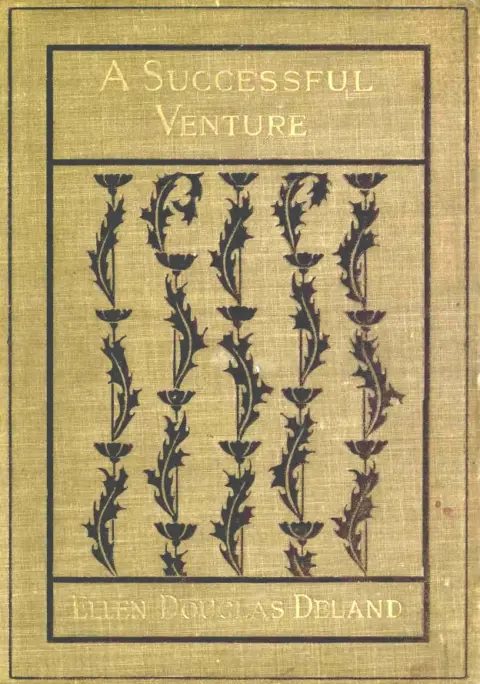
"A Successful Venture" by Ellen Douglas Deland is a novel written in the late 19th century. The story revolves around the Starr sisters—Honor, Katherine, Victoria, and the youngest, Sophy—as they navigate a significant change in their lives after the death of their father and the arrival of their formidable Aunt Sophia. Faced with the prospect of leaving their beloved home and agreeing to Aunt Sophia's plans, the sisters must find their own way to support themselves amidst financial struggle. The opening of the novel sets a poignant and reflective tone, introducing the Starr sisters in their quaint dining room as they prepare for their aunt's visit, unaware of the drastic changes she intends to impose on their lives. As Aunt Sophia arrives amidst a stormy day, her authoritative demeanor and unexpected announcement about relocating the sisters to Boston leads to an immediate family dialogue filled with resistance and disbelief. This tumultuous family dynamic highlights their struggle against societal expectations, and the sisters' determination to maintain their autonomy becomes evident as they contemplate a life of self-sufficiency while adhering to their father's legacy.
Introduction adapted from the source catalogue; source summaries may be automatically generated.
Free to read · English · 66,761 words · No account needed
MAKE TIME FOR A GOOD BOOK
On by default. Untick to stop anonymous reading totals. Each page counts after 10 seconds in view. How this works.
Anonymous counting is on unless you have switched it off.
“BEFORE I’d be afraid of a toad!”
“But, Peter, you’re not afraid of anything.”
“And you’re afraid of everything, so there’s the difference. I never saw such a girl. Snakes, and lizards, and toads, and spiders, and wasps—there isn’t a thing you’re not afraid of.”
“Yes, there is, too!” said Sophy, indignantly. “I’m not afraid of flies or butterflies or caterpillars—yes, I am afraid of caterpillars. They’re so fuzzy.”
“There, you see there is hardly anything! As for flies and butterflies, why, of course a baby wouldn’t mind them.”
“But what’s the use of those other things, Peter? What’s the use of
wasps?”
“Wasps! Why, they’re very useful. They don’t hurt you unless you bother them, and they eat up slugs, and some kinds of caterpillars.”
“Well, wasps are very frightening, I think, even if they are useful, and so are hop toads, and hop toads are so ugly! Oh, here comes one now! Go away, you horrid, naughty toad!”
Peter and Sophy were on the piazza in the early twilight. Honor and Katherine were with the Madisons on the river, enjoying a picnic tea. Supper at Glen Arden was over, and Mrs. Wentworth Ward had walked to the village for her “constitutional,” which the hot weather had prevented during the day. Victoria had gone in search of Dave Carney, whom she thought she should be apt to find at liberty at this hour. It was the evening of the day upon which the robbery had been discovered.
“There is no use in an ugly toad, Peter,” continued Sophy.
“Indeed there is!” said her brother, in a tone of marked masculine superiority. “That just shows how little you know about things. Toads are regular policemen.”
“Peter! What do you mean? Do they arrest people?”
“No, of course not, you goosie! But they arrest insects. If you put toads into hotbeds or cold-frames, they’ll eat up all the bugs and worms that come after the plants. They keep regular guard, just as policemen do. There, do you hear that tree toad now?”
Sophy listened to the shrill song of the little creature that appeared to be sitting upon the branch of a tree close by.
“They’re as good as hop toads, for they eat caterpillars, and worms, and hateful flies that lay their eggs under the bark of the trees, and would eat up the trees if it were not for the toads.”
“I’m glad they eat caterpillars as well as the wasps,” said Sophy. “They’re so disagreeable. Why do you suppose caterpillars were made, Peter?”
Your reading position is saved on this browser. Take it to another device with a library code. Reading pages adapt to text, rather than matching a printed edition.
Ellen Douglas Deland
BEHIND THE BOOK
This eBook is for the use of anyone anywhere in the United States and most other parts of the world at no cost and with almost no restrictions whatsoever. You may copy it, give it away or re-use it under the terms of the Project Gutenberg License included with this eBook or online at www.gutenberg.org. If you are not located in the United States, you will have to check the laws of the country where you are located before using this eBook. Read the source licence.
The original source file, including credits and licence, is retained by this library. Request an original-format copy at no charge. Please include the book title and Project Gutenberg identifier #68799.
KEEP YOUR CURIOSITY GOING
Coulson Kernahan

Maurice Baring
Frances Wright
Cécile Tormay

Frederic Jesup Stimson

W. H. P. (William Henry Pope) Jarvis