School Reading By Grades: Fifth Year
James Baldwin
THE CLASSIC COLLECTION · 1887
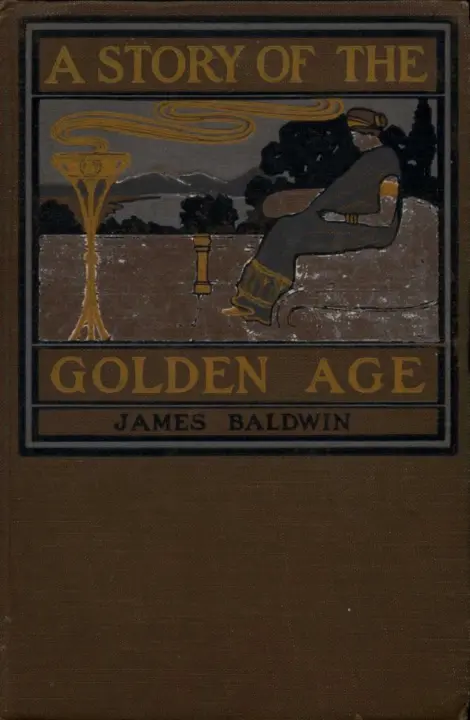
"A Story of the Golden Age" by James Baldwin is a children's historical fiction book written in the late 19th century. The narrative focuses on the legendary hero Odysseus during his youth, exploring the myths and legends that surround the events leading up to the Trojan War while weaving a continuous story that introduces young readers to classical Greek mythology. The opening of the story sets the scene on the idyllic island of Ithaca, where young Odysseus lives with his parents, Laertes and Anticleia. As he gazes out over the world from Mount Neritus on his twelfth birthday, he becomes captivated by the grandeur of the lands beyond his home, sparking a desire to explore. His yearning leads him to express his wish to visit his grandfather at Mount Parnassus, and this is met with encouragement from his mother and father, highlighting the anticipation of adventure that fuels the tale. The narrative skillfully blends themes of family, exploration, and mythical elements, promising a captivating journey into the rich tapestry of Greek mythology for young readers.
Introduction adapted from the source catalogue; source summaries may be automatically generated.
Free to read · English · 72,216 words · No account needed
MAKE TIME FOR A GOOD BOOK
On by default. Untick to stop anonymous reading totals. Each page counts after 10 seconds in view. How this works.
Anonymous counting is on unless you have switched it off.
Helen (145-162, 216, 267), daughter of Tyndareus and Leda of Lacedaemon, represented in mythology as the daughter of Zeus and Leda. "The most beautiful woman in the world."
Helenus (258), son of Priam, soothsayer of the Trojans.
Helios (5, 15-19), the god of the sun. Sol.
Hellas, the name which the Greeks applied to their country. Greece.
Hellen (203), son of Deucalion and Pyrrha, and ancestor of all the
Hellenes.
Hephaestus (90, 160, 193), the god of fire. Vulcan.
Here (99-105), the wife of Zeus. Juno.
Heracles (55, 87-90, 138-144, 169-181, 211-214), the most celebrated of all the old heroes. Hercules.
Hermes (100-104, 196), the herald of the gods, son of Zeus and Maia.
Mercury.
Hesione (210-213), the sister of Priam
Hesperia (19), "the western land."
Hesperides (5, 27, 139), guardians of the golden apples which Earth gave to Here on her marriage day--said by some to be the daugters of Phorcys and Ceto.
Hippodameia (84, 167) wife of Peirithous.
Hyllus (176), son of Heracles.
Hyperboreans (6, 39), a people living in the far North.
Iasus (163), an Arcadian, father of Atalanta.
Icarius (155, 162), brother of Tyndareus, and father of Penelope.
Ida (102-109, 208), a mountain-range of Mysia in Asia Minor, east of
Troy.
Idas (67, 185), "the boaster," son of Aphareus, and father of Cleopatra.
Idomeneus (151, 215, 235), king of Crete.
Ilios (206-214, 253), a name applied to the district in which Troy was
situated. Ilium.
Ilus (208), son of Dardanus.
Inachus (196), the first king of Argos.
Io (196-199), daughter of Inachus, and mother of Epaphos from whom was
descended Heracles.
Iolcos (77-110), an ancient town of Thessaly at the head of the
Pegasaean Gulf.
Iole (138-144, 173-181), daughter of Eurytus of OEchalia, beloved by
Heracles.
Iphigenia (242-252), daughter of Agamemnon and Clytemnestra.
Iphitus (136-153, 172), son of Eurytus, one of the Argonauts.
Ithaca (1, 113), a small island in the Ionian Sea, the birthplace of
Odysseus.
Jason (2, 68, 87), leader of the Argonauts.
Lacedaemon (5, 145-169, 189-204), a district of Laconia in which was situated Sparta. The name is also applied to the town of Sparta.
Lachesis (66), one of the Fates.
Laconia (5, 145), a country in the south-east of Peloponnesus.
Laertes (2, 182), king of Ithaca, father of Odysseus.
Laodamia (254), daughter of Acastus, and wife of Protesilaus.
Laomedon (208-314), king of Troy, father of Priam.
Lapiths (84), a people inhabiting the country adjoining Mount Pelion in
Thessaly.
Leda (146), wife of Tyndareus of Lacedaemon.
Lemnos (253, 260), an island in the AEgaean Sea.
Lichas (174-179), the herald of Heracles.
Linus (56), a musician, brother of Orpheus.
Lycomedes (228), king of Scyros.
Lydia (173), a district of Asia Minor.
Lynceus (185), son of Aphareus, brother of Idas.
Machaon (151, 262), son of Asclepius, the surgeon of the Greeks in the
Trojan war.
Medea (89), daughter of AEetes, king of Colchis, celebrated for her
skill in magic.
Medusa (27), one of the Gorgons.
Meleager (66-76), son of Oineus and Althea, husband of Cleopatra.
Your reading position is saved on this browser. Take it to another device with a library code. Reading pages adapt to text, rather than matching a printed edition.
James Baldwin

James Baldwin
James Baldwin
James Baldwin
BEHIND THE BOOK
This eBook is for the use of anyone anywhere in the United States and most other parts of the world at no cost and with almost no restrictions whatsoever. You may copy it, give it away or re-use it under the terms of the Project Gutenberg License included with this eBook or online at www.gutenberg.org. If you are not located in the United States, you will have to check the laws of the country where you are located before using this eBook. Read the source licence.
The original source file, including credits and licence, is retained by this library. Request an original-format copy at no charge. Please include the book title and Project Gutenberg identifier #54214.
KEEP YOUR CURIOSITY GOING
Wilfrid Scawen Blunt
Wilfrid Scawen Blunt

E. W. (Edgar Watson) Howe
Cécile Tormay

Moritz Busch
Coulson Kernahan