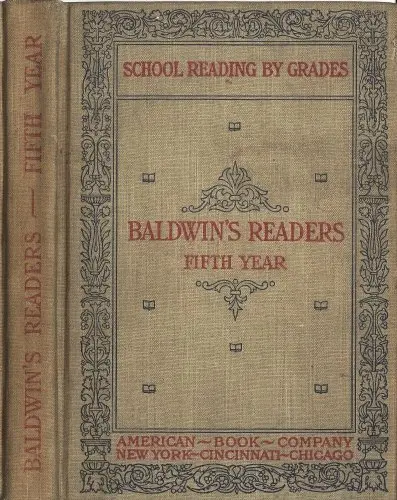
School Reading By Grades: Fifth Year
James Baldwin
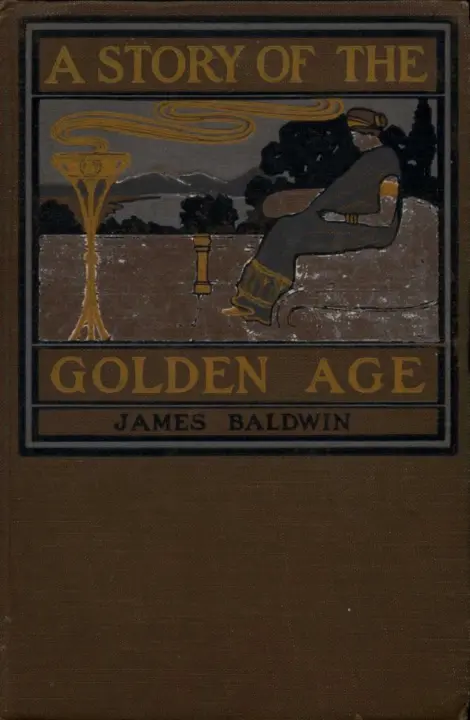
THE CLASSIC COLLECTION · 1887
"A Story of the Golden Age" by James Baldwin is a children's historical fiction book written in the late 19th century. The narrative focuses on the legendary hero Odysseus during his youth, exploring the myths and legends that surround the events leading up to the Trojan War while weaving a continuous story that introduces young readers to classical Greek mythology. The opening of the story sets the scene on the idyllic island of Ithaca, where young Odysseus lives with his parents, Laertes and Anticleia. As he gazes out over the world from Mount Neritus on his twelfth birthday, he becomes captivated by the grandeur of the lands beyond his home, sparking a desire to explore. His yearning leads him to express his wish to visit his grandfather at Mount Parnassus, and this is met with encouragement from his mother and father, highlighting the anticipation of adventure that fuels the tale. The narrative skillfully blends themes of family, exploration, and mythical elements, promising a captivating journey into the rich tapestry of Greek mythology for young readers.
Introduction adapted from the source catalogue; source summaries may be automatically generated.
Free to read · English · 72,216 words · No account needed
MAKE TIME FOR A GOOD BOOK
On by default. Untick to stop anonymous reading totals. Each page counts after 10 seconds in view. How this works.
Anonymous counting is on unless you have switched it off.
Cal{~CYRILLIC SMALL LETTER SHORT U U+045e~}don (66-76), an ancient town and district of AEtolia, on the Evenus River.
Castor (56, 68, 146, 185), twin-brother of Polydeuces.
Centaurs (84-86), an ancient race inhabiting Mount Pelion and the neighboring districts of Thessaly.
Cephallenia (183), a large island near Ithaca.
Charybdis (155), a dreadful whirlpool on the side of a narrow strait
opposite Scylla.
Cheiron (58, 78, 170), a Centaur, "the wisest of men," and the teacher
of the heroes.
Chryse (252), an island in the AEgaean Sea; also a city on the coast of Asia Minor, south of Troy.
Circe (270), daughter of Helios, a sorceress who lived in the island of
AEaea.
Cleopatra (67-76), wife of Meleager.
Clotho (66, 98), one of the Fates.
Clytemnestra (152, 242-252), daughter of Tyndareus and Leda, and sister of Castor and Polydeuces and Helen. She was married to Agamemnon, and became the mother of Iphigenia and Orestes.
Colchis (2, 87-89), a country of Asia, at the eastern extremity of the
Black Sea.
Copais (40), a lake in Boeotia.
Corinth (5, 49, no), a city on the isthmus between the Corinthian Gulf
and the AEgaean Sea.
Corycia (51), a nymph who lived on Mount Parnassus.
Crissa (5, 29), the ancient name of the Gulf of Corinth; also, the name
of a town in Phocis.
Cronus (11,182), the youngest of the Titans, and the father of Zeus.
Saturn.
Cythera (165), an island off the south-western point of Laconia.
Deianeira (142, 171-181), wife of Heracles.
Delos (38), the smallest of the Cyclades islands in the AEgaean Sea.
Delphi (5, 30-45), a town on the southern slope of Mount Parnassus.
Deucalion (200), son of Prometheus, and father of Hellen.
Diomede (151, 235), son of Tydeus, and king of Argos.
Dodona (171, 225), an ancient oracle of Hellas, situated in Epirus in a grove of oaks and beeches.
Echion (61, 76), son of Autolycus.
Elis (125), a country on the western coast of the Peloponnesus, south of
Achala.
Epaphos (16, 198), son of Zeus and Io.
Eris (98), the goddess of discord.
Erymanthus (139), a mountain in Arcadia.
Euboea, the largest island of the AEgaean Sea, separated from Boeotia by
the Euripus.
Eumaeus (114-119), the swineherd of Ithaca.
Euripus (233), the narrow strait between Euboea and Boeotia.
Eurycleia (12), the nurse of Odysseus and of Telemachus.
Eurystheus (138), the master of Heracles, king of Argolis.
Eurytion (71, 92), king of Phthia.
Eurytion (85), a Centaur.
Eurytus (55, 136-144), king of OEchalia.
Evenus (176), a river in AEtolia.
Gan{~CYRILLIC SMALL LETTER SHORT U U+045e~}medes (208), the most beautiful of mortals, son of Tros.
Glaucus (25), a fisherman who became immortal by eating of the divine herb which Cronus had sown.
Gorgons (27), three daughters of Phorcys and Ceto.
Gray Sisters (26), daughters of Phorcys.
Hades (89, 170), the god of the lower regions. Pluto.
Hebe (98), the goddess of youth.
Hector (101, 255), son of Priam; the chief hero of the Trojans.
Your reading position is saved on this browser. Take it to another device with a library code. Reading pages adapt to text, rather than matching a printed edition.
James Baldwin
James Baldwin
James Baldwin
James Baldwin
BEHIND THE BOOK
This eBook is for the use of anyone anywhere in the United States and most other parts of the world at no cost and with almost no restrictions whatsoever. You may copy it, give it away or re-use it under the terms of the Project Gutenberg License included with this eBook or online at www.gutenberg.org. If you are not located in the United States, you will have to check the laws of the country where you are located before using this eBook. Read the source licence.
The original source file, including credits and licence, is retained by this library. Request an original-format copy at no charge. Please include the book title and Project Gutenberg identifier #54214.
KEEP YOUR CURIOSITY GOING
Wilfrid Scawen Blunt
Wilfrid Scawen Blunt

E. W. (Edgar Watson) Howe
Cécile Tormay

Moritz Busch
Coulson Kernahan