THE CLASSIC COLLECTION✦Salve Venetia, gleanings from Venetian history; vol. IICLASSIC FREE BOOKS
Salve Venetia, gleanings from Venetian history; vol. II
F. Marion (Francis Marion) Crawford
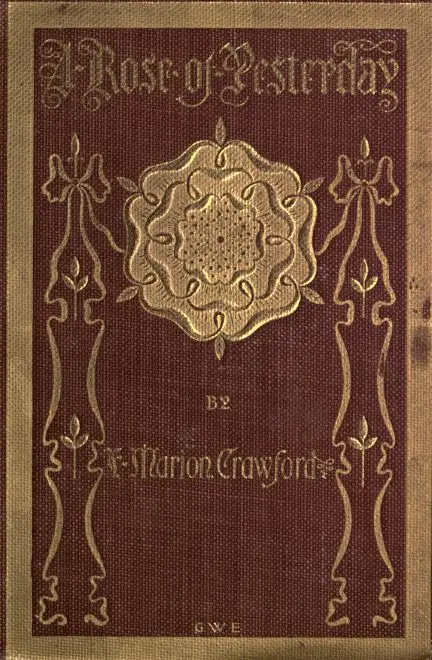
THE CLASSIC COLLECTION · 1897
"A Rose of Yesterday" by F. Marion Crawford is a novel written in the late 19th century. The narrative unfolds around the character of Sylvia, who is navigating her feelings towards her guardian, Colonel Wimpole, amidst themes of love, loss, and social expectations. The story explores the complexities of their relationship as Sylvia, an impressionable young woman, grapples with emotions that intertwine affection with the looming specter of age and societal constraints. The opening of the novel introduces Sylvia in a personal moment with Colonel Wimpole, as they discuss an etching depicting a noble knight and the deeper meanings it may hold. Their dialogue hints at Sylvia's infatuation with the ideals of heroism and love, while Colonel Wimpole reflects on his past and the unfulfilled promises rooted in his experiences of war and honor. As the narrative develops, the emotional tension between them is palpable, with themes of unreciprocated love and the weight of societal norms coming into play, especially as Sylvia mistakes Wimpole’s fatherly affection for something more. The delicate balance between youth and age, destiny, and the longing for love sets the stage for a compelling exploration of human relationships and the challenges of defining true passion within societal confines.
Introduction adapted from the source catalogue; source summaries may be automatically generated.
Free to read · English · 52,003 words · No account needed
MAKE TIME FOR A GOOD BOOK
On by default. Untick to stop anonymous reading totals. Each page counts after 10 seconds in view. How this works.
Anonymous counting is on unless you have switched it off.
"I can't! I can't!" she repeated aloud, and she pressed Archie's arm
again.
"Can't--what, mother?" he asked. "Can't go back?"
"How can I, after this? How can I ever bear to see him, to touch his hand,--his hand that hurt you, Archie,--that hurt you so much more than you ever dream of?"
There were tears in her voice again, and again she pressed him close to her. But he did not understand.
"Oh, that's all right, mother," he answered. "Don't cry about me! I made it all right with him long ago. And I don't suppose he hurt me more than I dreamed of, either. That's only a way of talking, you know. It used to make me feel rather stupid. But then, I'm stupid anyway; so even that didn't matter much." And Archie smiled indifferently.
"More than you think, more than you know!" She kissed his hair. "It was that--it may have been that--it must have been--I know it was--"
She was on the point of breaking down again.
"What?" he asked with curiosity. "What do you mean? I don't
understand."
Helen's voice sank low, and she hardly seemed to be speaking to her son.
"Your father made you what you are," she said, and her face grew cold
and hard.
"What? Stupid?" asked Archie, cheerfully. Then his face changed, too. "I say, mother," he went on, in another voice, "do you think I'm so dull because he hit me on the head?"
Helen repented her words, scarcely knowing why, but sure that it would have been better not to speak them. She did not answer the question.
"That's what you think," said Archie. "And it's because I'm not like other people that you say it's absurd of me to want to marry Sylvia Strahan, isn't it? And that's my father's doing? Is that what you think?"
He waited for an answer, but none came at once. Helen was startled by the clear sequence of ideas, far more logical than most of his reasonings. It seemed as if his sudden passion for Sylvia had roused his sluggish intelligence from its long torpor. She could not deny the truth of what he said, and he saw that she could not.
"That's it," he continued. "That's what you think. I knew it."
His brows knitted themselves straight across his forehead, and his eyes were fixed upon his mother's face, as he knelt beside her. She had not been looking at him, but she turned to him slowly now.
"And that's why you ask whether I can forgive him," he concluded.
"Can you?"
"No."
Your reading position is saved on this browser. Take it to another device with a library code. Reading pages adapt to text, rather than matching a printed edition.
F. Marion (Francis Marion) Crawford
F. Marion (Francis Marion) Crawford

F. Marion (Francis Marion) Crawford

F. Marion (Francis Marion) Crawford
BEHIND THE BOOK
This eBook is for the use of anyone anywhere in the United States and most other parts of the world at no cost and with almost no restrictions whatsoever. You may copy it, give it away or re-use it under the terms of the Project Gutenberg License included with this eBook or online at www.gutenberg.org. If you are not located in the United States, you will have to check the laws of the country where you are located before using this eBook. Read the source licence.
The original source file, including credits and licence, is retained by this library. Request an original-format copy at no charge. Please include the book title and Project Gutenberg identifier #41009.
KEEP YOUR CURIOSITY GOING
Coulson Kernahan

Maurice Baring
Frances Wright
Cécile Tormay

Frederic Jesup Stimson

W. H. P. (William Henry Pope) Jarvis