THE CLASSIC COLLECTION✦Salve Venetia, gleanings from Venetian history; vol. IICLASSIC FREE BOOKS
Salve Venetia, gleanings from Venetian history; vol. II
F. Marion (Francis Marion) Crawford
THE CLASSIC COLLECTION · 1897
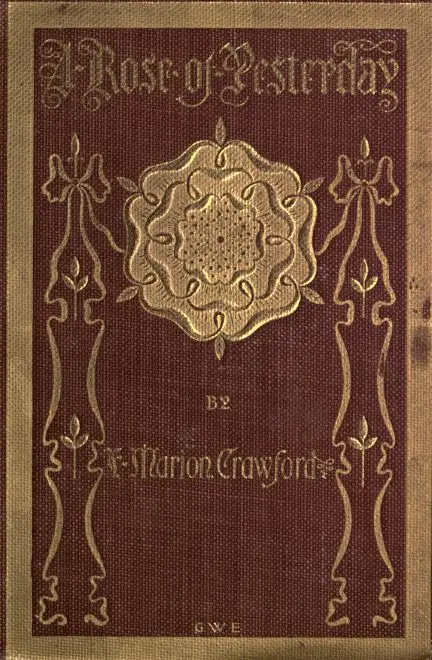
"A Rose of Yesterday" by F. Marion Crawford is a novel written in the late 19th century. The narrative unfolds around the character of Sylvia, who is navigating her feelings towards her guardian, Colonel Wimpole, amidst themes of love, loss, and social expectations. The story explores the complexities of their relationship as Sylvia, an impressionable young woman, grapples with emotions that intertwine affection with the looming specter of age and societal constraints. The opening of the novel introduces Sylvia in a personal moment with Colonel Wimpole, as they discuss an etching depicting a noble knight and the deeper meanings it may hold. Their dialogue hints at Sylvia's infatuation with the ideals of heroism and love, while Colonel Wimpole reflects on his past and the unfulfilled promises rooted in his experiences of war and honor. As the narrative develops, the emotional tension between them is palpable, with themes of unreciprocated love and the weight of societal norms coming into play, especially as Sylvia mistakes Wimpole’s fatherly affection for something more. The delicate balance between youth and age, destiny, and the longing for love sets the stage for a compelling exploration of human relationships and the challenges of defining true passion within societal confines.
Introduction adapted from the source catalogue; source summaries may be automatically generated.
Free to read · English · 52,003 words · No account needed
MAKE TIME FOR A GOOD BOOK
On by default. Untick to stop anonymous reading totals. Each page counts after 10 seconds in view. How this works.
Anonymous counting is on unless you have switched it off.
"He is not a relation at all!" exclaimed Sylvia in English, to Miss Wimpole. "My relations are not idiots, thank Heaven! And it's the only one of all those hats that I could wear! Oh, Aunt Rachel, what shall I do? I can't possibly take the thing, you know! And I must have a hat. I've come all the way from Japan with this old one, and it isn't fit to be seen."
"There is no reason why you should not take this one," said Miss Wimpole, philosophically. "I promise you that Mrs. Harmon shall have the money by to-night, since she is here. Your Uncle Richard will go and see her at once, of course, and he can manage it. They are on terms of intimacy," she added rather primly, for Helen Harmon was the only person in the world of whom she had ever been jealous.
"You always use such dreadfully correct language, Aunt Rachel," answered the young girl. "Why don't you say that they are old friends? 'Terms of intimacy' sounds so severe, somehow."
"You seem impatient, my dear," observed Miss Wimpole, as though stating
a fact about nature.
"I am," answered Sylvia. "I know I am. You would be impatient if an escaped lunatic rushed into a shop and paid for your gloves, or your shoes, or your hat, and then rushed off again, goodness knows where. Wouldn't you? Don't you think I am right?"
"You had better tell them to send the hat to the hotel," suggested Aunt Rachel, not paying the least attention to Sylvia's appeal for justification.
"If I must take it, I may as well wear it at once, and look like a human being," said Sylvia. "That is, if you will really promise to send Mrs. Harmon the eighty francs at once."
"I promise," answered Miss Wimpole, solemnly, and as she had never
broken her word in her life, Sylvia felt that the difficulty was at an
end.
The milliner smiled sweetly, and bowed them out.
"All the same," said Sylvia, as she walked up the street with the pretty hat on her head, "it is an outrageous piece of impertinence. Idiots ought not to be allowed to go about alone."
"I should think you would pity the poor fellow," said Miss Wimpole, with a sort of severe kindliness, that was genuine but irritating.
"Oh yes! I will pity him by and by, when I'm not angry," answered the young girl. "Of course--it's all right, Aunt Rachel, and I'm not depraved nor heartless, really. Only, it was very irritating."
Your reading position is saved on this browser. Take it to another device with a library code. Reading pages adapt to text, rather than matching a printed edition.
F. Marion (Francis Marion) Crawford
F. Marion (Francis Marion) Crawford

F. Marion (Francis Marion) Crawford

F. Marion (Francis Marion) Crawford
BEHIND THE BOOK
This eBook is for the use of anyone anywhere in the United States and most other parts of the world at no cost and with almost no restrictions whatsoever. You may copy it, give it away or re-use it under the terms of the Project Gutenberg License included with this eBook or online at www.gutenberg.org. If you are not located in the United States, you will have to check the laws of the country where you are located before using this eBook. Read the source licence.
The original source file, including credits and licence, is retained by this library. Request an original-format copy at no charge. Please include the book title and Project Gutenberg identifier #41009.
KEEP YOUR CURIOSITY GOING
Coulson Kernahan

Maurice Baring
Frances Wright
Cécile Tormay

Frederic Jesup Stimson

W. H. P. (William Henry Pope) Jarvis