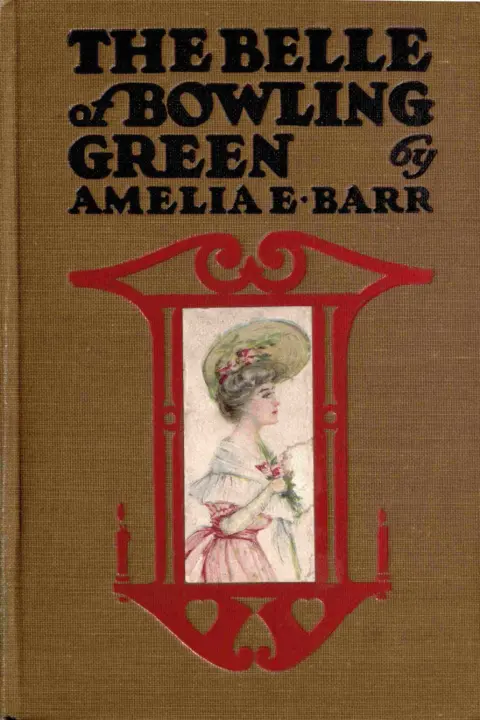
The Belle of Bowling Green
Amelia E. Barr
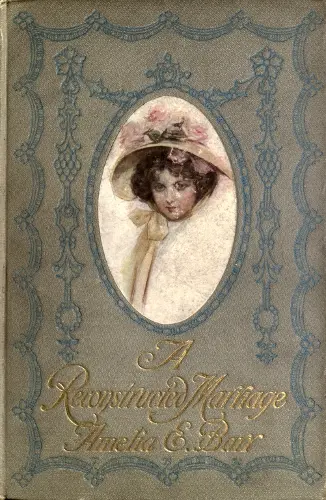
THE CLASSIC COLLECTION · 1910
"A Reconstructed Marriage" by Amelia E. Barr is a novel written in the early 20th century. The story revolves around Robert Campbell, who is caught between his family's expectations and his love for Theodora, an Englishwoman with whom he wishes to marry. The narrative focuses on the interplay of family dynamics, societal pressures, and the struggle for personal happiness. At the start of the book, the reader is introduced to the Campbell family, particularly Mrs. Traquair Campbell, who is determined to control her son's future by insisting he marry Jane Dalkeith, a woman she deems suitable. The tension escalates when Isabel Campbell uncovers a velvet-bound Bible inscribed for a woman named Theodora, hinting at Robert's engagement to her. As discussions about Robert's relationship unfold, it becomes clear that family loyalty and tradition clash with the younger generation's pursuit of love, creating a dynamic filled with conflict and foreshadowing future challenges as the family prepares for Theodora's arrival.
Introduction adapted from the source catalogue; source summaries may be automatically generated.
Free to read · English · 95,236 words · No account needed
MAKE TIME FOR A GOOD BOOK
On by default. Untick to stop anonymous reading totals. Each page counts after 10 seconds in view. How this works.
Anonymous counting is on unless you have switched it off.
At seven precisely Mrs. Campbell re-entered the dining-room. Isabel was already there, and Jepson was bringing in the broth. Neither Robert nor Christina was present, and she wondered a little, but asked no questions. In a few moments Theodora took her place, and without remark permitted Jepson to serve her. But she was evidently in trouble, and she did not touch the food before her. At length Mrs. Campbell asked:
"Where is Robert? Is he not ready for dinner?"
"He is asleep. I suppose he is not ready for dinner."
"What time did he return home?"
"Very early. He said he was sleepy. He is always sleepy. I fear he is ill, a healthy man cannot always be needing sleep."
"The Campbells, all of them, are famous for their ability to sleep. They can sleep at all hours, and in any place--a four-inch-wide plank would suffice them for a sofa. They can order a sleep whenever they desire, and it comes. It is very remarkable."
"Very," answered Theodora, in a tone of unavoidable contempt.
"I have heard people say it was a great gift, and it is quite a family
gift."
"I hope my little David will not inherit it," said Theodora.
"There is nothing of the Campbell family about the boy," replied Mrs.
Campbell.
Theodora did not say she was glad, but she looked the words, and her expression of satisfaction was annoying to both Isabel and her mother. The former said with petulant decision:
"I can sleep at any time I wish. I think this family trait is a great
and peculiar blessing."
"Circumstances may sometimes make it so, Isabel," answered Theodora, "but I would rather wake and suffer, than sink into animal unconsciousness half my life. Robert has slept, or pretended to sleep, twelve hours out of the last twenty-four, and he does not even dream."
"Dream!" cried Mrs. Campbell in disgust, "dream, I hope not! Only fools dream. My children go to bed for the purpose of sleeping. Dream indeed! The Campbells have good sense, and they don't lose it when they sleep."
"Oh, but I think dreaming is one of the most sensible things we do. The soul is comforted by dreaming, instructed and warned by dreaming. I should feel spiritually dead, if the blessed, prophesying dreams failed to visit me."
"I wonder where Christina is taking dinner," said Mrs. Campbell. She refused to continue a conversation so senseless and disagreeable, and her way of doing so, was not only to ignore Theodora's topic, but also to introduce a subject which she considered important and interesting. And of course Christina's dinner was a matter that put dreaming out of court and question.
Your reading position is saved on this browser. Take it to another device with a library code. Reading pages adapt to text, rather than matching a printed edition.
Amelia E. Barr
Amelia E. Barr
Amelia E. Barr
Amelia E. Barr
BEHIND THE BOOK
This eBook is for the use of anyone anywhere in the United States and most other parts of the world at no cost and with almost no restrictions whatsoever. You may copy it, give it away or re-use it under the terms of the Project Gutenberg License included with this eBook or online at www.gutenberg.org. If you are not located in the United States, you will have to check the laws of the country where you are located before using this eBook. Read the source licence.
The original source file, including credits and licence, is retained by this library. Request an original-format copy at no charge. Please include the book title and Project Gutenberg identifier #36490.
KEEP YOUR CURIOSITY GOING
Coulson Kernahan

Maurice Baring
Frances Wright
Cécile Tormay

Frederic Jesup Stimson

W. H. P. (William Henry Pope) Jarvis