Discovering “Evelina”: An Old-fashioned Romance A Companion Book to “The Jessamy Bride”
Frank Frankfort Moore
THE CLASSIC COLLECTION · 1901
"A Nest of Linnets" by Frank Frankfort Moore is a novel written in the late 19th century. The story revolves around the Linley family, particularly focusing on Elizabeth "Betsy" Linley, a gifted singer whose struggles with her artistic identity are at the center of the narrative. The opening chapters introduce Betsy and her father, Mr. Linley, who emphasizes the importance of her musical talent, while Betsy's emotional turmoil regarding her public performances and personal aspirations begins to unfold. At the start of the novel, Mr. Linley is teaching his daughter, Betsy, to sing, pushing her to connect deeply with her music, yet she feels overwhelmed by the burden of performing for an audience. Betsy’s excitement on the return of her brother Tom, who has spent years studying music in Italy, is quickly shadowed by her realization that his passion for music eclipses their familial bond. As the narrative progresses, it becomes clear that Betsy yearns for a normal life away from the intense scrutiny of the public, desiring to marry an older man, Mr. Long, to escape her singing career. This internal conflict between her artistic gifts and her need for emotional fulfillment sets the stage for the drama that unfolds throughout the story.
Introduction adapted from the source catalogue; source summaries may be automatically generated.
Free to read · English · 114,660 words · No account needed
MAKE TIME FOR A GOOD BOOK
On by default. Untick to stop anonymous reading totals. Each page counts after 10 seconds in view. How this works.
Anonymous counting is on unless you have switched it off.
Mrs. Abington was in her chair. She had just been to see her friends at Bath-Easton, and was hoping that she would be in time for service at the Abbey. That was why she stopped Dick in the street. What did he think? would she be in time for the service? She would be quite content to accept Dick's opinion on the subject.
Dick looked at his watch.
"Madam," he said, after calculating a moment, "you will not be in time for the Confession, which seems rather a pity; but I promise you that you will be in good time for the Absolution, if you make haste, and that will be to your advantage."
"Sir, you are a rude boor!" cried the lady very prettily.
"If so, madam, I am rude at my own expense," said he. "My words implied
a 'Nunc Dimittis'."
"Now that I come to think on't, that is so," said she. "But I am sure that you, being a man, must hold with me that the ideal Church is the one that grants absolution without insisting on confession."
"I am a sound Churchman, Mrs. Abington," said he; "I will not countenance the least suspicion of what is not orthodox."
"Psha! sir, that is equivalent to a confession that you like your salads without vinegar," said she--"your punch without lemon--your spice-cakes without spice--your charmer without a bit of Mother Eve."
"Madam," said he, "'tis now you who are orthodox--ay, up to the first chapter of Genesis; but for my part, I adore your sex, from Genesis until the Revelation comes."
"The Revelation? Do you mean until the revealing of the woman or the
Revelation of the Divine?"
"Mrs. Abington, I am orthodox: I cannot admit that there is any
difference between the two."
"You are a quibbler, I vow; but I would not hear your worst enemy
accuse you of being orthodox."
"You can silence such an aspersion, madam, by letting it be known that you extended your friendship to me."
"More quibbling? I swear that 'tis a relief to have a simple chat with young Mr. Linley, after all this battledore and shuttlecock with you wits. Oh yes, Tom is a charming boy."
"I am told that he can illustrate the progress of a passion from
Genesis to the Revelation."
"Ay, sir; but with the Apocryphal books left out."
"You can hear passages from them read out in the Abbey."
"He has made me wild to learn the violin. But, I fear, alas! that
'twill be too much for me."
Your reading position is saved on this browser. Take it to another device with a library code. Reading pages adapt to text, rather than matching a printed edition.
Frank Frankfort Moore
Frank Frankfort Moore
Frank Frankfort Moore
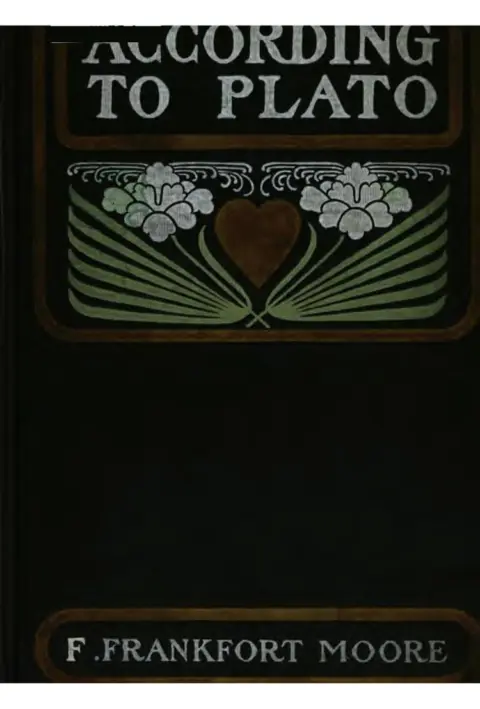
Frank Frankfort Moore
BEHIND THE BOOK
This eBook is for the use of anyone anywhere in the United States and most other parts of the world at no cost and with almost no restrictions whatsoever. You may copy it, give it away or re-use it under the terms of the Project Gutenberg License included with this eBook or online at www.gutenberg.org. If you are not located in the United States, you will have to check the laws of the country where you are located before using this eBook. Read the source licence.
The original source file, including credits and licence, is retained by this library. Request an original-format copy at no charge. Please include the book title and Project Gutenberg identifier #47195.
KEEP YOUR CURIOSITY GOING
Coulson Kernahan

Maurice Baring
Frances Wright
Cécile Tormay

Frederic Jesup Stimson

W. H. P. (William Henry Pope) Jarvis