
Louisa May Alcott : Her Life, Letters, and Journals
Louisa May Alcott
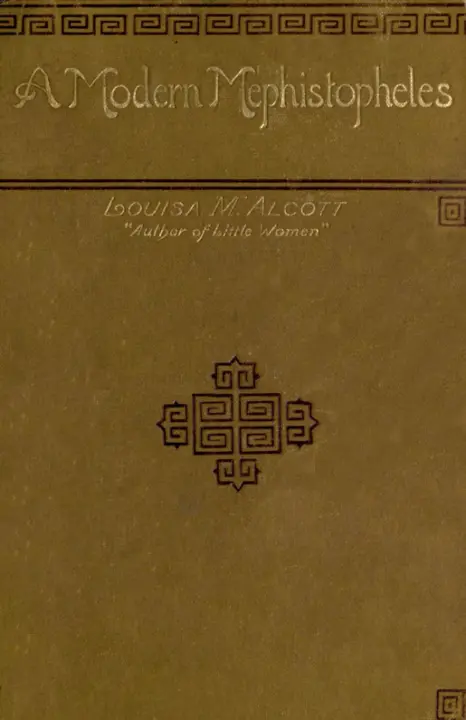
THE CLASSIC COLLECTION · 1877
"A Modern Mephistopheles, and A Whisper in the Dark" by Louisa May Alcott is a novel written in the late 19th century. The book delves into the struggles of its main characters, Felix Canaris, a young man grappling with despair and hopelessness, and Jasper Helwyze, a mysterious benefactor. Their relationship appears complex, with elements of mentorship, power dynamics, and the exploration of artistic ambition against a backdrop of personal turmoil. The beginning of the novel sets a somber tone, beginning with a desolate scene of a cold garret where Felix Canaris contemplates his despair as he burns his manuscripts—a symbol of his failed dreams. The introduction of Jasper Helwyze shifts the narrative; he interrupts Canaris's dark resolve and offers him a chance at redemption through work and mentorship. As Canaris accepts Helwyze's offer, it becomes clear that their relationship will intertwine ambition and dependency. The mood subtly shifts from despair to an uncertain hope as Canaris embarks on a new chapter, influenced by the enigmatic figure of Helwyze, whose intentions feel both alluring and dangerous.
Introduction adapted from the source catalogue; source summaries may be automatically generated.
Free to read · English · 73,492 words · No account needed
MAKE TIME FOR A GOOD BOOK
On by default. Untick to stop anonymous reading totals. Each page counts after 10 seconds in view. How this works.
Anonymous counting is on unless you have switched it off.
I shook with anger, yet still restrained myself hoping to fathom the mystery of this nocturnal journey.
“What is your name, please?” I meekly asked.
“You can call me Hannah.”
“Well, Hannah, there is a strange mistake somewhere. I am not ill—you see I am not—and I wish to go away at once to the friend I was to meet to-day. Get me a carriage and have my baggage taken out.”
“It can’t be done, miss. We are a mile from town, and have no carriages here; besides, you couldn’t go if I had a dozen. I have my orders, and shall obey ’em.”
“But Dr. Karnac has no right to bring or keep me here.”
“Your uncle sent you. The doctor has the care of you, and that is all I know about it. Now I have kept my promise, do you keep yours, miss, and eat your breakfast, else I can’t trust you again.”
“But what is the matter with me? How can I be ill and not know or feel it?” I demanded, more and more bewildered.
“You look it, and that’s enough for them as is wise in such matters. You’d have had a fever, if it hadn’t been seen to in time.”
“Who cut my hair off?”
“I did; the doctor ordered it.”
“How dared he? I hate that man, and never will obey him.”
“Hush, miss, don’t clench your hands and look in that way, for I shall have to report every thing you say and do to him, and it won’t be pleasant to tell that sort of thing.”
The woman was civil, but grim and cool. Her eye was unsympathetic, her manner business-like, her tone such as one uses to a refractory child, half-soothing, half-commanding. I conceived a dislike to her at once, and resolved to escape at all hazards, for my uncle’s inexplicable movements filled me with alarm. Hannah had left my door open, a quick glance showed me another door also ajar at the end of a wide hall, a glimpse of green, and a gate. My plan was desperately simple, and I executed it without delay. Affecting to eat, I presently asked the woman for my handkerchief from the bed. She crossed the room to get it. I darted out, down the passage, along the walk, and tugged vigorously at the great bolt of the gate, but it was also locked. In despair I flew into the garden, but a high wall enclosed it on every side; and as I ran round and round, vainly looking for some outlet, I saw Hannah, accompanied by a man as gray and grim as herself, coming leisurely toward me, with no appearance of excitement or displeasure. Back I would not go; and, inspired with a sudden hope, swung myself into one of the firs that grew close against the wall. The branches snapped under me, the slender tree swayed perilously, but up I struggled, till the wide coping of the wall was gained. There I paused and looked back. The woman was hurrying through the gate to intercept my descent on the other side, and close behind me the man, sternly calling me to stop. I looked down; a stony ditch was below, but I would rather risk my life than tamely lose my liberty, and with a flying leap tried to reach the bank; failed, fell heavily among the stones, felt an awful crash, and then came an utter blank.
Your reading position is saved on this browser. Take it to another device with a library code. Reading pages adapt to text, rather than matching a printed edition.
Louisa May Alcott
Louisa May Alcott
Louisa May Alcott
Louisa May Alcott
BEHIND THE BOOK
This eBook is for the use of anyone anywhere in the United States and most other parts of the world at no cost and with almost no restrictions whatsoever. You may copy it, give it away or re-use it under the terms of the Project Gutenberg License included with this eBook or online at www.gutenberg.org. If you are not located in the United States, you will have to check the laws of the country where you are located before using this eBook. Read the source licence.
The original source file, including credits and licence, is retained by this library. Request an original-format copy at no charge. Please include the book title and Project Gutenberg identifier #54212.
KEEP YOUR CURIOSITY GOING
Coulson Kernahan

Maurice Baring
Frances Wright
Cécile Tormay

Frederic Jesup Stimson

W. H. P. (William Henry Pope) Jarvis