THE CLASSIC COLLECTION✦A mission to Gelele, King of Dahome, Vol. 1 (of 2)CLASSIC FREE BOOKS
A mission to Gelele, King of Dahome, Vol. 1 (of 2)
Richard Francis, Sir Burton
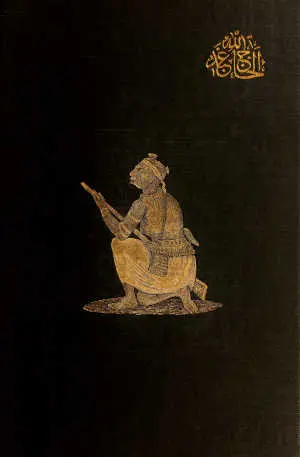
THE CLASSIC COLLECTION · 1893
"A mission to Gelele, King of Dahome, Vol. 2 (of 2)" by Sir Richard Francis Burton is a travel narrative and ethnographic account written in the late 19th century. It chronicles Burton’s diplomatic mission to the West African kingdom of Dahomey, centering on royal ceremonies, the famed female military corps, warfare, religion, and the politics of slavery and sacrifice. The work blends eyewitness reportage with comparison to neighboring states and European practices. Readers should expect vivid, densely detailed depictions of ritual, military display, and court life filtered through a period European lens.
The opening of this volume plunges into the “So-sin Customs,” a sequence of state ceremonies in Abomey: Burton describes dances, fetish displays, and the King’s dramatic scattering of cowries that sparks rough-and-tumble scrambles, as well as ritualized visits to a shed of prisoners where pardons are theatrically granted. On the following day the Amazons perform, officers and captains of both sexes swear oaths to break Abeokuta, bards sing royal titles, and rum and cowries are distributed amid repeated war speeches. Burton then pauses to explain the “Evil Night,” arguing that Dahomean human sacrifice is a funerary, religious practice tied to royal ancestor cults and largely aimed at criminals and captives, estimating several dozen victims during the annual rites while contrasting Dahomey with other West African polities. The fifth day brings an immense procession “of the King’s wealth,” with ministers, jesters, female officers, companies of archers and blunderbuss-women, drums, trophies, skull standards, carriages, umbrellas, and the “leopard wives,” all punctuated by toasts, songs, and vows of war; Burton counts fresh corpses and severed heads from the night before, meets the King, and secures a day of rest. The section closes by beginning a demystification of the so‑called Amazons—their historical roots, selection and enforced celibacy, their organization into three main commands, and the social costs of maintaining a female corps—while correcting European exaggerations.
Introduction adapted from the source catalogue; source summaries may be automatically generated.
Free to read · English · 91,661 words · No account needed
MAKE TIME FOR A GOOD BOOK
On by default. Untick to stop anonymous reading totals. Each page counts after 10 seconds in view. How this works.
Anonymous counting is on unless you have switched it off.
The caboceers, like their King, passed round three times.[113] As a rule, skirmishers, flags, and fetish preceded the captain of the party, who walked or rode under his umbrella, whilst a full band and stragglers, all firing heavily, brought up the rear. Each group numbered from 10 to 100 men and boys, and was separated by a short interval from its neighbours.
The ceremony much resembled that of the Entrance Day, but it was far more military; it was the march of the Dahoman army, whereas the other was the triumphal return from war. As sunset approached, the gale increased. The King sent to say that, at a future and more favourable time, I should see another review, and then passed, surrounded by his “Amazons,” to the north of the Komasi Palace. We waited till the ground was clear, and retired—not unwillingly.
The recreant ministers spent the night under sheds at the King’s gate, being forbidden to enter their homes. The punishments of high officials are here very capricious. Dr. M‘Leod mentions a chief magistrate being ordered by the King “not to shave his beard, pare his nails, or wash himself for a certain number of moons, and in this dirty state to sit daily at the palace-gate several hours for public inspection.” This exile continued till 5 P.M. of the next day (January 9th), when royalty was induced to relent by a storm of thunder and rain, the latter falling in peculiar spurts like jets of heavy drops. Agbwejekon, however, the only caboceer who did his duty, was temporarily rewarded with precedence, and was publicly presented with a fine cloth, a wife, and ten heads of cowries. Next time the chiefs will not be outwitted: they will pass the whole night in the square.
I will conclude this chapter with an account of the Dahoman campaign. The King marches in the midst of his host, surrounded by his Amazons. At the halt, a mat enclosure is made for him and them. The royal quarters, known by their superior size, are pitched far from the rest, and beyond danger of ambush. The males camp promiscuously in little huts. They move at all hours, generally by night, guided by captives kidnapped from the place about to be plundered; these men are disguised, tied up, and led in the rear; and after returning to the capital, they are released with presents. As may be imagined, not a few of them desert, to the great peril of the invader. A few soldiers in the garb of traders, with cloth and tobacco, precede and accompany the force to attract stragglers, who are at once kidnapped. The army advances by circuitous ways, cutting its own roads through the bush; a favourite plan is to spread false reports about the intended direction, and to double round upon a town which has heard that the foe has passed onwards. Great circumspection is ordered when nearing the destination; no talking is allowed, though the soldiers may snap fingers; and even smoking is forbidden. The point of attack is secretly reconnoitered by a chosen spy during the day. They surround the fated place so cautiously, that it is often taken unawares; and they assault, as usual amongst barbarians, before dawn, with a rush, uttering hellish cries and yells. The only village defences are prickly plants, and these the troops are trained to despise. Any one appearing is at once decapitated[114]; when weapons are thrown down, the prisoners are tied up; their arms, however, are not pierced for cords, as asserted by the Egbas. As a rule, their object is to capture, not to kill; only the old, the sick, and the “unmerchantable” lose their heads, which serve as trophies. The chiefs are reserved for public sacrifice. When the town is broken, the conquerors raise in the centre a clay-heap, which is girt with dry palm-leaf; the wretched fugitives may, after returning to their ruined homes, place some of this material upon their necks, and appear before the King, who then spares their lives. The army, even if victorious, hurries back, after losing for every 100 prisoners some 200 of their own men by famine, fatigue, and privations, many of them self- inflicted. During the whole campaign, even if it last six months, the warriors may not remove their tunics for ablution. The marching-food is scanty and poor enough to cause scurvy, and a single calabash of water must often suffice for three days. We cannot wonder that the host is decimated by disease, especially by small-pox.
Your reading position is saved on this browser. Take it to another device with a library code. Reading pages adapt to text, rather than matching a printed edition.
BEHIND THE BOOK
This eBook is for the use of anyone anywhere in the United States and most other parts of the world at no cost and with almost no restrictions whatsoever. You may copy it, give it away or re-use it under the terms of the Project Gutenberg License included with this eBook or online at www.gutenberg.org. If you are not located in the United States, you will have to check the laws of the country where you are located before using this eBook. Read the source licence.
The original source file, including credits and licence, is retained by this library. Request an original-format copy at no charge. Please include the book title and Project Gutenberg identifier #78571.
KEEP YOUR CURIOSITY GOING
Wilfrid Scawen Blunt
Wilfrid Scawen Blunt

E. W. (Edgar Watson) Howe
Francis Greenleaf Allinson & Anne C. E. (Anne Crosby Emery) Allinson
Cyrenus Cole

John Martineau