THE CLASSIC COLLECTION✦A mission to Gelele, King of Dahome, Vol. 1 (of 2)CLASSIC FREE BOOKS
A mission to Gelele, King of Dahome, Vol. 1 (of 2)
Richard Francis, Sir Burton
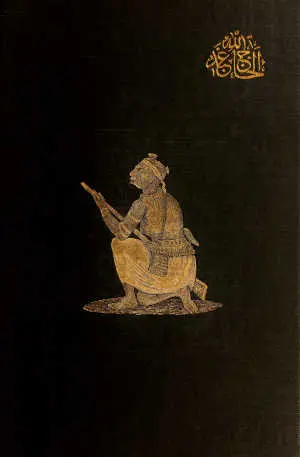
THE CLASSIC COLLECTION · 1893
"A mission to Gelele, King of Dahome, Vol. 2 (of 2)" by Sir Richard Francis Burton is a travel narrative and ethnographic account written in the late 19th century. It chronicles Burton’s diplomatic mission to the West African kingdom of Dahomey, centering on royal ceremonies, the famed female military corps, warfare, religion, and the politics of slavery and sacrifice. The work blends eyewitness reportage with comparison to neighboring states and European practices. Readers should expect vivid, densely detailed depictions of ritual, military display, and court life filtered through a period European lens.
The opening of this volume plunges into the “So-sin Customs,” a sequence of state ceremonies in Abomey: Burton describes dances, fetish displays, and the King’s dramatic scattering of cowries that sparks rough-and-tumble scrambles, as well as ritualized visits to a shed of prisoners where pardons are theatrically granted. On the following day the Amazons perform, officers and captains of both sexes swear oaths to break Abeokuta, bards sing royal titles, and rum and cowries are distributed amid repeated war speeches. Burton then pauses to explain the “Evil Night,” arguing that Dahomean human sacrifice is a funerary, religious practice tied to royal ancestor cults and largely aimed at criminals and captives, estimating several dozen victims during the annual rites while contrasting Dahomey with other West African polities. The fifth day brings an immense procession “of the King’s wealth,” with ministers, jesters, female officers, companies of archers and blunderbuss-women, drums, trophies, skull standards, carriages, umbrellas, and the “leopard wives,” all punctuated by toasts, songs, and vows of war; Burton counts fresh corpses and severed heads from the night before, meets the King, and secures a day of rest. The section closes by beginning a demystification of the so‑called Amazons—their historical roots, selection and enforced celibacy, their organization into three main commands, and the social costs of maintaining a female corps—while correcting European exaggerations.
Introduction adapted from the source catalogue; source summaries may be automatically generated.
Free to read · English · 91,661 words · No account needed
MAKE TIME FOR A GOOD BOOK
On by default. Untick to stop anonymous reading totals. Each page counts after 10 seconds in view. How this works.
Anonymous counting is on unless you have switched it off.
As we arose and mutually bowed, the King descended, and fired from the hip five guns and carbines, very lightly loaded. He then remounted, and made the three customary rounds of the market-place, followed by a few “salvage-men” in green, fourteen standards, one pink and six white umbrellas, the show-shields, and the skull-drums. The rear-guard consisted of 100 men, accompanying the shabby umbrellas, which here denote soldiery; at times they skirmished in European fashion, with a fire pretty well nourri. After the third turn an order, sent to it by means of messengers, who ran bawling along the noisy chattering line, converted the rear into a van, which retired in turn, fraying out in a line of light troops. The King then marched down to the south side of the marketplace, where his parasol showed him to be sitting amongst the women soldiery.
A fetish company of men and boys presently passed us at a run, carrying implements of their craft, huge cressets, crescents of iron hung with cowries, and various images, idols, and simulacres, chiefly of the Bo- fetish—a crucified turkey-buzzard of wood with red dots on a white body, another spotted animal encoiled by a snake, and sundry things undescribable. This party also formed up with the veterans, at the northern end of the Uhun-jro space.
It was now the Amazons’ turn to advance, and they came up in better style as regards marching and firing than their brother soldiers. They passed us with a feu d’enfer, and when the dust was not flying the smoke hung like a pall upon the ground. The King was followed by unarmed wives, who were fanning their lord and carrying a few weapons for his proper use. The soldiery wore tunics of grey baft, stained brown with blood and barks, covering the bosom and extending to the knees like the men, short drawers, and white sashes hanging to the right. The King dismounted, danced to an “Amazon” band, and again rode thrice round the market-place, followed by his rear-guard singing and firing. After the third turn he walked up to where our umbrella was pitched, and discharging several carbines, he danced a simple morris, called Hun- gan,[111] before a semicircle of armed women, who were chanting and cheering him lustily. After this, he took from one of his head fetishmen, a fine tall priest, with Abyssinian features, a crooked club, covered with blue and black cloth, and ringed with Indian cowries, and he performed another saltation. Then, holding my wrist, Gelele led me out, and we danced opposite each other amidst tempestuous applause. On this occasion the King expects strangers not to refuse him; I therefore had the honour of executing a very notable decapitating movement. Mr. Bernasko, as a “god-man,” was excused, and a slight fever had detained Mr. Cruikshank at home; the performance, therefore, did not last long. The King, after dancing, turned round and drank from a small case- bottle, or decanter, with the usual noise and averting of faces on the part of his subjects. I observed that before putting it to his lips he allowed a few drops to fall upon the ground. This is not an oblation to the gods as in ancient Europe, but the offering to ancestors, especially to the paternal ghost, as made by the Chinese. Gelele showed me all his fetish sticks, requesting that they might be sketched, and presently retired to his little pavilion, where the scouts coated in grass danced before him. He continued his attentions by sending food and drink at short intervals, till we were surrounded by bottles and calabashes. One gourd contained pomegranates, poor in the extreme, half ripe, bitter, and preponderant in seed and rind. Another calabash, I was told, showed a specimen of his own war-food, bananas, excellent Akansan, powdered red pepper, in an Achatina shell, and a few pods of Malaguetta pepper,[112] which were greedily seized by the Reverend. A massing and scattering of umbrellas far to our left told us that the caboceers were on the move; it was waxing late, and all was hurried. The chiefs were distinguished by the vast variety of charms and amulets hung about their arms, necks, and limbs, and some held a leaf of the Ayyan, or thunder fetish shrub, to prevent their guns bursting. These talismans are intended to create an artificial courage; all peoples having their own peculiar stimuli. The Englishman nerves himself by a sense of duty and hope of profit. The Frenchman by visions of glory, and of late years by a bargain with Heaven that, if spared, he will believe in the Immaculate Conception. The German remembers the Rhine and its “ichor divine.” The Russian thinks of a kind of a demi-god; whilst in southern Europe the true fetish appears in the shape of the cross, the medal, and the relic. The braver Orientals, mostly Moslems, spur themselves by visions of Paradise, and by the prospect of escaping the “Squeeze of the Grave”; and the more cowardly Hindus and Chinese, regarding what is scandalously called Dutch courage, as the spur of heroism, “bhang themselves” accordingly. In many, if not in all, parts of Pagan Africa, the Congo for instance, the negro will not think of fighting without fetishes that will bring him safe out of battle; and even the less timid North American must propitiate imaginary supernatural powers before he sets out to “raise hair.”
Your reading position is saved on this browser. Take it to another device with a library code. Reading pages adapt to text, rather than matching a printed edition.
BEHIND THE BOOK
This eBook is for the use of anyone anywhere in the United States and most other parts of the world at no cost and with almost no restrictions whatsoever. You may copy it, give it away or re-use it under the terms of the Project Gutenberg License included with this eBook or online at www.gutenberg.org. If you are not located in the United States, you will have to check the laws of the country where you are located before using this eBook. Read the source licence.
The original source file, including credits and licence, is retained by this library. Request an original-format copy at no charge. Please include the book title and Project Gutenberg identifier #78571.
KEEP YOUR CURIOSITY GOING
Wilfrid Scawen Blunt
Wilfrid Scawen Blunt

E. W. (Edgar Watson) Howe
Francis Greenleaf Allinson & Anne C. E. (Anne Crosby Emery) Allinson
Cyrenus Cole

John Martineau