THE CLASSIC COLLECTION✦A mission to Gelele, King of Dahome, Vol. 1 (of 2)CLASSIC FREE BOOKS
A mission to Gelele, King of Dahome, Vol. 1 (of 2)
Richard Francis, Sir Burton
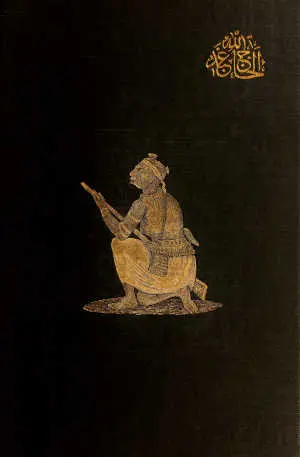
THE CLASSIC COLLECTION · 1893
"A mission to Gelele, King of Dahome, Vol. 2 (of 2)" by Sir Richard Francis Burton is a travel narrative and ethnographic account written in the late 19th century. It chronicles Burton’s diplomatic mission to the West African kingdom of Dahomey, centering on royal ceremonies, the famed female military corps, warfare, religion, and the politics of slavery and sacrifice. The work blends eyewitness reportage with comparison to neighboring states and European practices. Readers should expect vivid, densely detailed depictions of ritual, military display, and court life filtered through a period European lens.
The opening of this volume plunges into the “So-sin Customs,” a sequence of state ceremonies in Abomey: Burton describes dances, fetish displays, and the King’s dramatic scattering of cowries that sparks rough-and-tumble scrambles, as well as ritualized visits to a shed of prisoners where pardons are theatrically granted. On the following day the Amazons perform, officers and captains of both sexes swear oaths to break Abeokuta, bards sing royal titles, and rum and cowries are distributed amid repeated war speeches. Burton then pauses to explain the “Evil Night,” arguing that Dahomean human sacrifice is a funerary, religious practice tied to royal ancestor cults and largely aimed at criminals and captives, estimating several dozen victims during the annual rites while contrasting Dahomey with other West African polities. The fifth day brings an immense procession “of the King’s wealth,” with ministers, jesters, female officers, companies of archers and blunderbuss-women, drums, trophies, skull standards, carriages, umbrellas, and the “leopard wives,” all punctuated by toasts, songs, and vows of war; Burton counts fresh corpses and severed heads from the night before, meets the King, and secures a day of rest. The section closes by beginning a demystification of the so‑called Amazons—their historical roots, selection and enforced celibacy, their organization into three main commands, and the social costs of maintaining a female corps—while correcting European exaggerations.
Introduction adapted from the source catalogue; source summaries may be automatically generated.
Free to read · English · 91,661 words · No account needed
MAKE TIME FOR A GOOD BOOK
On by default. Untick to stop anonymous reading totals. Each page counts after 10 seconds in view. How this works.
Anonymous counting is on unless you have switched it off.
After the third time we got down, and entered the palace gates, passing through a row of Chiefs on each side.
The court-yard of the palace is of great extent, and presented a
spectacle not easily forgotten.
At the further end was a large building, of some pretensions to beauty in this country, being made of thatch, and supported by columns of wood, roughly cut.
In front of this, and close to it, leaving an open space for admission to the King, was placed a large array of variegated umbrellas, admitted only to be used by himself.
Under these were congregated his principal Chiefs. On either side of him, under the building, were his wives, to the number of about one hundred, gaily dressed, most of them young, and exceedingly pretty.
The King was reclining on a raised daïs, about three feet high, covered with crimson cloth, smoking his pipe. One of his wives held a glass sugar basin for him to spit in.
He was dressed very plainly, the upper part of his body being bare, with only a silver chain, holding some fetish charm round his neck, and an unpretending cloth around his waist.
The left side of the court-yard was filled with Amazons, from the walls up to the King’s presence, all armed with various weapons, such as muskets, swords, gigantic razors for cutting off heads, bows and arrows, blunderbusses, &c.
They were seated when we entered. Their large war-drum was conspicuous, being surrounded with human skulls.
We advanced to where the King was sitting, with due form and ceremony, and when close to him all the respect due to a King was paid by bowing, &c., which he gracefully acknowledged by bowing himself, and waving his hand.
We then sat down close to him, in chairs that had accompanied us from
Whydah.
The conversation commenced with the usual compliments. He asked about my health, and how I had got on with my journey.
He then inquired about the Queen and all her family, asking many questions about the form of government in England.
I said the Queen sent her compliments to him, and hoped he was quite well, at which he seemed much pleased.
This being only a visit of introduction, not of delivering messages, therefore nothing political was entered into.
He then gave orders for his Amazons to perform a variety of movements, and to salute me, which they did most creditably. They loaded and fired quickly, singing songs all the time.
They are a very fine body of women and are very active in their movements, being remarkably well-limbed and strong.
Your reading position is saved on this browser. Take it to another device with a library code. Reading pages adapt to text, rather than matching a printed edition.
BEHIND THE BOOK
This eBook is for the use of anyone anywhere in the United States and most other parts of the world at no cost and with almost no restrictions whatsoever. You may copy it, give it away or re-use it under the terms of the Project Gutenberg License included with this eBook or online at www.gutenberg.org. If you are not located in the United States, you will have to check the laws of the country where you are located before using this eBook. Read the source licence.
The original source file, including credits and licence, is retained by this library. Request an original-format copy at no charge. Please include the book title and Project Gutenberg identifier #78571.
KEEP YOUR CURIOSITY GOING
Wilfrid Scawen Blunt
Wilfrid Scawen Blunt

E. W. (Edgar Watson) Howe
Francis Greenleaf Allinson & Anne C. E. (Anne Crosby Emery) Allinson
Cyrenus Cole

John Martineau