THE CLASSIC COLLECTION✦A mission to Gelele, King of Dahome, Vol. 1 (of 2)CLASSIC FREE BOOKS
A mission to Gelele, King of Dahome, Vol. 1 (of 2)
Richard Francis, Sir Burton
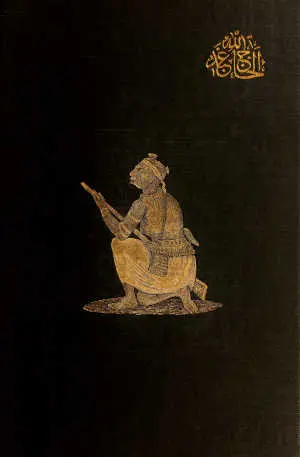
THE CLASSIC COLLECTION · 1893
"A mission to Gelele, King of Dahome, Vol. 2 (of 2)" by Sir Richard Francis Burton is a travel narrative and ethnographic account written in the late 19th century. It chronicles Burton’s diplomatic mission to the West African kingdom of Dahomey, centering on royal ceremonies, the famed female military corps, warfare, religion, and the politics of slavery and sacrifice. The work blends eyewitness reportage with comparison to neighboring states and European practices. Readers should expect vivid, densely detailed depictions of ritual, military display, and court life filtered through a period European lens.
The opening of this volume plunges into the “So-sin Customs,” a sequence of state ceremonies in Abomey: Burton describes dances, fetish displays, and the King’s dramatic scattering of cowries that sparks rough-and-tumble scrambles, as well as ritualized visits to a shed of prisoners where pardons are theatrically granted. On the following day the Amazons perform, officers and captains of both sexes swear oaths to break Abeokuta, bards sing royal titles, and rum and cowries are distributed amid repeated war speeches. Burton then pauses to explain the “Evil Night,” arguing that Dahomean human sacrifice is a funerary, religious practice tied to royal ancestor cults and largely aimed at criminals and captives, estimating several dozen victims during the annual rites while contrasting Dahomey with other West African polities. The fifth day brings an immense procession “of the King’s wealth,” with ministers, jesters, female officers, companies of archers and blunderbuss-women, drums, trophies, skull standards, carriages, umbrellas, and the “leopard wives,” all punctuated by toasts, songs, and vows of war; Burton counts fresh corpses and severed heads from the night before, meets the King, and secures a day of rest. The section closes by beginning a demystification of the so‑called Amazons—their historical roots, selection and enforced celibacy, their organization into three main commands, and the social costs of maintaining a female corps—while correcting European exaggerations.
Introduction adapted from the source catalogue; source summaries may be automatically generated.
Free to read · English · 91,661 words · No account needed
MAKE TIME FOR A GOOD BOOK
On by default. Untick to stop anonymous reading totals. Each page counts after 10 seconds in view. How this works.
Anonymous counting is on unless you have switched it off.
It was necessary to provide subsistence for all these people, a very large body of men, according to the custom of the country.
We arrived at Cannah, eight miles from Abomey, on the evening of Tuesday the 9th, where the King was holding his Court.
The King was scarcely prepared to receive us, and hence we were detained on the road longer than otherwise would have been the case.
It is supposed that, on this occasion, he was anxious to display all his grandeur and all his power, and my landing so quickly at Whydah had rather disconcerted him.
At all places on the road, the head men turned out with their soldiers, and received us with firing and dancing; also, the usual presents of water, fowls, goats, &c.
Speeches were made expressive of their desire to go to war, and cut off heads for their master. The war-dance was performed by women and children, and motions made with swords as if in the act of decapitating their enemies.
Some of their songs were very curious, which shall be described
hereafter.
At all the villages where we slept, comfortable quarters had been
provided, and water furnished.
Nothing could exceed the civility of every one.
The water is very bad, and there is great scarcity of it, particularly in the dry season. It must be very unwholesome.
The King had sent three of his sticks by special messengers to meet us on our way, with inquiries about our health, &c.
At 10 A.M. on the morning of the 10th, the King sent to say that he
would receive us.
We accordingly went in full dress, and remained under some large trees, in an open space of some extent.
After a short time, the Chiefs arrived in succession with their followers, according to their rank, and were introduced to us, the same drumming, firing, dancing, and singing, being carried on as at Whydah.
This occupied a considerable time; and when finished we got into our hammocks, and went to the palace outside of which, in a large square, were assembled all the Chiefs with their people, as well as large bodies of the King’s soldiers.
The sight was most interesting: the gaudy colours of the large umbrellas, the dresses of the headmen, the firing of the muskets, the songs of the people, the beating of the war-drums, the savage gesture of the soldiers, and their ferocious appearance, made us feel indeed that we were amidst an uncivilised nation.
All, however, treated us with marked respect, while, according to custom, we were carried three times round the square.
Your reading position is saved on this browser. Take it to another device with a library code. Reading pages adapt to text, rather than matching a printed edition.
BEHIND THE BOOK
This eBook is for the use of anyone anywhere in the United States and most other parts of the world at no cost and with almost no restrictions whatsoever. You may copy it, give it away or re-use it under the terms of the Project Gutenberg License included with this eBook or online at www.gutenberg.org. If you are not located in the United States, you will have to check the laws of the country where you are located before using this eBook. Read the source licence.
The original source file, including credits and licence, is retained by this library. Request an original-format copy at no charge. Please include the book title and Project Gutenberg identifier #78571.
KEEP YOUR CURIOSITY GOING
Wilfrid Scawen Blunt
Wilfrid Scawen Blunt

E. W. (Edgar Watson) Howe
Francis Greenleaf Allinson & Anne C. E. (Anne Crosby Emery) Allinson
Cyrenus Cole

John Martineau