THE CLASSIC COLLECTION✦A dead man’s diaryCLASSIC FREE BOOKS
A dead man’s diary
Coulson Kernahan
THE CLASSIC COLLECTION · 1923
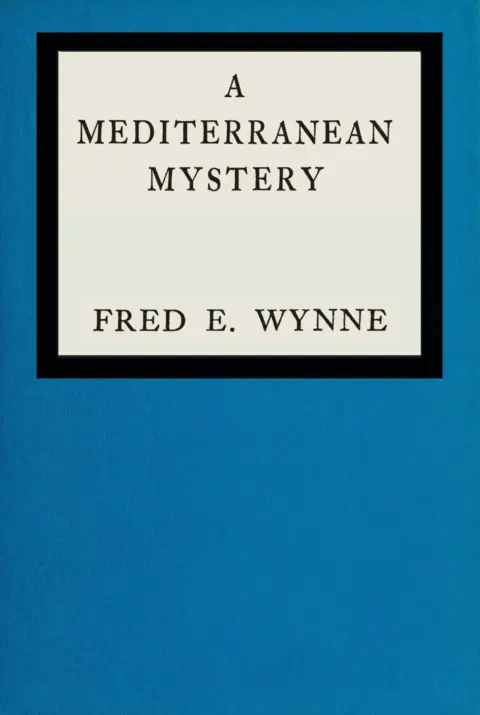
"A Mediterranean Mystery" by Fred E. Wynne is a novel written in the early 20th century. The narrative begins with the protagonist, a middle-aged parson named Davoren, leading a comfortable yet routine life at his Sussex vicarage, which is soon disrupted by an unexpected telegram from his adventurous younger brother, Edmund. The plot seems to weave together elements of family dynamics, adventure, and the exploration of personal aspirations as the two brothers navigate their contrasting lives. The opening of this novel introduces us to the main character, Davoren, who is characterized by his scholarly tendencies and a quiet life, interspersed with his hobby of breeding homing pigeons. His tranquil existence is interrupted by the arrival of a telegram announcing the return of his brother, Edmund, who has a reputation for mischief and a tendency to live life on the edge. Davoren reflects on his family background and his complicated feelings towards Edmund, revealing a blend of concern, frustration, and familial affection. As the brothers reunite, they discuss Edmund’s recent escapades at sea and his partnership with a character named Captain Welfare, hinting at an adventure that intertwines with endearing moments and family tensions, setting the stage for the unfolding mystery.
Introduction adapted from the source catalogue; source summaries may be automatically generated.
Free to read · English · 86,430 words · No account needed
MAKE TIME FOR A GOOD BOOK
On by default. Untick to stop anonymous reading totals. Each page counts after 10 seconds in view. How this works.
Anonymous counting is on unless you have switched it off.
Edmund and the man who had been in the stern-sheets were talking aside in low tones, and now they guided the laden men to the rough path in the cliff leading to the tunnel.
Snape and I followed, fascinated by this strange, impossible invasion
of our quiet Sussex cove.
“It is quite like the old days of the smugglers!” giggled Snape.
It irritated me to feel that he had no sense of the real eerie strangeness and mystery of the scene, and I wished I were alone.
I heard Edmund’s voice, almost unrecognisable in the harsh gutturals of Arabic, giving directions, as I guessed, about getting up the path. Then someone slipped and I heard the quick swish of a whip, the thud of its lash on flesh, and a growl like that of a wounded beast.
I drew in my breath with a little gasp and a throb of the heart, wondering if Edmund had struck the blow.
It seemed a horrible and hideous thing to me then.
The two men who had been with the dinghy now passed us also bearing loads, and three of the first party came back for others. Edmund and the rest had evidently gone on up the tunnel to my cellar.
It was strange to me to think of these wild-looking creatures even in the cellar of my peaceful home, and I wondered what Bates would think of them. I sincerely hoped that Mrs. Rattray would keep out of their way.
I knew how utterly she would disapprove of them, and feared I should sink in her estimation by such an association.
And Mrs. Rattray’s good opinion was very precious to me.
In an incredibly short time all the cases had disappeared and the men
were back with my luggage.
Bates came to see me off, bringing some things he had thought of at the last moment as likely to add to my comfort.
“Is everything all right, Bates?”
“Yes, sir. Everything stowed away quite right.”
“What do you think of the crew?”
“Well, sir, I didn’t see much of them. But I hope you’ll keep your
things locked up.”
“You think they’re thieves?”
“Well, I believe those sort of low-class foreigners mostly are, sir.”
As we were getting into the boat Snape asked which I thought would be the best evening for the G.F.S.?
“I don’t know,” I said firmly, “ask Miss Gregson at the post-office.”
I don’t know what put Miss Gregson into my head, but as the Arabs rowed us through the night with a strange grunt at each stroke, I felt the Girls’ Friendly Society was very remote.
Your reading position is saved on this browser. Take it to another device with a library code. Reading pages adapt to text, rather than matching a printed edition.
BEHIND THE BOOK
This eBook is for the use of anyone anywhere in the United States and most other parts of the world at no cost and with almost no restrictions whatsoever. You may copy it, give it away or re-use it under the terms of the Project Gutenberg License included with this eBook or online at www.gutenberg.org. If you are not located in the United States, you will have to check the laws of the country where you are located before using this eBook. Read the source licence.
The original source file, including credits and licence, is retained by this library. Request an original-format copy at no charge. Please include the book title and Project Gutenberg identifier #74400.
KEEP YOUR CURIOSITY GOING
Coulson Kernahan

Maurice Baring
Frances Wright
Cécile Tormay

Frederic Jesup Stimson

W. H. P. (William Henry Pope) Jarvis