THE CLASSIC COLLECTION✦A dead man’s diaryCLASSIC FREE BOOKS
A dead man’s diary
Coulson Kernahan
THE CLASSIC COLLECTION · 1923
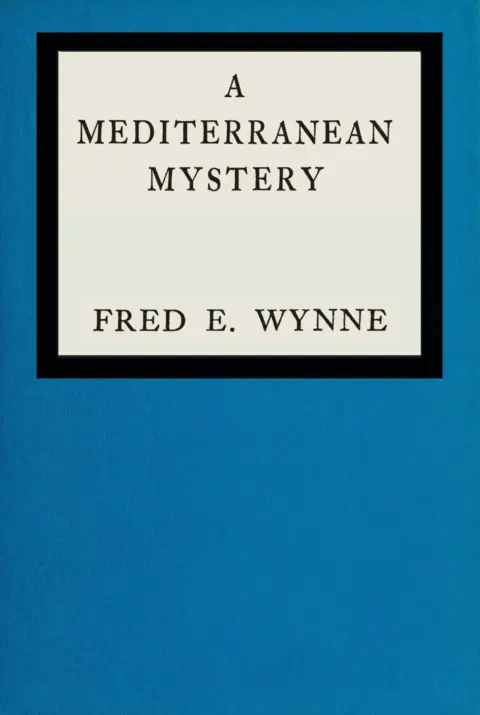
"A Mediterranean Mystery" by Fred E. Wynne is a novel written in the early 20th century. The narrative begins with the protagonist, a middle-aged parson named Davoren, leading a comfortable yet routine life at his Sussex vicarage, which is soon disrupted by an unexpected telegram from his adventurous younger brother, Edmund. The plot seems to weave together elements of family dynamics, adventure, and the exploration of personal aspirations as the two brothers navigate their contrasting lives. The opening of this novel introduces us to the main character, Davoren, who is characterized by his scholarly tendencies and a quiet life, interspersed with his hobby of breeding homing pigeons. His tranquil existence is interrupted by the arrival of a telegram announcing the return of his brother, Edmund, who has a reputation for mischief and a tendency to live life on the edge. Davoren reflects on his family background and his complicated feelings towards Edmund, revealing a blend of concern, frustration, and familial affection. As the brothers reunite, they discuss Edmund’s recent escapades at sea and his partnership with a character named Captain Welfare, hinting at an adventure that intertwines with endearing moments and family tensions, setting the stage for the unfolding mystery.
Introduction adapted from the source catalogue; source summaries may be automatically generated.
Free to read · English · 86,430 words · No account needed
MAKE TIME FOR A GOOD BOOK
On by default. Untick to stop anonymous reading totals. Each page counts after 10 seconds in view. How this works.
Anonymous counting is on unless you have switched it off.
My boat did not sail until the following day, and I now felt a degree of mental and bodily lassitude and exhaustion that prevented my having any pleasure in the prospect of my last day in Egypt. I suffered from a profound nostalgia and craved only to be home. I had the feeling that I should never see my experiences in perspective until I saw them from my own study. Much as I dreaded the sight of him, I yet longed to see Jakoub, to have a final reckoning with him, to find out at least his intentions and know the worst; but Jakoub did not appear, and I had not the faintest idea how to find him.
I was very lonely and depressed as I gave notice to the hotel people that I should leave the following morning.
Van Ermengen had kept out of my way since our last interview, but the news of my departure brought him at once to see me.
His manner was grave and courteous as he bade me good morning. “Excuse me,” he said, “but I understand you sail to-morrow?”
“That is so.”
“Have you any instructions about the--ah--the goods in your room?”
“No; I don’t think I have, thank you.”
“They cannot remain here, you know.”
“Of course not.” I fear I was spitefully enjoying his perplexity and deliberately prolonging it.
“But you cannot take them with you.”
“I had not thought of doing so.”
“But what am I to do? I must have the necessary authority to hand them
over.”
“You won’t be bothered about it at all, Mr. Van Ermengen.”
“But I will be, I must be! I will not hand over the goods to anybody
without authority.”
“You will not be asked to; it is all arranged.”
I turned away, but he came after me and caught my arm.
“But this is my house,” he said, getting more excited; “things like this cannot be arranged without my knowledge.”
“It seems to me that they have been,” I said coldly, shaking off his hand. “‘The goods,’ as you call them, are in the charge of my partner.”
“But he cannot leave them here without consulting me.”
“I suppose not,” I agreed; “I suppose that is why they have taken them
away.”
“Taken them away?” he repeated.
I nodded. His look of perplexity changed to one of suspicion, and then
suspicious fury.
“But they cannot do this without my knowledge. It is impossible!”
“Well, they have done it. You can go and see for yourself.”
The man began to lose self-control and raised his voice.
“But it is not legal,” he cried shrilly; “it is robbery!”
Your reading position is saved on this browser. Take it to another device with a library code. Reading pages adapt to text, rather than matching a printed edition.
BEHIND THE BOOK
This eBook is for the use of anyone anywhere in the United States and most other parts of the world at no cost and with almost no restrictions whatsoever. You may copy it, give it away or re-use it under the terms of the Project Gutenberg License included with this eBook or online at www.gutenberg.org. If you are not located in the United States, you will have to check the laws of the country where you are located before using this eBook. Read the source licence.
The original source file, including credits and licence, is retained by this library. Request an original-format copy at no charge. Please include the book title and Project Gutenberg identifier #74400.
KEEP YOUR CURIOSITY GOING
Coulson Kernahan

Maurice Baring
Frances Wright
Cécile Tormay

Frederic Jesup Stimson

W. H. P. (William Henry Pope) Jarvis