THE CLASSIC COLLECTION✦A dead man’s diaryCLASSIC FREE BOOKS
A dead man’s diary
Coulson Kernahan
THE CLASSIC COLLECTION · 1923
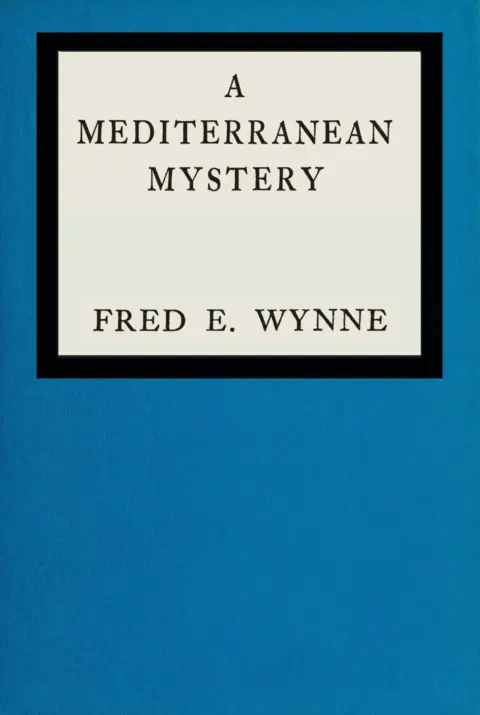
"A Mediterranean Mystery" by Fred E. Wynne is a novel written in the early 20th century. The narrative begins with the protagonist, a middle-aged parson named Davoren, leading a comfortable yet routine life at his Sussex vicarage, which is soon disrupted by an unexpected telegram from his adventurous younger brother, Edmund. The plot seems to weave together elements of family dynamics, adventure, and the exploration of personal aspirations as the two brothers navigate their contrasting lives. The opening of this novel introduces us to the main character, Davoren, who is characterized by his scholarly tendencies and a quiet life, interspersed with his hobby of breeding homing pigeons. His tranquil existence is interrupted by the arrival of a telegram announcing the return of his brother, Edmund, who has a reputation for mischief and a tendency to live life on the edge. Davoren reflects on his family background and his complicated feelings towards Edmund, revealing a blend of concern, frustration, and familial affection. As the brothers reunite, they discuss Edmund’s recent escapades at sea and his partnership with a character named Captain Welfare, hinting at an adventure that intertwines with endearing moments and family tensions, setting the stage for the unfolding mystery.
Introduction adapted from the source catalogue; source summaries may be automatically generated.
Free to read · English · 86,430 words · No account needed
MAKE TIME FOR A GOOD BOOK
On by default. Untick to stop anonymous reading totals. Each page counts after 10 seconds in view. How this works.
Anonymous counting is on unless you have switched it off.
“Am I to understand definitely,” the bishop asked Edmund, “that if all goes well you will accept this offer of the Colonial Secretary?”
“I will indeed, most thankfully,” Edmund assured him.
“And you think it probable that Captain Welfare would join you?”
“I cannot imagine his refusing.”
“Well, that’s all right so far----”
He was interrupted by a metallic clang, twice repeated. It was the old sound of the hammer on the anvil in the forge, brought to us along the tunnel. But it was an unusual time to hear it, and to all of us there was something minatory in the sound of those three strokes.
The bishop broke off in his sentence, and we all three listened, silent
and uneasy.
The three loud strokes were repeated.
“They are working late at the forge,” the bishop remarked.
“That is not blacksmith’s work,” I answered with an apprehensive note
in my voice.
There came a succession of blows, apparently from a lighter hammer, yet with a sound unusual and unfamiliar to me, making as it were a kind of tune.
Suddenly Edmund’s face “sprang to attention” as it were. He took a pencil from his pocket, and seizing a menu card, began making rapid marks on it, as the tune on the anvil rang on.
The bishop and I watched him in amazement.
“It’s Welfare,” he said; “our private call in Morse. Here’s his message coming. Excuse me.”
For some minutes the noise went on, the bishop and I, elbows on table, watching Edmund as he jotted down dots and dashes on the cardboard. He put out his hand for a fresh card, and I had had the sense to have one ready for him, so there was no interruption in his recording of the message.
Presently the hammering ceased.
We listened for a moment, but no more sound came from the anvil. Edmund set himself to deciphering and transcribing the message.
Finally he read aloud: “Police traced Jakoub to vicarage. Doors watched. Will arrest at once. Send him down passage. I will meet him at end.”
“We must act at once,” the bishop observed, rising from his chair; “perhaps you had better get him away,” he added to Edmund. Edmund nodded and moved towards the door.
“One moment,” I said, “I must get Mrs. Rattray and the maid out of the kitchen. We shall have to take Bates into our confidence.”
Your reading position is saved on this browser. Take it to another device with a library code. Reading pages adapt to text, rather than matching a printed edition.
BEHIND THE BOOK
This eBook is for the use of anyone anywhere in the United States and most other parts of the world at no cost and with almost no restrictions whatsoever. You may copy it, give it away or re-use it under the terms of the Project Gutenberg License included with this eBook or online at www.gutenberg.org. If you are not located in the United States, you will have to check the laws of the country where you are located before using this eBook. Read the source licence.
The original source file, including credits and licence, is retained by this library. Request an original-format copy at no charge. Please include the book title and Project Gutenberg identifier #74400.
KEEP YOUR CURIOSITY GOING
Coulson Kernahan

Maurice Baring
Frances Wright
Cécile Tormay

Frederic Jesup Stimson

W. H. P. (William Henry Pope) Jarvis