THE CLASSIC COLLECTION✦A dead man’s diaryCLASSIC FREE BOOKS
A dead man’s diary
Coulson Kernahan
THE CLASSIC COLLECTION · 1923
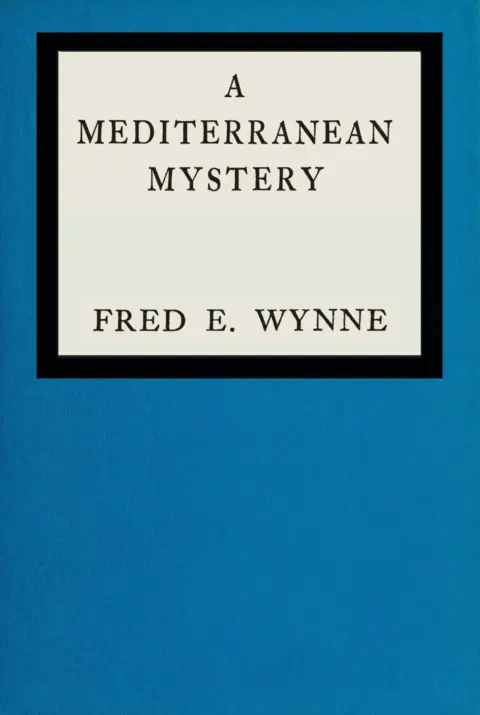
"A Mediterranean Mystery" by Fred E. Wynne is a novel written in the early 20th century. The narrative begins with the protagonist, a middle-aged parson named Davoren, leading a comfortable yet routine life at his Sussex vicarage, which is soon disrupted by an unexpected telegram from his adventurous younger brother, Edmund. The plot seems to weave together elements of family dynamics, adventure, and the exploration of personal aspirations as the two brothers navigate their contrasting lives. The opening of this novel introduces us to the main character, Davoren, who is characterized by his scholarly tendencies and a quiet life, interspersed with his hobby of breeding homing pigeons. His tranquil existence is interrupted by the arrival of a telegram announcing the return of his brother, Edmund, who has a reputation for mischief and a tendency to live life on the edge. Davoren reflects on his family background and his complicated feelings towards Edmund, revealing a blend of concern, frustration, and familial affection. As the brothers reunite, they discuss Edmund’s recent escapades at sea and his partnership with a character named Captain Welfare, hinting at an adventure that intertwines with endearing moments and family tensions, setting the stage for the unfolding mystery.
Introduction adapted from the source catalogue; source summaries may be automatically generated.
Free to read · English · 86,430 words · No account needed
MAKE TIME FOR A GOOD BOOK
On by default. Untick to stop anonymous reading totals. Each page counts after 10 seconds in view. How this works.
Anonymous counting is on unless you have switched it off.
As soon as he opened the door a man stepped quickly inside, in spite of a protesting movement from Bates.
For a moment my heart misgave me, for in this cloth-capped stranger, clad in cheap but respectable brown tweed, I failed to recognise Jakoub. But a flash from his eyes reassured me, and there was no mistaking his greeting. “All raight, effendi!” he said in his old mocking tone, “it is I, Jakoub.”
I think his quick intuition was disconcerted at my manifest pleasure in welcoming him! No doubt he had calculated on meeting fear or anger.
“Come in,” I said cordially. “I am very glad to see you again, Jakoub. It is quite right, Bates, just go and tell Mr. Edmund he will find an old friend with us in the study.”
Bates went upstairs distrustfully, and I led Jakoub into the study.
“Bishop, this is Jakoub,” I said with a happy smile; “Jakoub, this is
my sheikh.”
The bishop nodded pleasantly and Jakoub instinctively salaamed, touching his forehead and breast.
He stood with his hands folded before him looking uneasily from one to the other of us. He was evidently nonplussed and suspicious, and doubtless felt at a disadvantage in the strange ugly clothes which vulgarised and robbed him of all his natural dignity.
“I came to speak with you private,” he said sullenly.
“Sit down then. We are private. The sheikh knows all about our business, Jakoub. Mr. Montgomery is here too. He will be with us in a moment.”
I used the false name purposely to try if Jakoub knew Edmund by any other, but he made no comment.
“If you think I am in a trap, you mistake. Very big mistake,” he
muttered viciously.
“None of us thinks so, Jakoub. If you are in trouble, we want to help you. Have a cigarette?” He took the cigarette greedily, as one who had fasted for some time. It seemed to restore a little of his confidence.
“Jakoub is in no trouble,” he remarked, as he sat uneasily on the edge
of a low chair.
Edmund came in at this moment, quite calm and collected, without a trace of his recent emotional crisis.
“Well, Jakoub,” he said, “you have turned up?”
“Yes. I have come. I have come for my rights, for my money and for Van Ermengen, effendi’s. We will not be robbed.”
“No,” said Edmund, “but you may be arrested, you know. The police----”
Your reading position is saved on this browser. Take it to another device with a library code. Reading pages adapt to text, rather than matching a printed edition.
BEHIND THE BOOK
This eBook is for the use of anyone anywhere in the United States and most other parts of the world at no cost and with almost no restrictions whatsoever. You may copy it, give it away or re-use it under the terms of the Project Gutenberg License included with this eBook or online at www.gutenberg.org. If you are not located in the United States, you will have to check the laws of the country where you are located before using this eBook. Read the source licence.
The original source file, including credits and licence, is retained by this library. Request an original-format copy at no charge. Please include the book title and Project Gutenberg identifier #74400.
KEEP YOUR CURIOSITY GOING
Coulson Kernahan

Maurice Baring
Frances Wright
Cécile Tormay

Frederic Jesup Stimson

W. H. P. (William Henry Pope) Jarvis