THE CLASSIC COLLECTION✦A dead man’s diaryCLASSIC FREE BOOKS
A dead man’s diary
Coulson Kernahan
THE CLASSIC COLLECTION · 1923
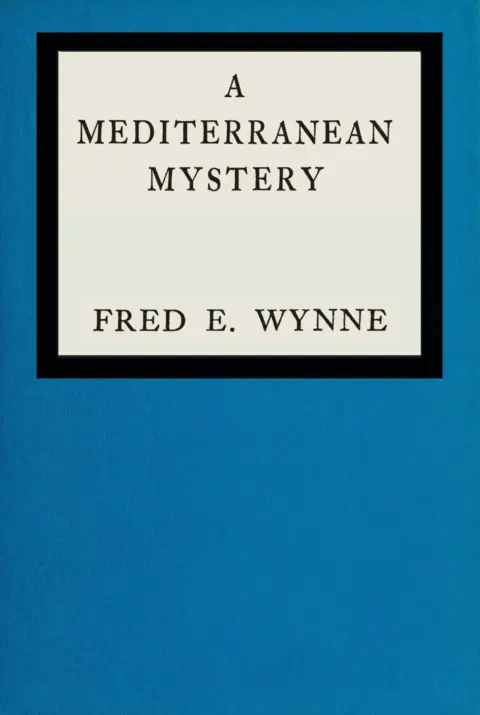
"A Mediterranean Mystery" by Fred E. Wynne is a novel written in the early 20th century. The narrative begins with the protagonist, a middle-aged parson named Davoren, leading a comfortable yet routine life at his Sussex vicarage, which is soon disrupted by an unexpected telegram from his adventurous younger brother, Edmund. The plot seems to weave together elements of family dynamics, adventure, and the exploration of personal aspirations as the two brothers navigate their contrasting lives. The opening of this novel introduces us to the main character, Davoren, who is characterized by his scholarly tendencies and a quiet life, interspersed with his hobby of breeding homing pigeons. His tranquil existence is interrupted by the arrival of a telegram announcing the return of his brother, Edmund, who has a reputation for mischief and a tendency to live life on the edge. Davoren reflects on his family background and his complicated feelings towards Edmund, revealing a blend of concern, frustration, and familial affection. As the brothers reunite, they discuss Edmund’s recent escapades at sea and his partnership with a character named Captain Welfare, hinting at an adventure that intertwines with endearing moments and family tensions, setting the stage for the unfolding mystery.
Introduction adapted from the source catalogue; source summaries may be automatically generated.
Free to read · English · 86,430 words · No account needed
MAKE TIME FOR A GOOD BOOK
On by default. Untick to stop anonymous reading totals. Each page counts after 10 seconds in view. How this works.
Anonymous counting is on unless you have switched it off.
There was a sudden hardening of his face, and I remembered Edmund saying, “Van Ermengen knows all about the consignment.” I was certain now that he did know all, that he was “in the trade.” It was evident too that he had assumed--how rightly!--that I knew nothing.
“But it is impossible,” he said; “they will be called for this
afternoon.”
“Who says so?”
“Your dragoman told me.” He sucked in his lips with annoyance at being forced to this admission.
“My dragoman takes my orders.”
“He referred to your partners,” said Van Ermengen with a touch of
insolence.
“I am waiting for my partners.”
Now that I had started, it seemed much easier than I had expected to assert myself. I had feared Van Ermengen. Now I saw that he began to fear me. I saw too that he was utterly puzzled by my demeanour.
“But your bedroom, sir? It is impossible. It will take a couple of
Arabs all morning.”
“I will pay them.”
“If you will come, I will show you where your cases are. They are quite
safe.”
“I want them in my bedroom.”
“But think of the weight! They are too heavy for the floor.”
“If that’s so, I will ask the English Consulate to take charge of them. Will you be good enough to ring them up?”
He darted at me the malevolent glance of a beaten man, and gave some orders in Arabic to a porter.
“I will have my breakfast in my room, if you please, so that I may
count the packages.”
He bowed, and we parted.
In spite of the misery that still afflicted my soul, I had a new feeling of self-esteem as I regained my room. I had come well out of this encounter, and felt I could depend on myself in the struggle that must lie before me.
Before I had finished my breakfast Jakoub was shown in, polite as ever.
“You have slept well, effendi? You seem no longer fatigued?”
“I’m quite well, thank you.”
“The praise to Allah. You would have the packing-cases up here,
effendi?”
I nodded.
“But it is against the orders of the Captain and the other effendi. Nasr Hussein calls for them to-day. I must obey my orders, effendi.”
“You must obey my orders.”
“It is not in my agreement. It is impossible, this.”
He was evidently prepared to defy my authority.
I stood up and looked at him.
“Jakoub, if those cases are not all here in one hour, I shall send for the police to take charge of them.”
Your reading position is saved on this browser. Take it to another device with a library code. Reading pages adapt to text, rather than matching a printed edition.
BEHIND THE BOOK
This eBook is for the use of anyone anywhere in the United States and most other parts of the world at no cost and with almost no restrictions whatsoever. You may copy it, give it away or re-use it under the terms of the Project Gutenberg License included with this eBook or online at www.gutenberg.org. If you are not located in the United States, you will have to check the laws of the country where you are located before using this eBook. Read the source licence.
The original source file, including credits and licence, is retained by this library. Request an original-format copy at no charge. Please include the book title and Project Gutenberg identifier #74400.
KEEP YOUR CURIOSITY GOING
Coulson Kernahan

Maurice Baring
Frances Wright
Cécile Tormay

Frederic Jesup Stimson

W. H. P. (William Henry Pope) Jarvis