THE CLASSIC COLLECTION✦Ambrose Gwinett; or, a sea-side story: a melo-drama, in three actsCLASSIC FREE BOOKS
Ambrose Gwinett; or, a sea-side story: a melo-drama, in three acts
Douglas William Jerrold
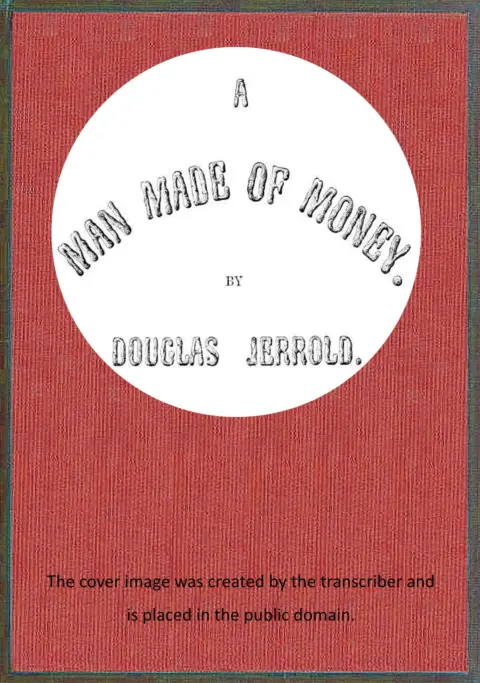
THE CLASSIC COLLECTION · 1849
"A Man Made of Money" by Douglas William Jerrold is a comedic novel written in the mid-19th century. The story centers around Solomon Jericho, a man trapped in financial troubles and marital discontent, as he grapples with the relentless demands of his wife, Mrs. Jericho, for money amidst their mounting debts. The book explores themes of social status, the burdens of marriage, and the absurdities of self-deception in the pursuit of a wealthier appearance. At the start of the narrative, the tension between Mr. and Mrs. Jericho is palpable as the latter demands money from her husband. The story unfolds with humorous exchanges between the couple, revealing Mr. Jericho's struggles with financial insecurity and his attempts to maintain a façade of wealth. As Mr. Jericho contemplates his predicament, he envisions his responsibilities pulling him in different directions, leading to conflicts that highlight the couple's complex relationship. The opening sets the stage for a domestic comedy rife with misunderstandings, financial dilemmas, and the clash between appearance and reality.
Introduction adapted from the source catalogue; source summaries may be automatically generated.
Free to read · English · 100,115 words · No account needed
MAKE TIME FOR A GOOD BOOK
On by default. Untick to stop anonymous reading totals. Each page counts after 10 seconds in view. How this works.
Anonymous counting is on unless you have switched it off.
A very few weeks ago, and had Sir Arthur Hodmadod, Bart., dropt a single syllable to Jericho, he would have treasured it even as a syllable of the girl, whose biggest words were the largest jewels. And now, in contemptuous silence, he looked upon the baronet with a grim, sharp face; keen, inexorable; the aspect of an axe. Possibly, the imaginative baronet regarded it as such; for he seemed irrepressibly to pass his hand round the back of his neck; at the same time urging on his steed, as though pricked by sudden peril.
“Why, my dear Jericho,” said Sabilla, “what a love you had for the
country.”
“I’ve grown out of green food, madam; can’t abide it,” said Jericho.
“Never tell me, Solomon, I know you love it still. And how delicious, after your work in the Commons—how delicious when you can, to come to such a place as this. A place that must give you new strength, new ideas, new freshness,” said Mrs. Jericho. “Every man with such an amount of national work must be the better for the country.”
“It’s like going to grass, you know,” said Hodmadod, again dropping
back.
“Quite,” said Candituft. “The country is the natural abode of man. Nothing like the fruits of rustic thought. Give me an Act of Parliament that smells of the green earth.”
“Delicious,” said Hodmadod. “An Act of Parliament that smells like a nosegay. When I say a nosegay, of course I mean, smells of the landed interest. Nothing like the country for a statute. Without the country, you know, we should have no laws against poachers. Should we?” There was no spoken answer; none: but Agatha always eloquently replied, for she always smiled.
“Certainly the loveliest village, I ever saw,” cried Mrs. Jericho as the carriage—according to orders—rolled slowly through a double line of cottages. “Delightful, is it not? The first time I saw it, I thought to myself,—well, here I could gather myself up to repose for life.”
“Like a cat on a cushion,” cried the too impulsive Hodmadod. Instantly, he felt his face shot clean through by the eye-balls of Mrs. Jericho. Whereupon, he stammered,—“When I say a cat on a cushion, I mean of course a lady—a lady in her own house, you know.”
“My dear Jericho,” said the wife to the dullard made of money, “you don’t seem to recollect where you are.”
“Where?” asked Jericho, holding his cheek on edge. “Where?”
“Why, at Marigolds. Don’t you remember those cottages, where the children stood, and where”—
Your reading position is saved on this browser. Take it to another device with a library code. Reading pages adapt to text, rather than matching a printed edition.
Douglas William Jerrold
Douglas William Jerrold
BEHIND THE BOOK
This eBook is for the use of anyone anywhere in the United States and most other parts of the world at no cost and with almost no restrictions whatsoever. You may copy it, give it away or re-use it under the terms of the Project Gutenberg License included with this eBook or online at www.gutenberg.org. If you are not located in the United States, you will have to check the laws of the country where you are located before using this eBook. Read the source licence.
The original source file, including credits and licence, is retained by this library. Request an original-format copy at no charge. Please include the book title and Project Gutenberg identifier #70481.
KEEP YOUR CURIOSITY GOING
Coulson Kernahan

Maurice Baring
Frances Wright
Cécile Tormay

Frederic Jesup Stimson

W. H. P. (William Henry Pope) Jarvis