THE CLASSIC COLLECTION✦Ambrose Gwinett; or, a sea-side story: a melo-drama, in three actsCLASSIC FREE BOOKS
Ambrose Gwinett; or, a sea-side story: a melo-drama, in three acts
Douglas William Jerrold
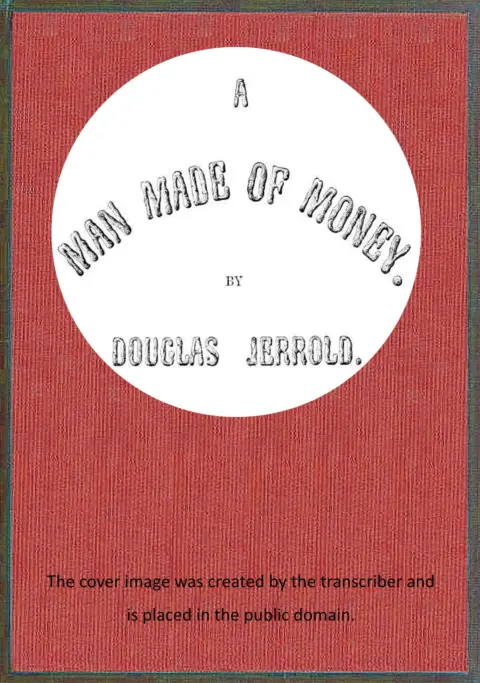
THE CLASSIC COLLECTION · 1849
"A Man Made of Money" by Douglas William Jerrold is a comedic novel written in the mid-19th century. The story centers around Solomon Jericho, a man trapped in financial troubles and marital discontent, as he grapples with the relentless demands of his wife, Mrs. Jericho, for money amidst their mounting debts. The book explores themes of social status, the burdens of marriage, and the absurdities of self-deception in the pursuit of a wealthier appearance. At the start of the narrative, the tension between Mr. and Mrs. Jericho is palpable as the latter demands money from her husband. The story unfolds with humorous exchanges between the couple, revealing Mr. Jericho's struggles with financial insecurity and his attempts to maintain a façade of wealth. As Mr. Jericho contemplates his predicament, he envisions his responsibilities pulling him in different directions, leading to conflicts that highlight the couple's complex relationship. The opening sets the stage for a domestic comedy rife with misunderstandings, financial dilemmas, and the clash between appearance and reality.
Introduction adapted from the source catalogue; source summaries may be automatically generated.
Free to read · English · 100,115 words · No account needed
MAKE TIME FOR A GOOD BOOK
On by default. Untick to stop anonymous reading totals. Each page counts after 10 seconds in view. How this works.
Anonymous counting is on unless you have switched it off.
As St. Shekels clock struck twelve, the bridegroom awoke. Heavily yawning, he called for Atkins. The faithful creature, hovering about the door, immediately entered the room. “Atkins, what’s o’clock?” demanded Hodmadod.
Atkins, afraid to give a direct reply, said, “Clock, sir? ha, sir!
don’t you know?”
“How the devil should I know?” asked Hodmadod, still yawning, and then stretching himself, and rolling backwards and forwards, half stupified by sleep. “What’s o’clock?”
“Why, sir”—Atkins was afraid to speak—“why, sir, it’s past twelve
o’clock.”
“Past twelve, eh? Past twelve,” grumbled Hodmadod, very drowsily.
“Do you recollect, sir,” and Atkins timidly approached the subject—“do you at all recollect, sir, anything you had to do this morning?”
“Humph!” grunted Hodmadod, with half-closed eyes.
Hereupon Atkins took up the bridal waistcoat, and shaking it—quite as if he meant nothing—and smoothing it in the face of Hodmadod, repeated the question. The bridegroom’s eyes gradually fixed themselves upon the snowy garment: light and with it consciousness gleamed within them. Suddenly, Hodmadod sat bolt upright in bed, and violently and rapidly exclaimed—“Atkins, tell me, Atkins! Wasn’t I to be married this morning?”
“This looks a little like it, sir,” said Atkins, at arm’s length
exhibiting the waistcoat.
Then Hodmadod, with a groan, fell back in his bed, and cried—“Atkins, Stubbs has poisoned me; when I say poisoned me”—
“My dear fellow,” exclaimed Candituft, bursting into the room; “how delighted am I at last to find you! What is the matter? Poison! Attempted suicide? No doubt, to avoid this marriage. I always thought your heart was not in it. But wherefore poison?”
“When I say poison, I mean—look there”—and Hodmadod pointed to the phial. “Stubbs prescribed it; two doses, one at night, one in the morning. Thought it quite the same to take ’em both at once—they were only to strengthen my nerves, and they’ve”—
“I see; a narcotic. A double dose has been a tremendous sleeping-draught,” said Candituft. “My dear friend—’tis a mercy you ever woke again. I have only just left the Jerichos.”
“There’s no time to lose,” cried Hodmadod; “I feel dreadfully stupid with the physic; when I say stupid, I mean I’ll be up, dressed, and ready for church directly.”
“Too late, my dear boy,” said Candituft with touching solemnity. “I came before to seek you—but your valet”—
“Acted according to orders, sir,” said Atkins. “Sir Arthur knows that. He must clear me,” and assured of this, Atkins, with the fullest self-satisfaction, left the room.
“Too late! How do you mean too late?” cried Hodmadod. “Never too late
to marry.”
Your reading position is saved on this browser. Take it to another device with a library code. Reading pages adapt to text, rather than matching a printed edition.
Douglas William Jerrold
Douglas William Jerrold
BEHIND THE BOOK
This eBook is for the use of anyone anywhere in the United States and most other parts of the world at no cost and with almost no restrictions whatsoever. You may copy it, give it away or re-use it under the terms of the Project Gutenberg License included with this eBook or online at www.gutenberg.org. If you are not located in the United States, you will have to check the laws of the country where you are located before using this eBook. Read the source licence.
The original source file, including credits and licence, is retained by this library. Request an original-format copy at no charge. Please include the book title and Project Gutenberg identifier #70481.
KEEP YOUR CURIOSITY GOING
Coulson Kernahan

Maurice Baring
Frances Wright
Cécile Tormay

Frederic Jesup Stimson

W. H. P. (William Henry Pope) Jarvis