THE CLASSIC COLLECTION✦Ambrose Gwinett; or, a sea-side story: a melo-drama, in three actsCLASSIC FREE BOOKS
Ambrose Gwinett; or, a sea-side story: a melo-drama, in three acts
Douglas William Jerrold
THE CLASSIC COLLECTION · 1849
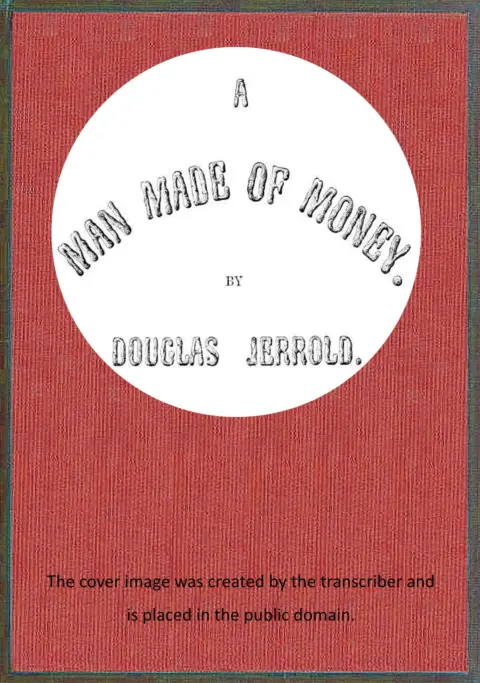
"A Man Made of Money" by Douglas William Jerrold is a comedic novel written in the mid-19th century. The story centers around Solomon Jericho, a man trapped in financial troubles and marital discontent, as he grapples with the relentless demands of his wife, Mrs. Jericho, for money amidst their mounting debts. The book explores themes of social status, the burdens of marriage, and the absurdities of self-deception in the pursuit of a wealthier appearance. At the start of the narrative, the tension between Mr. and Mrs. Jericho is palpable as the latter demands money from her husband. The story unfolds with humorous exchanges between the couple, revealing Mr. Jericho's struggles with financial insecurity and his attempts to maintain a façade of wealth. As Mr. Jericho contemplates his predicament, he envisions his responsibilities pulling him in different directions, leading to conflicts that highlight the couple's complex relationship. The opening sets the stage for a domestic comedy rife with misunderstandings, financial dilemmas, and the clash between appearance and reality.
Introduction adapted from the source catalogue; source summaries may be automatically generated.
Free to read · English · 100,115 words · No account needed
MAKE TIME FOR A GOOD BOOK
On by default. Untick to stop anonymous reading totals. Each page counts after 10 seconds in view. How this works.
Anonymous counting is on unless you have switched it off.
“Basil, really, my dear Basil, I cannot listen: whatever Mr. Jericho’s faults may be, if I can endure them—if I can be silent—at least I may expect my children”—
“Not at all, my dear lady, not at all. Your children never said a word to the bargain. They only looked on while you were sold. They have all the freedom of English subjects, and may abuse your husband ad libitum. I do nothing rashly, dear madam; I’ve inquired into the law, and I know it. My allegiance, my dear lady, is due to my own buried father; and as I’m told, he was a gentleman”—
“Basil, don’t—pray don’t! You bring him up before me. Ha! Basil, your father was a man.”
“No doubt of it, my dear lady; no doubt of it, my revered mother;” and the young gentleman, with really a touch of grace, bent his head, and raised his mother’s hand to his lips. “Would shoot the fellow, my dear lady, who doubted it. Well, why did you hook-and-eye yourself to the individual up stairs? Why were you induced to drop upon the golden name of Pennibacker the tin extinguisher of Jericho? As Hamlet somewhere says, why did you leave that Primrose Hill of clover, to go to grass on Wormwood Scrubs?”
“I entreat you, Basil—I supplicate, my dearest boy, that you desist!
You”—
“All right, my dear lady, all right, and got the receipt. What I meant to say was this. You sacrificed yourself for the good of your family?” And Basil Pennibacker, with wrinkled forehead, looked inquiringly about, gesticulating as though chewing his emotion. “Didn’t you?”
“I did, Basil, I did; but don’t grieve for that—I can be resigned; I have been resigned.”
“Like a tame lamb,” said Basil, bursting into metaphor, “like a tame lamb you wreathed your brow with orange flowers, and in the very handsomest manner gave yourself away. Can I forget it? Ought I to forget it? Ought my sisters to forget it? Never. You married our destroyer-in-law—pardon my feelings, my dear madam; as your dutiful son I must call him so: you married our cannibal-in-law, to make the fortunes of your innocent orphans? Did you not?”
“I did, Basil,” said Mrs. Jericho, and she shuddered. “Your father
knows I did.”
“In which case, madam, as one of those orphans, it is my first duty to take care that your intentions are honourably carried out. Now, madam, can I see Mr. Jericho?”
“My dear child,” said Mrs. Jericho, “he is not yet up.”
Your reading position is saved on this browser. Take it to another device with a library code. Reading pages adapt to text, rather than matching a printed edition.
Douglas William Jerrold
Douglas William Jerrold
BEHIND THE BOOK
This eBook is for the use of anyone anywhere in the United States and most other parts of the world at no cost and with almost no restrictions whatsoever. You may copy it, give it away or re-use it under the terms of the Project Gutenberg License included with this eBook or online at www.gutenberg.org. If you are not located in the United States, you will have to check the laws of the country where you are located before using this eBook. Read the source licence.
The original source file, including credits and licence, is retained by this library. Request an original-format copy at no charge. Please include the book title and Project Gutenberg identifier #70481.
KEEP YOUR CURIOSITY GOING
Coulson Kernahan

Maurice Baring
Frances Wright
Cécile Tormay

Frederic Jesup Stimson

W. H. P. (William Henry Pope) Jarvis