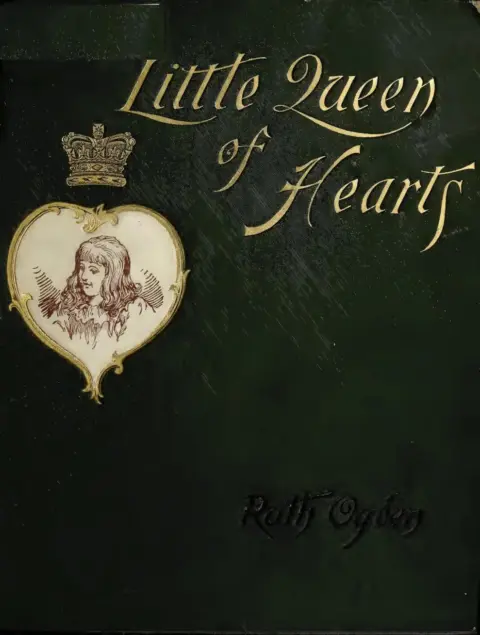
A Little Queen of Hearts: An International Story
Ruth Ogden
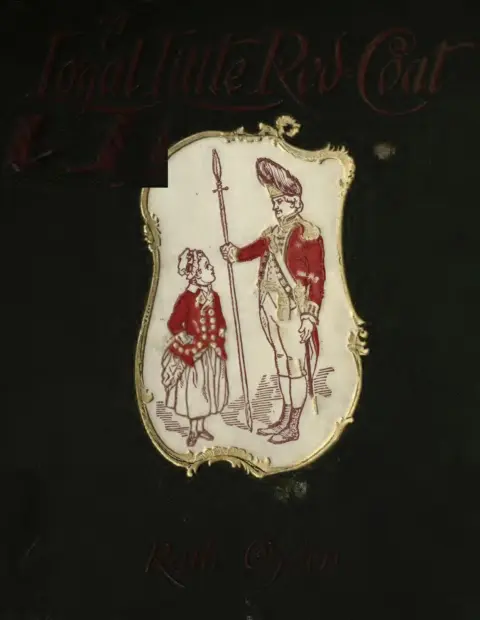
THE CLASSIC COLLECTION · 1890
"A Loyal Little Red-Coat: A Story of Child-life in New York a Hundred Years Ago" by Ruth Ogden is a historical novel written in the late 19th century. The story is set in the backdrop of the American Revolutionary War, focusing on the experiences of a young girl named Hazel Boniface, a Loyalist growing up in New York City during this tumultuous time. The narrative explores her interactions with various characters, including her friendship with Job Ainsworth, a Whig, highlighting the conflicts and camaraderie between those on opposing sides of the political spectrum. The opening of the book introduces Hazel Boniface, born into a Loyalist family, and illustrates her young life against the backdrop of a shifting political landscape in 1783 New York. Hazel is depicted watching boys skating and playing during a winter outing with her father, and soon her thoughts turn to her friend Job, with whom she has a burgeoning friendship despite their differing loyalties. The chapter establishes her deep concern for her friends' rights, particularly her worries about the treatment of a family displaced by British soldiers, and sets the stage for Hazel’s determination to advocate for justice while navigating the complexities of childhood friendships amidst the Revolutionary War's end.
Introduction adapted from the source catalogue; source summaries may be automatically generated.
Free to read · English · 65,375 words · No account needed
MAKE TIME FOR A GOOD BOOK
On by default. Untick to stop anonymous reading totals. Each page counts after 10 seconds in view. How this works.
Anonymous counting is on unless you have switched it off.
But Colonel Hamilton was high spirited too, and was on his feet in a moment. “It was not my intention to offer either sympathy or apologies. I bid you good-evening, Miss Avery.”
But Aunt Frances said quickly, “In that case I should prefer you to remain, Colonel Hamilton.”
“Thank you,” and the Colonel, with no little dignity, resumed his seat, while Aunt Frances condescended to add:
“I did not mean to be rude, but I wished you to understand my position.”
“It was because I wished you to understand mine that I sought this interview, Miss Avery; but I see I have need to be very careful as to my choice of words.”
Aunt Frances smiled, as much as to say, “Quite right, Colonel Hamilton.”
“I hope you realize,” he said, “that my argument in Captain Wadsworth's case was founded on the most sincere convictions;” and the Colonel half betrayed the admiration which Aunt Frances somehow inspired in him, notwithstanding her high-spiritedness.
“I never questioned that, Colonel Hamilton.”
“So I felt I had reason to believe, when I found you had urged your nephew to make application for the vacancy in my office.”
“Why, I told Harry it was hardly necessary to volunteer the fact of our relationship,” said Aunt Frances, with unconcealed surprise.
“He evidently did not agree with you then, for he had been with me scarce twenty-four hours before he told me he was your nephew. I suppose you thought, if I knew it, that it might count against him; on the contrary, let me assure you it has helped him. It is no light thing, Miss Avery, to have done any one an injury, whether from conscientious motives or not; and I shall welcome every chance to atone for it that comes within my power. I can imagine, in part at least, what it must mean to be banished from the home of a life-time under any circumstances, and especially when you feel that you have still a perfect right to be there.”
This looked a little like sympathy on the Colonel's part, but it was too kindly meant to be rejected. They were treading, however, dangerously near the region of Aunt Frances's proud sensitiveness, so she changed the direction somewhat by asking, “But Harry is able to rise on his own merits, is he not, Colonel Hamilton?”
“Abundantly; that was one thing I desired to tell you. He has unusual capacity, and is remarkably efficient. I think his future assured. As for me, it is a great satisfaction to know you do not question my sincerity. And now, Miss Avery, I will not detain you longer, and will say good-evening.”
“Good-evening, Colonel Hamilton.”
Your reading position is saved on this browser. Take it to another device with a library code. Reading pages adapt to text, rather than matching a printed edition.
Ruth Ogden
Ruth Ogden
Ruth Ogden
Ruth Ogden
BEHIND THE BOOK
This eBook is for the use of anyone anywhere in the United States and most other parts of the world at no cost and with almost no restrictions whatsoever. You may copy it, give it away or re-use it under the terms of the Project Gutenberg License included with this eBook or online at www.gutenberg.org. If you are not located in the United States, you will have to check the laws of the country where you are located before using this eBook. Read the source licence.
The original source file, including credits and licence, is retained by this library. Request an original-format copy at no charge. Please include the book title and Project Gutenberg identifier #54132.
KEEP YOUR CURIOSITY GOING
Wilfrid Scawen Blunt
Wilfrid Scawen Blunt

E. W. (Edgar Watson) Howe
Cécile Tormay

Moritz Busch
Coulson Kernahan