A Little Queen of Hearts: An International Story
Ruth Ogden
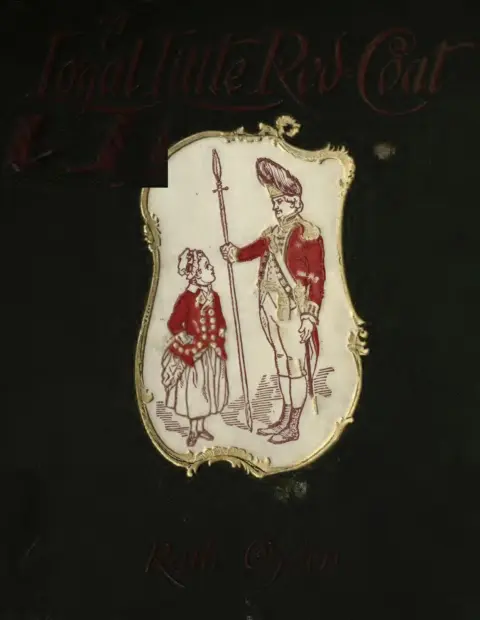
THE CLASSIC COLLECTION · 1890
"A Loyal Little Red-Coat: A Story of Child-life in New York a Hundred Years Ago" by Ruth Ogden is a historical novel written in the late 19th century. The story is set in the backdrop of the American Revolutionary War, focusing on the experiences of a young girl named Hazel Boniface, a Loyalist growing up in New York City during this tumultuous time. The narrative explores her interactions with various characters, including her friendship with Job Ainsworth, a Whig, highlighting the conflicts and camaraderie between those on opposing sides of the political spectrum. The opening of the book introduces Hazel Boniface, born into a Loyalist family, and illustrates her young life against the backdrop of a shifting political landscape in 1783 New York. Hazel is depicted watching boys skating and playing during a winter outing with her father, and soon her thoughts turn to her friend Job, with whom she has a burgeoning friendship despite their differing loyalties. The chapter establishes her deep concern for her friends' rights, particularly her worries about the treatment of a family displaced by British soldiers, and sets the stage for Hazel’s determination to advocate for justice while navigating the complexities of childhood friendships amidst the Revolutionary War's end.
Introduction adapted from the source catalogue; source summaries may be automatically generated.
Free to read · English · 65,375 words · No account needed
MAKE TIME FOR A GOOD BOOK
On by default. Untick to stop anonymous reading totals. Each page counts after 10 seconds in view. How this works.
Anonymous counting is on unless you have switched it off.
“Yes, it must be very humiliating to say the least; but then they have brought it upon themselves, you must remember,” for Mrs. Rainsford was herself a most ardent Whig, and thought the Loyalists, whether English or American, should be made to pay very dearly for their behavior.
“You ought to have seen your garden this summer, Miss Avery,” continued Mrs. Rainsford, reverting to their former subject. “Captain Wadsworth must be very fond of flowers. He took the best of care of it.”
“I think I could not have borne to see it, Mrs. Rainsford.”
“No, perhaps not, dear child; and to think that you really have Alexander Hamilton to thank for it all. You must hate him. He is here to-night, you know, with his young wife. I don't wonder she turned the heads of the officers at Morristown. You know she went to visit her aunt while Washington had his headquarters there, and Hamilton was his aide-de-camp, and fell in--”
“Sh--” interrupted Aunt Frances, who saw that Colonel Hamilton was not very far off, and might easily overhear what they were saying; and, indeed, he was not far off, for the very good reason that, in the company of his friend, Major Potter, every step was bringing him nearer.
Imagine, if you can, Aunt Frances's surprise when Major Potter, whom she knew quite well, paused before her, and bowing low, with old-time grace and courtliness, said slowly, “May I take the liberty, Miss Avery, of presenting my friend, Colonel Hamilton?”
Aunt Frances was, of course, greatly confused, though too much of a lady to betray it; but Mrs. Rainsford, astonished beyond measure, and not always at her ease, was quite glad to slip away from an interview that promised to be, to say the least, embarrassing.
Colonel Hamilton took the seat she left vacant. “I begged the favor of an introduction, Miss Avery, and am very glad to meet you,” he said, politely.
“I must not doubt your sincerity, Colonel Hamilton,” Aunt Frances replied with no little dignity, “but perhaps you do not recognize in me the Miss Avery whom you lately defeated in the courts.”
“On the contrary,” replied the Colonel with a deferential air, for Aunt Frances was by many years his senior, “that is the very reason why I wished to meet you. I feel myself to have been the cause--”
“Excuse me, Colonel Hamilton, but I desire neither apologies nor sympathy.” For with all her sweetness, Aunt Frances was high spirited; she thought the Colonel's manner was a little patronizing.
Your reading position is saved on this browser. Take it to another device with a library code. Reading pages adapt to text, rather than matching a printed edition.
Ruth Ogden
Ruth Ogden
Ruth Ogden
Ruth Ogden
BEHIND THE BOOK
This eBook is for the use of anyone anywhere in the United States and most other parts of the world at no cost and with almost no restrictions whatsoever. You may copy it, give it away or re-use it under the terms of the Project Gutenberg License included with this eBook or online at www.gutenberg.org. If you are not located in the United States, you will have to check the laws of the country where you are located before using this eBook. Read the source licence.
The original source file, including credits and licence, is retained by this library. Request an original-format copy at no charge. Please include the book title and Project Gutenberg identifier #54132.
KEEP YOUR CURIOSITY GOING
Wilfrid Scawen Blunt
Wilfrid Scawen Blunt

E. W. (Edgar Watson) Howe
Cécile Tormay

Moritz Busch
Coulson Kernahan