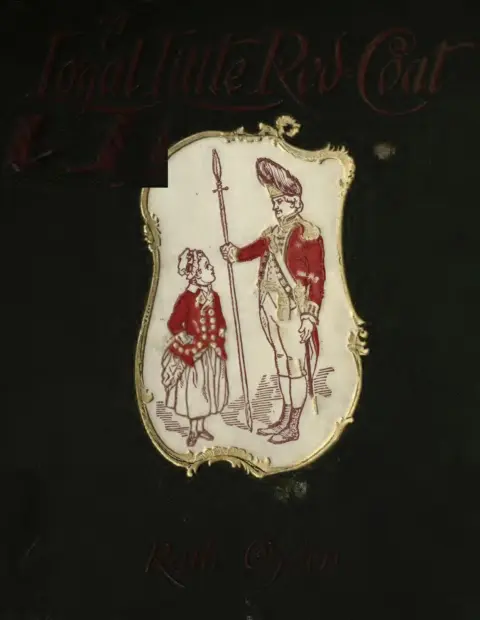
A Loyal Little Red-Coat: A Story of Child-life in New York a Hundred Years Ago
Ruth Ogden
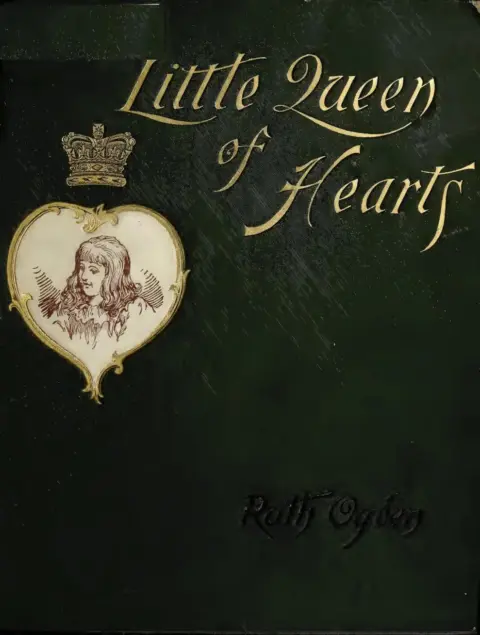
THE CLASSIC COLLECTION · 1893
"A Little Queen of Hearts: An International Story" by Ruth Ogden is a novel written in the late 19th century. The story follows the adventures of a young girl named Marie-Celeste as she navigates new relationships and experiences during her summer in Windsor, England. The narrative explores themes of friendship, family, and the contrast of social statuses, primarily through the interactions of Marie-Celeste with her English cousin Harold and other characters she meets along the way. The opening of the novel introduces Harold, a boy grappling with feelings of loneliness and the desire for change in his life. After a heartfelt moment where he writes a letter inviting his relatives to visit, we learn about Ted, his brother, who is absorbed in his own college life. The scene shifts to Marie-Celeste, whose warmth and curiosity shine through as she eagerly awaits the arrival of new friends and experiences. The fabric of their lives begins to intertwine as they set the stage for a summer filled with discovery and personal growth. The contrasting perspectives of young Harold and the exuberant Marie-Celeste set up a rich narrative of familial bonds and youthful adventures in the chapters to follow.
Introduction adapted from the source catalogue; source summaries may be automatically generated.
Free to read · English · 73,082 words · No account needed
MAKE TIME FOR A GOOD BOOK
On by default. Untick to stop anonymous reading totals. Each page counts after 10 seconds in view. How this works.
Anonymous counting is on unless you have switched it off.
The old belfry clock was striking eight as Harold and Marie-Celeste put in an appearance at the lodgings where the little party were staying in Oxford, and of course there was a great deal to be told; but alas! too, for Marie-Celeste so much that must not be told, under any circumstances. If you think it easy to be sole possessor of a piece of news that would rejoice the hearts of your nearest and dearest, and yet for extreme precaution's sake have given your promise on no account to divulge it, why then all that can be said is that you were never in Marie-Celeste's shoes. If it had been an uncomfortable piece of news it would have been vastly easier. There ought to be no pleasure at all in conveying bad news to people, though here and there, it must be confessed, one sometimes meets individuals who seem to rejoice in any news whatsoever, and the more startling and surprising the better.
But Marie-Celeste succeeded in getting through the first few hours without telling: the two hours with Harold on the train, a very trying half hour when she was all alone with her mother, and another trying half hour the next morning, when she was sitting in the breakfast-room with Dorothy; and after that the worst was over, so many delightful things came along to claim everyone's thought and attention. And one of the most delightful things of all--at least in the children's estimation--came with that Sunday afternoon in Oxford, and Dorothy was the one to be thanked for it.
It seemed that in one of the colleges somebody lived who Marie-Celeste would have given more to see, next to the Queen (and, as you know, she had seen her without the asking), than any one else in England, and that was the man who calls himself Lewis Carroll, and who has written those incomparable books, “Through the Looking-Glass” and “Alice in Wonderland.” If it is possible that any little friend of these stories of mine has never happened to have read them, then let me urge you at once to give Aunt Bess or Uncle Jack no rest till both are in your keeping, with your name written very legibly across the fly-leaf of each, so that you can keep them for your very own till you've no more use for any books whatsoever. And while you are about it, why not put in a plea for Kingsley's “Water Babies,” too, which is of the same beautiful dreamland type; and please do not think for a moment that you are too old for any of the three. Why, some one I know, who is well on to forty, just revels in those same three books, and, for that matter, there are some things in them that you cannot fully take in even then. And in this connection perhaps it is fair to tell you, in case you do not happen to know it already, that it is twenty years and more since these books were written; but then of course you are sensible enough to see that that is ever so much more to their credit. Indeed, it was just because they were written so long ago that the visit of which I am about to tell you came to pass. Twenty years before Dorothy's father had been rector of a church there in Oxford, and though Dorothy was only two years old at that time, and her brother Harry but a year and a half older, they had been great pets, babies though they were, with the author of “Wonderland” and “Through the Looking-Glass,” and Mr. Dodgson--for that is Lewis Carroll's real name--had been in and out of Canon Allyn's house almost every day in the week. And what was true of Canon Allyn's house was true of many another house in Oxford where there were children; and so you see it was because of this old-time intimacy with Lewis Carroll that Dorothy had made bold to write and ask if she might bring Harold and Marie-Celeste to call upon him. But for some reason or other Mr. Dodgson no longer cares to see as much of the little people as formerly; in fact, he rather runs away from them when they seek him out; and when he received Dorothy's letter, what did he do but write her that he was very sorry to say that he would not be at home on the afternoon in question, but that if it would be any pleasure to her little friends to see his rooms, she might bring them there and welcome, and that he would leave some old photographs that he thought would interest them ready to her hand in a portfolio on the writing-table.
Your reading position is saved on this browser. Take it to another device with a library code. Reading pages adapt to text, rather than matching a printed edition.
Ruth Ogden
Ruth Ogden
Ruth Ogden
Ruth Ogden
BEHIND THE BOOK
This eBook is for the use of anyone anywhere in the United States and most other parts of the world at no cost and with almost no restrictions whatsoever. You may copy it, give it away or re-use it under the terms of the Project Gutenberg License included with this eBook or online at www.gutenberg.org. If you are not located in the United States, you will have to check the laws of the country where you are located before using this eBook. Read the source licence.
The original source file, including credits and licence, is retained by this library. Request an original-format copy at no charge. Please include the book title and Project Gutenberg identifier #54133.
KEEP YOUR CURIOSITY GOING
Wilfrid Scawen Blunt
Wilfrid Scawen Blunt

E. W. (Edgar Watson) Howe
Coulson Kernahan

Maurice Baring
Frances Wright