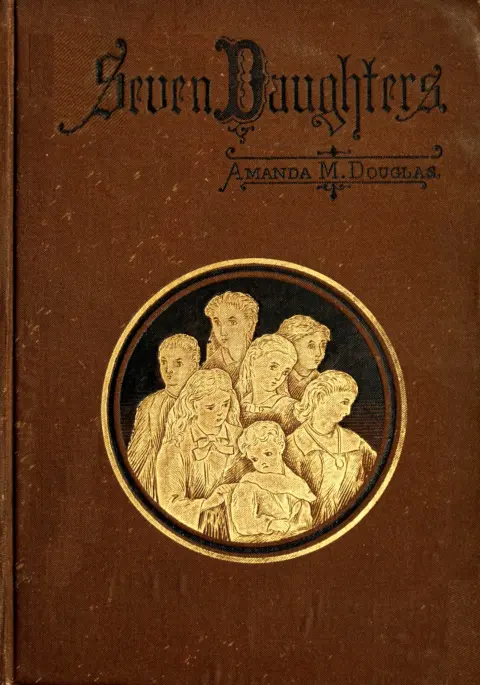
Seven daughters
Amanda M. Douglas
THE CLASSIC COLLECTION · 1909
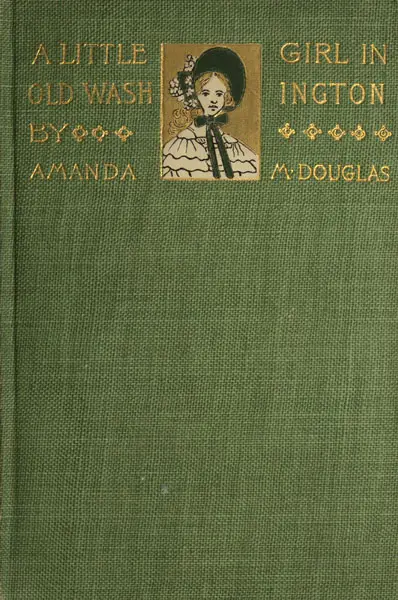
"A Little Girl in Old Pittsburg" by Amanda M. Douglas is a historical novel written in the early 20th century. The book follows the life of a young girl named Daffodil as she navigates her childhood in early Pittsburgh, experiencing the aftermath of the American Revolutionary War. With her family and various neighbors, Daffodil encounters joy, uncertainty, and the complexities of growing up in a community shaped by diverse backgrounds and the remnants of conflict. At the start of the narrative, we are introduced to Daffodil, her grandfather, and the local townspeople amid the excitement of news concerning Lord Cornwallis's surrender. The community buzzes with the implications of the war's end, igniting hope and conversation amongst the residents, who include various ethnic groups such as the Irish and French. Daffodil’s inquisitive nature shines through as her mother and grandfather discuss their lives, her father’s absence due to the war, and the changes in Pittsburgh's landscape. These early interactions lay the groundwork for Daffodil's development, as she grapples with her father's return and the dynamics of familial love in a time of great social and personal upheaval.
Introduction adapted from the source catalogue; source summaries may be automatically generated.
Free to read · English · 79,745 words · No account needed
MAKE TIME FOR A GOOD BOOK
On by default. Untick to stop anonymous reading totals. Each page counts after 10 seconds in view. How this works.
Anonymous counting is on unless you have switched it off.
The summer passed rapidly. Daffodil found many things to entertain her, but grandfather demanded much of her time. He took his morning walk with her hand in his, but he did not go as far as formerly. Then, on his return, he had a nap in his chair. He lost his appetite during the latter part of the season. In the afternoon he took a long nap. Daffodil read to him now, and he did not appear to notice her blunders.
"Father fails rapidly, I think," Mrs. Bradin said to her husband.
He shook his head with a slow, sympathetic movement.
"We shall miss him very much. And Dilly will feel it. I am sorry to have her know the mystery no child can understand."
"We won't go for a walk this morning, Dilly," he said one day in later August. "The air is very close. We will wait until evening."
"But you go to bed so early."
"Yes, I'm getting old," with his faint, sweet smile.
"But everybody says you must live to be a hundred. That's a whole
century."
"Sometimes I feel as if it were two centuries since I began. But it has been a pleasant journey toward the last. I'm glad to have had you, Dilly."
"I'm glad, too," the child said with her bright smile.
"Now you may sing to me a little."
So she sang him to sleep. Then she went to wait on her grandmother. Her mother was sewing by the window in their sleeping-room.
"Go and look at grandfather," she said presently.
"He is still asleep. Mother, I wish you would show me that stitch I
began yesterday."
So she sat down at her work.
Mrs. Bradin went to her father. His head had drooped a little forward. She placed her hand on his forehead, and drew a long quivering breath. The summons had come, peacefully, for him.
She was still standing there when her husband entered, and at a glance he knew what had happened.
"It is best so," he said.
Barbe was startled beyond measure. Latterly her thoughts had been revolving much about herself, and though she had remarked the slow alteration, she had put off the assumption of the great change. Somewhere in the winter--maybe spring, and here it was with the ripening of summer.
They carried him to his room and laid him tenderly on his bed. A long, well-used life it had been.
To Daffodil it was a profound mystery. No child could comprehend it. This was the journey grandfather had spoken of, that she had imagined going back to France.
"What is it, mother? How do people go to heaven?" she asked.
Your reading position is saved on this browser. Take it to another device with a library code. Reading pages adapt to text, rather than matching a printed edition.
Amanda M. Douglas

Amanda M. Douglas
Amanda M. Douglas

Amanda M. Douglas
BEHIND THE BOOK
This eBook is for the use of anyone anywhere in the United States and most other parts of the world at no cost and with almost no restrictions whatsoever. You may copy it, give it away or re-use it under the terms of the Project Gutenberg License included with this eBook or online at www.gutenberg.org. If you are not located in the United States, you will have to check the laws of the country where you are located before using this eBook. Read the source licence.
The original source file, including credits and licence, is retained by this library. Request an original-format copy at no charge. Please include the book title and Project Gutenberg identifier #43769.
KEEP YOUR CURIOSITY GOING
Cécile Tormay

Moritz Busch
Coulson Kernahan
John L. Ransom

Maurice Baring
Frances Wright