READ · DISCOVER · ENJOYClassic literature · Always free
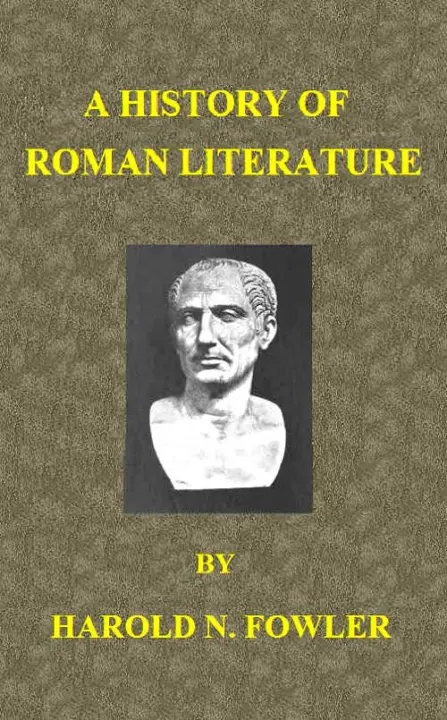
A History of Roman Literature — digital edition cover

THE CLASSIC COLLECTION · 1903

A History of Roman Literature

"A History of Roman Literature" by Harold North Fowler is a historical account written in the early 20th century. The book explores the development of Roman literature from its origins during the Republican period through various subsequent eras, detailing key authors and their contributions. It serves as both an educational text for schools and colleges and a reference work about the literary accomplishments of Rome. At the start of the book, the author outlines the significance of Roman literature, noting its roots in Greek literary traditions and its overarching political influence. Fowler discusses the practical character of Roman society, which shaped its literature to reflect political and military concerns rather than pure artistic expression. He introduces key figures, such as Livius Andronicus and Ennius, while also indicating the evolution of literary forms like tragedy and comedy in the context of Roman culture. Through these early chapters, Fowler sets the stage for a comprehensive exploration of the rich tapestry of Roman literary history.

Introduction adapted from the source catalogue; source summaries may be automatically generated.

Start reading ↓

Free to read · English · 97,375 words · No account needed

MAKE TIME FOR A GOOD BOOK

A History of Roman Literature

On by default. Untick to stop anonymous reading totals. Each page counts after 10 seconds in view. How this works.

Anonymous counting is on unless you have switched it off.

A History of Roman Literature

VARRO (MARCUS). Text. De Lingua Latina, Müller, Leipzig, 1833; Spengel, Berlin, 1885. De Re Rustica, Keil, Leipzig, 1889, Teubner series [commentary, 1891]. Fragments of Varro’s Menippean Satires are contained in Bücheler’s PETRONIUS, of the lost grammatical works in Wilmanns, De Varronis Libris Grammaticis, Berlin, 1864, Weidmann, of the Antiquitates in Merckel’s edition of OVID’S Fasti, Berlin, 1841, and poetical fragments in Fragm. Poet. Rom.

VEGETIUS RENATUS. Text. Epitoma Rei Militaris, Lang, Leipzig, 2d ed. 1885, Teubner series.

Mulomedicina. In Schneider’s Scriptores Rei Rusticae, Jena,
1794-’97.

VELLEIUS PATERCULUS. Text. Halm, Leipzig, 1876, Teubner
series.

Translation. J. S. Watson, Bohn’s and Harper’s Libraries. [SALLUST, FLORUS, and VELLEIUS PATERCULUS, with notes.]

VIRGIL. Text. Ribbeck, Leipzig, 2d ed., Teubner series.

Crit. Text. Ribbeck, Leipzig, 2d ed., Teubner. 4 vols.

Annotated editions. Conington and Nettleship, London, 1865-’71, Bell, 3 vols.; Greenough, Boston, 1895, Ginn & Co. [School editions of parts of Virgil’s works are numerous.]

Translation (verse). Dryden, in his complete works.

Æneid. Conington, London, 1870, Longmans; J. D. Long, Boston, 1879, Lockwood, Brooks & Co.

Eclogues. C. S. Calverley, in his collected works, London,
1901, Bell.

Georgics. H. W. Preston, Boston, 1881, Osgood & Co.

VITRUVIUS. Crit. Text. Rose, Leipzig, 1899, Teubner series. Translation. Gwilt, London, new ed. 1860, Weale.

VOLCACIUS SEDIGITUS. Text in Fragm. Poet. Rom.

VOPISCUS. Text in Script. Hist. Aug.

APPENDIX II

CHRONOLOGICAL TABLE

[When two dates are given they designate the birth and death of the author or authors named in the same line. The dates given opposite the names of emperors, which are printed in italics, refer, however, to their reigns, not to their lives. When one date is given it designates a time when the activity of the author or authors was probably at its height. Interrogation points denote uncertainty.]

B. C. 280. │ Appius Claudius Cæcus (orator). Before 270-about 204. │ Livius Andronicus. About 269-199. │ Gnæus Nævius. About 254-184. │ Titus Maccius Plautus. 239-169. │ Quintus Ennius. 234-149. │ Marcus Porcius Cato. About 230. │ Quintus Fabius Maximus Cunctator │ (orator). 220-about 130. │ Marcus Pacuvius. 216. │ Quintus Fabius Pictor. 211. │ Fabulæ Atellanæ introduced. 210. │ Lucius Cincius Alimentus. 206. │ Quintus Cæcilius Metellus (orator). Before 200-about 165. │ Statius Cæcilius (comic poet). 198. │ Sextus Ælius (jurist). (?)-196. │ Marcus Cornelius Cethegus (orator). About 192-152. │ Cato’s son (jurist). 191. │ Scipio Nasica (jurist). About 190-159. │ Publius Terentius Afer (Terence). 185-129. │ Scipio Africanus the younger. 183. │ Quintus Fabius Labeo (jurist). (?)-183. │ Publius Licinius Crassus (orator), │ Scipio Africanus the elder. About 180. │ Lucius Acilius (jurist). 180 (?)-126. │ Gaius Lucilius. (?)-174. │ Publius Ælius (jurist). 170-at least 100. │ Lucius Accius. 163-133. │ Tiberius Gracchus (orator). About 158-about 75. │ Publius Rutilius Rufus. 154-121. │ Gaius Gracchus (orator). About 154-after 100. │ Lucius Ælius Præconinus Stilo. About 152-87. │ Quintus Lutatius Catulus. │ About 150. │ Lucius Afranius, Titinius (comic poets), │ Publius Cornelius Scipio, Aulus │ Postumius Albinus, Gaius Acilius. 143-87. │ Marcus Antonius (orator). About 140. │ Lucius Cassius Hemina, Gaius Lælius. 140-91. │ Lucius Licinius Crassus (orator). 136. │ Lucius Furius Philus (orator and jurist). 133. │ Publius Mucius Scævola, Lucius Calpurnius │ Piso Frugi. 131. │ Publius Licinius Crassus Mucianus (jurist). About 130. │ Gaius Titius. 122. │ Gaius Fannius (orator and historian). 119-67. │ Lucius Cornelius Sisenna. 116-27. │ Marcus Terentius Varro. 114-50. │ Hortensius (orator). 109-32. │ Titus Pomponius Atticus. 106-43. │ Marcus Tullius Cicero. 105-43. │ Decimus Laberius. (?)-103. │ Turpilius (comic poet). 102 (?)-44. │ Gaius Julius Cæsar. 102-43. │ Quintus Cicero. Latter part of the │ Gnæus Matius, Lævius Melissus, Hostius, second century. │ Aulus Furius, Cœlius Antipater, Quintus │ Valerius Soranus. Before 100-after 30. │ Cornelius Nepos. About 99-55 (?). │ Titus Lucretius Carus. (?)-at least 91. │ Sempronius Asellio (historian). 95. │ Quintus Mucius Scævola (jurist). About 90. │ Lucius Pomponius, Novius (writers of │ Fabulæ Atellanæ), Volcacius Sedigitus. (?)-87 │ Gaius Julius Cæsar Strabo (tragedian). 87-47. │ Gaius Licinius Calvus. 86-35. │ Gaius Sallustius Crispus. Early in the first │ century. │ Valerius Antias, Quintus Cornificius. First half of the first │ Sueius, Gaius Helvius Cinna, Publius century. │ Valerius Cato, Gaius Memmius, Ticidas, │ Aurelius Opilius, Antonius Gnipho, │ Marcus Pompilius Andronicus, Santra, │ Servius Sulpicius Rufus. About 84-about 54. │ Gaius Valerius Catullus. (?)-at least 82. │ Quintus Claudius Quadrigarius (historian). 82-after 37. │ Varro Atacinus. 78 (?)-42. │ Marcus Junius Brutus. (?)-77 │ Titus Quinctius Atta. 70-27. │ Cornelius Gallus. 70 (?)-8. │ Gaius Mæcenas. 70-19. │ Publius Vergilius Maro (Virgil). About 70-after 16. │ Vitruvius Pollio. 67-5 A. D. │ Gaius Asinius Pollio. 65-8. │ Quintus Horatius Flaccus (Horace). About 64-about 17 A. D. │ Gaius Julius Hyginus. 64-8 A. D. Marcus │ Valerius Messalla. 63-14 A. D. │ Gaius Octavius (Cæsar Octavianus Augustus). 63-12 A. D. │ Marcus Vipsanius Agrippa. 59-17 A. D. │ Titus Livius (Livy). About 55-about 40 A. D. │ Seneca (the father). About 54-about 19. │ Albius Tibullus. About 54-about 4. │ Domitius Marsus. 52-19 A. D. │ Decimus Fenestella. About 50. │ Publilius Syrus (writer of mimes). About 50-about 15. │ Sextus Propertius. (?)-47. │ Marcus Calidius. 47-about 30 A. D. │ Decimus Valerius Maximus. (?)-45. │ Nigidius Figulus. (?)-after 44. │ Gaius Oppius. (?)-43. │ Aulus Hirtius. (?)-after 43. │ Marcus Tullius Tiro. 43-(?). │ Lygdamus. 43-17 A. D. │ Publius Ovidius Naso (Ovid). 40-33 A. D. │ Asinius Gallus. About 20. │ Pompeius Trogus. 15-19 A. D. │ Claudius Cæsar Germanicus. 14-59 A. D. │ Domitius Afer. 12. │ Gaius Valgius Rufus. Second half of the │ Sulpicia, Albinovanus Pedo, Ponticus, first century. │ Macer, Grattius, Rabirius, Cornelius │ Severus, Gaius Melissus, the Priapea, │ the Consolatio ad Liviam, Titus Labienus, │ Marcus Porcius Latro, Gaius Albucius │ Silus, Quintus Haterius, Lucius │ Junius Gallio, Arellius Fuscus, Lucius │ Cestius Pius, Marcus Antistius Labeo, │ Gaius Ateius Capito. First half of the first │ Manilius, the Ætna, Aufidius Bassus, century. │ Quintus Remmius Palæmon, Cæpio, Antonius │ Castor, Julius Atticus, Lucius │ Gracchinus, Marcus Apicius, Lucius │ Annæus Cornutus, the Sextii, Gaius │ Musonius Rufus. About 1. │ Verrius Flaccus. About 1-65. │ Lucius Annæus Seneca (the son). About 3-88. │ Asconius Pedianus. 14-37. │ Tiberius. About 15-80. │ The father of Statius. 16-59. │ Agrippina. 23-79. │ Gaius Plinius Secundus (Pliny the elder). (?)-25. │ Cremutius Cordus. 25-101. │ Silius Italicus. (?)-27. │ Votienus Montanus. 30. │ Velleius Paterculus. │ (?)-31. │ Publius Vitellius. (?)-32. │ Cassius Severus. (?)-34 │ Mamercus Scaurus. 34-62. │ Aulus Persius Flaccus (Persius). About 35-about 100. │ Marcus Fabius Quintilianus (Quintilian). About 35. │ Aulus Cornelius Celsus. 37-41. │ Caligula. 39-65. │ Marcus Annæus Lucanus (Lucan). About 40. │ Phædrus, Columella, Pomponius Mela. About 40-about 95. │ Publius Papinius Statius. About 40-about 104. │ Marcus Valerius Martialis (Martial). 41-54. │ Claudius. About 45. │ Gaius Cassius Longinus, Proculus. About 50. │ Pomponius Secundus, Quintus Curtius │ Rufus, Suetonius Paulinus. 54-68. │ Nero. About 55-about 118. │ Cornelius Tacitus. 55 (?)-about 135. │ Decimus Junius Juvenalis (Juvenal). 56 │ Marcus Valerius Probus. About 60. │ Titus Calpurnius Siculus. 61 or 62-112 or 113. │ Gaius Plinius Cæcilius Secundus (Pliny │ the younger). (?)-66 │ Petronius Arbiter. (?)-67 │ Gnæus Domitius Corbulo. 69-79. │ Vespasian. About 70. │ Saleius Bassus, Curiatius Maternus, │ Sextus Julius Frontinus. About 70 or 75 to about │ Gaius Suetonius Tranquillus. 150. │ 79-81. │ Titus. 81-96. │ Domitian. (?)-about 90. │ Gaius Valerius Flaccus. 96-98. │ Nerva. Time of Nerva and │ Hyginus, Balbus, Siculus Flaccus, Trajan. │ several grammarians, etc. 98-117. │ Trajan. About 100-175. │ Marcus Cornelius Fronto. About 110-180. │ Gaius. 117-138. │ Hadrian. Time of Hadrian. │ Lucius Annæus (?) Florus, Marcus Junianus │ Justinus (Justin), Salvius Julianus, │ Quintus Terentius Scaurus. About 125-(?). │ Aulus Gellius. About 125-about 200. │ Apuleius. 138-161. │ Antoninus Pius. Time of Antoninus. │ Granius Licinianus, Lucius Ampelius, Sextus │ Pomponius. Time of Antoninus and │ Quintus Cervidius Scævola. M. Aurelius. │ About 160. │ Marcus Minucius Felix. About 160-about 230. │ Quintus Septimius Florens Tertullianus │ (Tertullian). 161-180. │ Marcus Aurelius. About 165-230. │ Marius Maximus. 180-192. │ Commodus. (?)-212. │ Æmilius Papinianus. Before 200. │ Terentianus Maurus, Juba. 193-211. │ Septimius Severus. Second or third century.│ The Pervigilium Veneris. About 200. │ Helenius Acro, Pomponius Porphyrio, │ Quintus Sammonicus Serenus. Early in the third │ Hosidius Geta, Gaius Julius Romanus, century. │ Julius Paulus. Third century. │ The Disticha Catonis, Cornelius Labeo, │ Quintus Gargilius Martialis, Aquila Romanus, │ Gaius Julius Solinus. About 200-258. │ St. Cyprian (Thascius Cæcilius Cyprianus). 222-235. │ Alexander Severus. (?)-228. │ Domitius Ulpianus. 238. │ Gordian I. 238. │ Censorinus. 249. │ Commodianus. About 250. │ Ælius Julius Cordus. 260-268. │ Gallienus. 270-275. │ Aurelian. 275. │ Tacitus. 283. │ Marcus Aurelius Olympius Nemesianus. 284-305. │ Diocletian. Time of Diocletian. │ Ælius Spartianus, Julius Capitolinus, │ Vulcacius Gallicanus, Trebellius Pollio. About 290. │ Arnobius. 297. │ Eumenius (panegyrist). Latter part of the │ Vespa, Marius Plotius Sacerdos. third century. │ End of the third │ Ælius Festus Aphthonius. century. │ About 300. │ Lactantius Firmianus, Reposianus, │ Gregorianus. Early part of the │ Ælius Lampridius, Flavius Vopiscus, Nonius, fourth century. │ Macrobius, Optatianus, Juvencus. Fourth century. │ Itineraries, Peutinger Tablet. About 310-about 395. │ Ausonius. About 315-367. │ St. Hilary. 321. │ Nazarius (panegyrist). About 330. │ Hermogenianus. 330-400. │ Ammianus Marcellinus. 331-420. │ St. Jerome. About 340-397. │ St. Ambrose. About 345-405. │ Symmachus. 348 to about 410. │ Prudentius. About 350. │ Marius Victorinus, Ælius Donatus, │ Charisius, Diomedes, Palladius. 354 (?). │ Firmicus Maternus. 354. │ The Notitia. 354-430. │ St. Augustine. About 360. │ Julius Obsequens. 360. │ Aurelius Victor. 362. │ Mamertinus (panegyrist). 365. │ Eutropius. Second half of fourth │ Dictys Cretensis (L. Septimius). century. │ Latter part of the │ Servius. fourth century. │ 369. │ Rufius Festus. 370. │ (Rufius Festus) Avienus. About 370. │ The Querolus. 389. │ Drepanius (panegyrist). About 400. │ Claudian (Claudius Claudianus), │ Martianus Capella, Vegetius, Avianus. Early in the fifth │ Sulpicius Serenus. century. │ Fifth century. │ Dares. 416. │ Namatianus. 417. │ Orosius. 438. │ Codex Theodosianus. About 450. │ Sedulius. End of the fifth │ Dracontius. century. │ About 500. │ Priscian. 529. │ Code of Justinian. 533. │ Pandects and Institutes.

Your reading position is saved on this browser. Take it to another device with a library code. Reading pages adapt to text, rather than matching a printed edition.

BEHIND THE WORDS

About Harold North Fowler

Harold North Fowler (1859–1955). Explore A History of Roman Literature in this collection. These books span history.

Explore this author’s books →

THE READERS’ VERDICT

How did this story stay with you?

Not rated yet
Your rating for A History of Roman Literature

Be the first to share your verdict.

One rating per browser, which you can change or remove. A necessary browser identifier remembers your vote. How ratings work

A GOOD STORY DESERVES COMPANY

Pass this book along.

A great read is even better when it’s shared.

SEND A LITTLE INSPIRATION

Share this book

BEHIND THE BOOK

Edition & source details.

Title
A History of Roman Literature
Author
Harold North Fowler
Publication year
1903
Digital edition publisher
Project Gutenberg
Gutenberg release date
2014-02-22
Language
English
Source edition imprint
Not stated in source catalogue
Source identifier
Project Gutenberg #44975
Contributors
No additional named contributors in source metadata

Public-domain source & licence

This eBook is for the use of anyone anywhere in the United States and most other parts of the world at no cost and with almost no restrictions whatsoever. You may copy it, give it away or re-use it under the terms of the Project Gutenberg License included with this eBook or online at www.gutenberg.org. If you are not located in the United States, you will have to check the laws of the country where you are located before using this eBook. Read the source licence.

Full source licence and obtaining an original copy

The original source file, including credits and licence, is retained by this library. Request an original-format copy at no charge. Please include the book title and Project Gutenberg identifier #44975.

the full Project Gutenberg License must appear
prominently whenever any copy of a Project Gutenberg work (any work
on which the phrase “Project Gutenberg” appears, or with which the
phrase “Project Gutenberg” is associated) is accessed, displayed,
performed, viewed, copied or distributed:

This eBook is for the use of anyone anywhere in the United States and most
other parts of the world at no cost and with almost no restrictions
whatsoever. You may copy it, give it away or re-use it under the terms
of the Project Gutenberg™ License included with this eBook or online
at www.gutenberg.org. If you
are not located in the United States, you will have to check the laws
of the country where you are located before using this eBook.

1.E.2. If an individual Project Gutenberg electronic work is
derived from texts not protected by U.S. copyright law (does not
contain a notice indicating that it is posted with permission of the
copyright holder), the work can be copied and distributed to anyone in
the United States without paying any fees or charges. If you are
redistributing or providing access to a work with the phrase “Project
Gutenberg” associated with or appearing on the work, you must comply
either with the requirements of paragraphs 1.E.1 through 1.E.7 or
obtain permission for the use of the work and the Project Gutenberg
trademark as set forth in paragraphs 1.E.8 or 1.E.9.

1.E.3. If an individual Project Gutenberg electronic work is posted
with the permission of the copyright holder, your use and distribution
must comply with both paragraphs 1.E.1 through 1.E.7 and any
additional terms imposed by the copyright holder. Additional terms
will be linked to the Project Gutenberg License for all works
posted with the permission of the copyright holder found at the
beginning of this work.

1.E.4. Do not unlink or detach or remove the full Project Gutenberg
License terms from this work, or any files containing a part of this
work or any other work associated with Project Gutenberg.

1.E.5. Do not copy, display, perform, distribute or redistribute this
electronic work, or any part of this electronic work, without
prominently displaying the sentence set forth in paragraph 1.E.1 with
active links or immediate access to the full terms of the Project
Gutenberg License.

1.E.6. You may convert to and distribute this work in any binary,
compressed, marked up, nonproprietary or proprietary form, including
any word processing or hypertext form. However, if you provide access
to or distribute copies of a Project Gutenberg work in a format
other than “Plain Vanilla ASCII” or other format used in the official
version posted on the official Project Gutenberg website
(www.gutenberg.org), you must, at no additional cost, fee or expense
to the user, provide a copy, a means of exporting a copy, or a means
of obtaining a copy upon request, of the work in its original “Plain
Vanilla ASCII” or other form. Any alternate format must include the
full Project Gutenberg License as specified in paragraph 1.E.1.

1.E.7. Do not charge a fee for access to, viewing, displaying,
performing, copying or distributing any Project Gutenberg works
unless you comply with paragraph 1.E.8 or 1.E.9.

1.E.8. You may charge a reasonable fee for copies of or providing
access to or distributing Project Gutenberg electronic works
provided that:

• You pay a royalty fee of 20% of the gross profits you derive from
the use of Project Gutenberg works calculated using the method
you already use to calculate your applicable taxes. The fee is owed
to the owner of the Project Gutenberg trademark, but he has
agreed to donate royalties under this paragraph to the Project
Gutenberg Literary Archive Foundation. Royalty payments must be paid
within 60 days following each date on which you prepare (or are
legally required to prepare) your periodic tax returns. Royalty
payments should be clearly marked as such and sent to the Project
Gutenberg Literary Archive Foundation at the address specified in
Section 4, “Information about donations to the Project Gutenberg
Literary Archive Foundation.”

• You provide a full refund of any money paid by a user who notifies
you in writing (or by e-mail) within 30 days of receipt that s/he
does not agree to the terms of the full Project Gutenberg™
License. You must require such a user to return or destroy all
copies of the works possessed in a physical medium and discontinue
all use of and all access to other copies of Project Gutenberg™
works.

• You provide, in accordance with paragraph 1.F.3, a full refund of
any money paid for a work or a replacement copy, if a defect in the
electronic work is discovered and reported to you within 90 days of
receipt of the work.

• You comply with all other terms of this agreement for free
distribution of Project Gutenberg™ works.


1.E.9. If you wish to charge a fee or distribute a Project
Gutenberg™ electronic work or group of works on different terms than
are set forth in this agreement, you must obtain permission in writing
from the Project Gutenberg Literary Archive Foundation, the manager of
the Project Gutenberg™ trademark. Contact the Foundation as set
forth in Section 3 below.

1.F.

1.F.1. Project Gutenberg volunteers and employees expend considerable
effort to identify, do copyright research on, transcribe and proofread
works not protected by U.S. copyright law in creating the Project
Gutenberg™ collection. Despite these efforts, Project Gutenberg™
electronic works, and the medium on which they may be stored, may
contain “Defects,” such as, but not limited to, incomplete, inaccurate
or corrupt data, transcription errors, a copyright or other
intellectual property infringement, a defective or damaged disk or
other medium, a computer virus, or computer codes that damage or
cannot be read by your equipment.

1.F.2. LIMITED WARRANTY, DISCLAIMER OF DAMAGES - Except for the “Right
of Replacement or Refund” described in paragraph 1.F.3, the Project
Gutenberg Literary Archive Foundation, the owner of the Project
Gutenberg™ trademark, and any other party distributing a Project
Gutenberg™ electronic work under this agreement, disclaim all
liability to you for damages, costs and expenses, including legal
fees. YOU AGREE THAT YOU HAVE NO REMEDIES FOR NEGLIGENCE, STRICT
LIABILITY, BREACH OF WARRANTY OR BREACH OF CONTRACT EXCEPT THOSE
PROVIDED IN PARAGRAPH 1.F.3. YOU AGREE THAT THE FOUNDATION, THE
TRADEMARK OWNER, AND ANY DISTRIBUTOR UNDER THIS AGREEMENT WILL NOT BE
LIABLE TO YOU FOR ACTUAL, DIRECT, INDIRECT, CONSEQUENTIAL, PUNITIVE OR
INCIDENTAL DAMAGES EVEN IF YOU GIVE NOTICE OF THE POSSIBILITY OF SUCH
DAMAGE.

1.F.3. LIMITED RIGHT OF REPLACEMENT OR REFUND - If you discover a
defect in this electronic work within 90 days of receiving it, you can
receive a refund of the money (if any) you paid for it by sending a
written explanation to the person you received the work from. If you
received the work on a physical medium, you must return the medium
with your written explanation. The person or entity that provided you
with the defective work may elect to provide a replacement copy in
lieu of a refund. If you received the work electronically, the person
or entity providing it to you may choose to give you a second
opportunity to receive the work electronically in lieu of a refund. If
the second copy is also defective, you may demand a refund in writing
without further opportunities to fix the problem.

1.F.4. Except for the limited right of replacement or refund set forth
in paragraph 1.F.3, this work is provided to you ‘AS-IS’, WITH NO
OTHER WARRANTIES OF ANY KIND, EXPRESS OR IMPLIED, INCLUDING BUT NOT
LIMITED TO WARRANTIES OF MERCHANTABILITY OR FITNESS FOR ANY PURPOSE.

1.F.5. Some states do not allow disclaimers of certain implied
warranties or the exclusion or limitation of certain types of
damages. If any disclaimer or limitation set forth in this agreement
violates the law of the state applicable to this agreement, the
agreement shall be interpreted to make the maximum disclaimer or
limitation permitted by the applicable state law. The invalidity or
unenforceability of any provision of this agreement shall not void the
remaining provisions.

1.F.6. INDEMNITY - You agree to indemnify and hold the Foundation, the
trademark owner, any agent or employee of the Foundation, anyone
providing copies of Project Gutenberg™ electronic works in
accordance with this agreement, and any volunteers associated with the
production, promotion and distribution of Project Gutenberg™
electronic works, harmless from all liability, costs and expenses,
including legal fees, that arise directly or indirectly from any of
the following which you do or cause to occur: (a) distribution of this
or any Project Gutenberg work, (b) alteration, modification, or
additions or deletions to any Project Gutenberg work, and (c) any
Defect you cause.

Section 2. Information about the Mission of Project Gutenberg

Project Gutenberg is synonymous with the free distribution of
electronic works in formats readable by the widest variety of
computers including obsolete, old, middle-aged and new computers. It
exists because of the efforts of hundreds of volunteers and donations
from people in all walks of life.

Volunteers and financial support to provide volunteers with the
assistance they need are critical to reaching Project Gutenberg’s
goals and ensuring that the Project Gutenberg collection will
remain freely available for generations to come. In 2001, the Project
Gutenberg Literary Archive Foundation was created to provide a secure
and permanent future for Project Gutenberg and future
generations. To learn more about the Project Gutenberg Literary
Archive Foundation and how your efforts and donations can help, see
Sections 3 and 4 and the Foundation information page at www.gutenberg.org.

Section 3. Information about the Project Gutenberg Literary Archive Foundation

The Project Gutenberg Literary Archive Foundation is a non-profit
501(c)(3) educational corporation organized under the laws of the
state of Mississippi and granted tax exempt status by the Internal
Revenue Service. The Foundation’s EIN or federal tax identification
number is 64-6221541. Contributions to the Project Gutenberg Literary
Archive Foundation are tax deductible to the full extent permitted by
U.S. federal laws and your state’s laws.

The Foundation’s business office is located at 41 Watchung Plaza #516,
Montclair NJ 07042, USA, +1 (862) 621-9288. Email contact links and up
to date contact information can be found at the Foundation’s website
and official page at www.gutenberg.org/contact

Section 4. Information about Donations to the Project Gutenberg
Literary Archive Foundation

Project Gutenberg™ depends upon and cannot survive without widespread
public support and donations to carry out its mission of
increasing the number of public domain and licensed works that can be
freely distributed in machine-readable form accessible by the widest
array of equipment including outdated equipment. Many small donations
($1 to $5,000) are particularly important to maintaining tax exempt
status with the IRS.

The Foundation is committed to complying with the laws regulating
charities and charitable donations in all 50 states of the United
States. Compliance requirements are not uniform and it takes a
considerable effort, much paperwork and many fees to meet and keep up
with these requirements. We do not solicit donations in locations
where we have not received written confirmation of compliance. To SEND
DONATIONS or determine the status of compliance for any particular state
visit www.gutenberg.org/donate.

While we cannot and do not solicit contributions from states where we
have not met the solicitation requirements, we know of no prohibition
against accepting unsolicited donations from donors in such states who
approach us with offers to donate.

International donations are gratefully accepted, but we cannot make
any statements concerning tax treatment of donations received from
outside the United States. U.S. laws alone swamp our small staff.

Please check the Project Gutenberg web pages for current donation
methods and addresses. Donations are accepted in a number of other
ways including checks, online payments and credit card donations. To
donate, please visit: www.gutenberg.org/donate.

Section 5. General Information About Project Gutenberg electronic works

Professor Michael S. Hart was the originator of the Project
Gutenberg concept of a library of electronic works that could be
freely shared with anyone. For forty years, he produced and
distributed Project Gutenberg eBooks with only a loose network of
volunteer support.

Project Gutenberg eBooks are often created from several printed
editions, all of which are confirmed as not protected by copyright in
the U.S. unless a copyright notice is included. Thus, we do not
necessarily keep eBooks in compliance with any particular paper
edition.

Most people start at our website which has the main PG search
facility: www.gutenberg.org.

This website includes information about Project Gutenberg,
including how to make donations to the Project Gutenberg Literary
Archive Foundation, how to help produce our new eBooks, and how to
subscribe to our email newsletter to hear about new eBooks.


KEEP YOUR CURIOSITY GOING

Your next chapter awaits.

Your privacy choices

Reading is always free. You can change these settings at any time.

Book banners link to our books on simonward.net. They do not use advertising cookies or tracking.

Privacy & cookie policy · Reading data and privacy controls