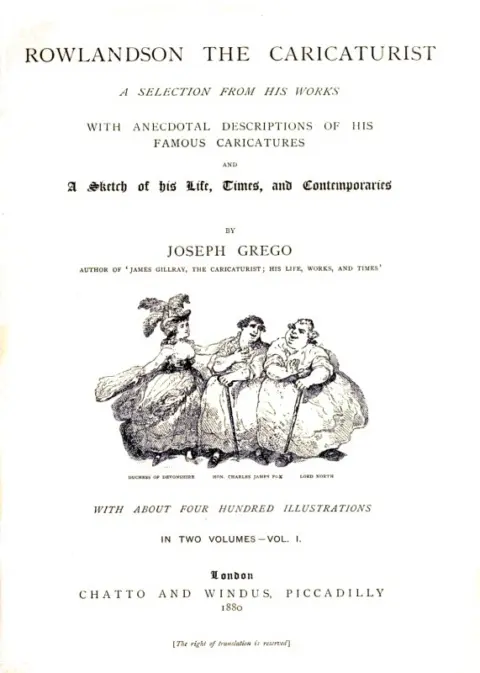
Rowlandson the Caricaturist; a Selection from His Works. Vol. 2
Joseph Grego
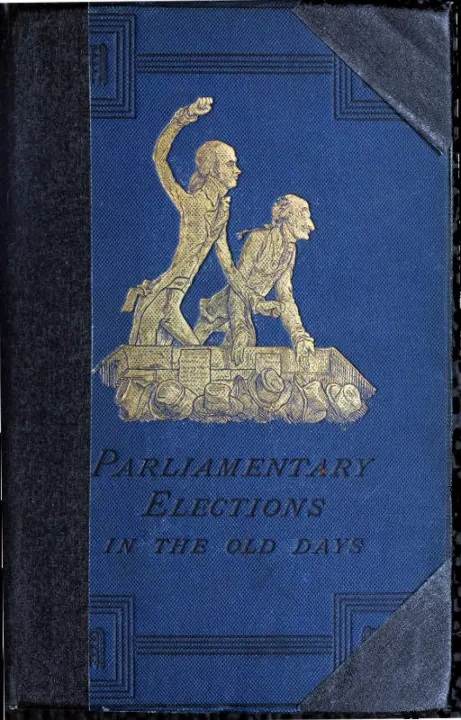
THE CLASSIC COLLECTION · 1886
"A History of Parliamentary Elections and Electioneering in the Old Days" by Joseph Grego is a historical account written in the late 19th century. This work explores the evolution of parliamentary elections and the various methods of electioneering in Britain from the time of the Stuarts to the reign of Queen Victoria. The text likely examines the intricate relationships between social classes, political parties, and the electoral process, centering on themes of corruption, representation, and civic engagement. The opening of the book delves into the origins of parliamentary assemblies and the complex rules governing elections, starting from early medieval practices to the formalization of the House of Commons. It highlights the role of key figures and evolving practices, touching upon concepts such as electoral qualifications, bribery, and the increasing power dynamics in electioneering. Grego establishes a historical context that underpins the development of Britain's parliamentary system, setting the stage for the ensuing chapters that promise to detail the vivid and often tumultuous political landscape of earlier centuries.
Introduction adapted from the source catalogue; source summaries may be automatically generated.
Free to read · English · 157,851 words · No account needed
MAKE TIME FOR A GOOD BOOK
On by default. Untick to stop anonymous reading totals. Each page counts after 10 seconds in view. How this works.
Anonymous counting is on unless you have switched it off.
“Had my dear Sister still been living,
I might have hop’d for (the Crown) of her giving;
But she, alas, is gone, and all
Her latest servants--I should call
My friends--disgrac’d and out of power,
Nay some committed to the Tower,
Impeach’d! Who then but must resent,
To see a British parliament,
With all the power of Arms and Laws,
So zealously oppose my Cause,
Pay Dutch, raise English troops and seamen,
And may, perhaps, bring more from Bremen.
Can my good subjects bear this still,
And thus be sav’d against their will?
However, if you’ll still consent,
To damn that thing call’d Parliament,
Burn Magna Charta, bring confusion
On all things since the Revolution,
Be governed by no other measure,
But our own sovereign will and pleasure,
I’ll pardon all, and what I’ve promis’d, grant ye,
All ‘Oaths of Coronation’ non obstante.”
Whatever prospects the Pretender and his good friends the Tories might have cherished on the accession of George I., were abruptly put to flight after the abortive rising in 1715; this ill-advised attempt, and the consequences of its utter failure, are wittily set forth in the ballad:--
“Ye Whigs, and eke you Tories, give ear to what I sing; For it is about the Chevalier, that silly would-be King! He boasts of his nobility, and when his race began, Though his arms they are two trowels and his Crest a warming-pan. When first he came to Scotland, in ‘Our Dear Sister’s’ reign, He look’d, but did not like the Land, and so went home again. Soon after, ‘Our Dear Sister’ did make a peace with France, And then the Perkinites did laugh to see the Devil dance. And then to please the growling Whigs, who Perkin could not brook, That slim young man was sent to graze as far as Bar-le-Duc. But yet when D’Aumont hither came, to tie the League full close, Young Perkin tarry’d in Lorrain, or came to Som’set House. The Lords then did Address the Queen to do what she deny’d, Until Sir Patrick and the Prigg were safe on t’other side. Then came a proclamation out, to give five thousand pound To any one who Perkin took upon the English ground. Soon after Semper Eadem[38] this Mortal life departs Which thing almost broke Chevalier’s, and Bona Fides’s hearts. Then Royal George of Hanover to happy Britain comes, With joyful noise upon the Thames, of trumpets, and of drums. The trait’rous Tory Tools then did cringe to seek for grace, And swore to be most loyal lads, if they were kept in place. But when the leaders found the King their Treason did espy, Away with speed they fled to France, the traitor’s sanctuary. This made the High-priest cry aloud,--the Danger of the Church, Because those pillars from her slipt, and left her in the lurch. Then Bungay[39] and his gang, harangu’d the senseless mob to win ’em; And rous’d ’em up to serve the Lord; as tho’ the De’il was in ’em. They ‘listed thieves, and jail birds, and rogues of ev’ry town, The Ladies chaste of Drury Lane, and the w---- of Babylon. Depending on this pious crew of ‘Non-Resisting’ Saints, They thought by plund’ring of the Whigs to make up all their wants. Then to begin the show,--Lord Mar,--that never was upright, To summon all his Bag-pipe-men, to Scotland took his flight. He sent his baillie Jockey round to summon all his clans, With a concert of Bag-pipes--it should been Warming-pans! He told ’em they might all for mighty Honours look, For he that was before a Lord, was now become a Duke. They all (he said) should great men be, which was the way to win ’em. So he got an army of captains all, and scarce a soldier in ’em. And finding of his numbers great, he sent a brigadier, To join a band of Fox-Hunters, that were near Lancashire. These march’d into Preston town, the women for to frighten, And there they show’d their talent lay, in marching, not in fighting. They challeng’d Gen’ral Carpenter to run with them a race, And troth they beat him out and out, he could not keep ’em pace. But Wills with expeditious march these foot-pads did surround, And then they look’d like harmless sheep coop’d up within a pound. Then Forster got a posset, and gave his priest the Tythe, But posset could not make the priest nor general look blithe. Then Forster and his perjur’d crew surrender prisoners, And show’d they were no Whigs, for they did not delight in wars. Then as they march’d to London, Oh! ’twas a gallant show, The Whigs bid the music play ‘Traitors all a-row.’ About this time the said Lord Mar (depending on his number) March’d up against the brave Argyle, and thought to bring him under. But tho’ he had full four to one (which you may say is odds) Of Highland Loons dress’d dreadfully, with Bonnets, Dirks, and plads. Yet bold Argyle, with Britons brave, engag’d him near Dunblane, And soon with loss made him retire much faster than he came. Then Mar sent to the Chevalier, to hasten o’er to Scoon, And said, ‘He should not want a crown, tho’ the Ale-wives pawn’d their spoon.’ But Mar’s design was plainly, when next they went to fight, Only to show a dismal thing which would like Death’s-head fright. At length the pale-fac’d Hero came, and like an Owler lands, Indeed he had much reason, for the goods were contrabands. As soon as he arrived, a Scottish ague took him, And tho’ he swallow’d Jesuit’s Bark, Good Lady! how it shook him. The non-resisting Damsels believ’d the omen bad, When at first speech the Baby cried, which made his Council mad. But when he heard Argyle approach’d with army in array, As Perkin came in like a thief, so again he stole away. So there’s an end of Perkin, and thus I end my Lays, With God preserve our Glorious George, and all his royal race!”
Your reading position is saved on this browser. Take it to another device with a library code. Reading pages adapt to text, rather than matching a printed edition.
BEHIND THE BOOK
This eBook is for the use of anyone anywhere in the United States and most other parts of the world at no cost and with almost no restrictions whatsoever. You may copy it, give it away or re-use it under the terms of the Project Gutenberg License included with this eBook or online at www.gutenberg.org. If you are not located in the United States, you will have to check the laws of the country where you are located before using this eBook. Read the source licence.
The original source file, including credits and licence, is retained by this library. Request an original-format copy at no charge. Please include the book title and Project Gutenberg identifier #52156.
KEEP YOUR CURIOSITY GOING
Cécile Tormay

Moritz Busch
John L. Ransom
Frances Wright
Cécile Tormay

Mabel Potter Daggett