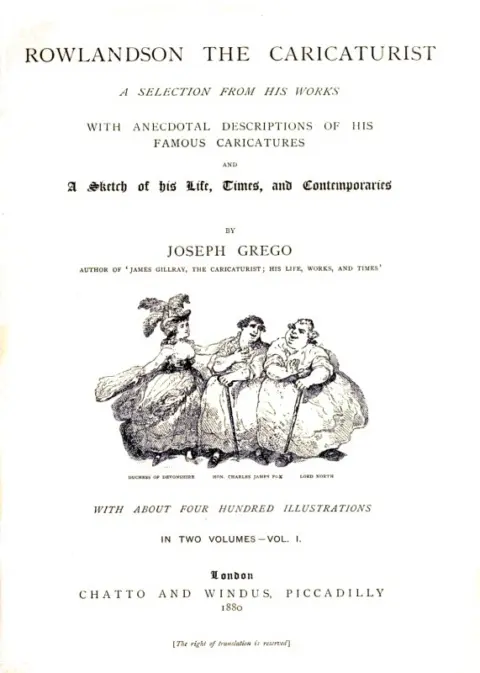
Rowlandson the Caricaturist; a Selection from His Works. Vol. 2
Joseph Grego
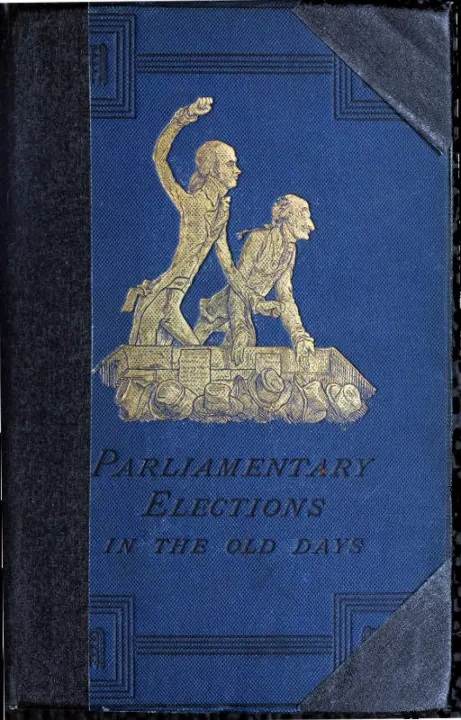
THE CLASSIC COLLECTION · 1886
"A History of Parliamentary Elections and Electioneering in the Old Days" by Joseph Grego is a historical account written in the late 19th century. This work explores the evolution of parliamentary elections and the various methods of electioneering in Britain from the time of the Stuarts to the reign of Queen Victoria. The text likely examines the intricate relationships between social classes, political parties, and the electoral process, centering on themes of corruption, representation, and civic engagement. The opening of the book delves into the origins of parliamentary assemblies and the complex rules governing elections, starting from early medieval practices to the formalization of the House of Commons. It highlights the role of key figures and evolving practices, touching upon concepts such as electoral qualifications, bribery, and the increasing power dynamics in electioneering. Grego establishes a historical context that underpins the development of Britain's parliamentary system, setting the stage for the ensuing chapters that promise to detail the vivid and often tumultuous political landscape of earlier centuries.
Introduction adapted from the source catalogue; source summaries may be automatically generated.
Free to read · English · 157,851 words · No account needed
MAKE TIME FOR A GOOD BOOK
On by default. Untick to stop anonymous reading totals. Each page counts after 10 seconds in view. How this works.
Anonymous counting is on unless you have switched it off.
“The Spendthrift Election,” Northampton, 1768--Expensive contests, the defeated men appearing in the Gazette--Colchester; Hampshire--Three noble patrons adversaries at Northampton: the Earls of Halifax, Northampton, and Spencer--Open-house at ancestral seats--The “perdition of Horton”--The petition and scrutiny on the Northampton election--The event referred to chance--Cost of the contest--The results of the reckless expenditure upon the fortunes of the patrons--Sir Francis Delaval at Andover, 1768--His attorney’s bill: item, “to being Thrown out of window, £500”--Reckoning without the host--An hospitable entertainment--Returning thanks--The Mayor versus the Colonel--“Sir Jeffery Dunstan’s Address to the Electors of Garratt,” 1774: a parody upon election manifestoes-“Lord Shiner’s Appeal to the Electors of Garratt”--Bribery at elections, and “controverted election petitions”--Various methods of acquiring “Parliamentary interest”--Boroughs cultivated for the market, like other saleable commodities--Patronage--Buying up burgage-tenures--Recognized prices of votes--The Ilchester tariff--“Dispensers of seats”--Lord Chesterfield’s experience of borough-jobbing--The seven electors of Old Sarum--Typical sinks of corruption--Boroughbridge, Yorkshire--“The last of the Boroughbridges”--A solitary franchise-holder; one man returning two representatives--The bribery scrutiny, Hindon, 1774--203 bribed electors out of a constituency of 210--Wholesale corruption--Bribing candidates committed to the King’s Bench--A fine of “a thousand marks”--Boroughmongering at Milborne Port--Lord North’s agent--A wholesale purchase of “bailiwicks”--Supineness of the Commons and ministerial influence--Corrupt bargains ignored by the House--Illegal interference of peers and lords of parliament in elections; Westminster election, 1774--“Money, meat, drink, entertainment or provision”--The partiality of persons in power manifested at “election bribery commissions”--The “king’s menial servants disqualified”--“Direct solicitation of the peers”--Worcester, 1774, wholesale swearing-in of electors as special constables--Convenient formula for defeating evidence of bribery before the House--High-Sheriffs returning themselves, Abingdon, 1774--The instance of Sir Edward Coke--“The sheriff in no respect the returning officer for boroughs”--The election made void by the sheriff returning himself--Morpeth, 1774--An election determined by main force--The candidate forcibly returning “himself and friend”--A “bribing” candidate preferred to a “main-force” candidate--Petersfield, Hants--The Shaftesbury “Punch,”--Pantomimic method of distributing bribes--The mysterious “Glenbucket”--Sudbury, 1780--A wager on the result of a controverted petition--A mayor insisting upon carrying on an election all night--The Shaftesbury “Punch” outdone by the Shoreham “Christian Society”--A well-organized scheme for “burgessing business”--The “Society” a “heap of bribery”--Stafford, 1780; The price paid by R. B. Sheridan for his seat--Tom Sheridan a candidate for Stafford, on his father’s retirement, 1806--The successful candidate for Stafford presented with a new hat at the hustings, by a subscription of his constituents--“A Mob-Reformer,” 1780--The first entry into public life of William Pitt--“The spirit of the country in 1780”--Pitt seated for Appleby, one of Sir James Lowther’s pocket-boroughs--Pitt’s early political friends: the Duke of Rutland and Lord Euston--Pitt’s letter to his mother, Lady Chatham, on his coming election--No necessity to visit constituencies--Choice of seats offered to the young premier, 1784--Nominated for the City of London--Invited to stand for Bath, represented by his late father Earl Chatham--Pitt returned for the University of Cambridge, 1784, which he represented till his death--The dissolution delayed by the theft of the Great Seal from the Chancellor’s residence, 1784--Pitt’s letter to Wilberforce on the coming elections--Pitt “a hardened electioneerer”--The war carried into the great Whig strongholds--The subscription to forward Wilberforce’s return for Yorkshire--Earl Stanhope on “Fox’s Martyrs”--Fox’s courage under adversity--Wilkes returned as the ministerial representative for Middlesex--Wilkes’s “address to the electors”--“The Back-stairs Scoured”--“The boldest of bilks”--“Reconciliation of the Two Kings of Brentford,” 1784--“The New Coalition,” 1784--Charles James Fox’s first entry into public life--Returned for Midhurst, 1769--His first speech on the Wilkes case--Wilkes at a levée: he denounces to the king his friend Glynn as a “Wilkite”--Canvass of Pitt’s friends--The poet Cowper’s description of Pitt’s cousin, the Hon. W. W. Grenville, seeking for suffrages--The amenities of canvassing in the old days: saluting the ladies and maids--A most loving, kissing, kind-hearted gentleman--W. W. Grenville and John Aubrey returned for Buckinghamshire, 1784 226
Your reading position is saved on this browser. Take it to another device with a library code. Reading pages adapt to text, rather than matching a printed edition.
BEHIND THE BOOK
This eBook is for the use of anyone anywhere in the United States and most other parts of the world at no cost and with almost no restrictions whatsoever. You may copy it, give it away or re-use it under the terms of the Project Gutenberg License included with this eBook or online at www.gutenberg.org. If you are not located in the United States, you will have to check the laws of the country where you are located before using this eBook. Read the source licence.
The original source file, including credits and licence, is retained by this library. Request an original-format copy at no charge. Please include the book title and Project Gutenberg identifier #52156.
KEEP YOUR CURIOSITY GOING
Cécile Tormay

Moritz Busch
John L. Ransom
Frances Wright
Cécile Tormay

Mabel Potter Daggett