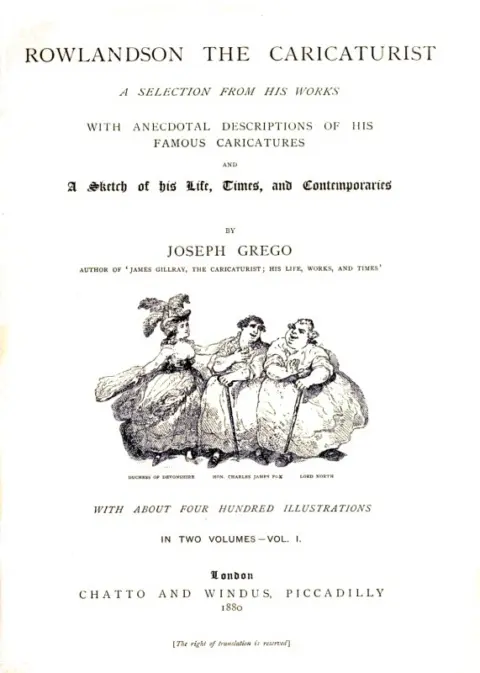
Rowlandson the Caricaturist; a Selection from His Works. Vol. 2
Joseph Grego
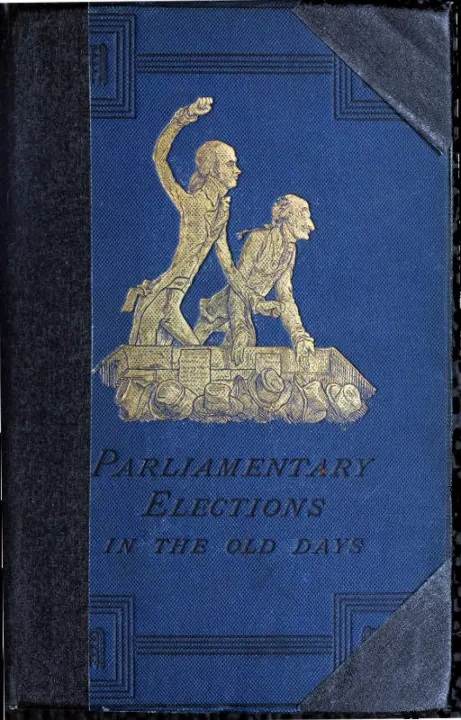
THE CLASSIC COLLECTION · 1886
"A History of Parliamentary Elections and Electioneering in the Old Days" by Joseph Grego is a historical account written in the late 19th century. This work explores the evolution of parliamentary elections and the various methods of electioneering in Britain from the time of the Stuarts to the reign of Queen Victoria. The text likely examines the intricate relationships between social classes, political parties, and the electoral process, centering on themes of corruption, representation, and civic engagement. The opening of the book delves into the origins of parliamentary assemblies and the complex rules governing elections, starting from early medieval practices to the formalization of the House of Commons. It highlights the role of key figures and evolving practices, touching upon concepts such as electoral qualifications, bribery, and the increasing power dynamics in electioneering. Grego establishes a historical context that underpins the development of Britain's parliamentary system, setting the stage for the ensuing chapters that promise to detail the vivid and often tumultuous political landscape of earlier centuries.
Introduction adapted from the source catalogue; source summaries may be automatically generated.
Free to read · English · 157,851 words · No account needed
MAKE TIME FOR A GOOD BOOK
On by default. Untick to stop anonymous reading totals. Each page counts after 10 seconds in view. How this works.
Anonymous counting is on unless you have switched it off.
The Buckingham ballad, “The Sale of Esau’s Birthright,” which relates to these members, is interesting from an electioneering point, as proving bribery, and as showing there were only thirteen electors of this limited constituency concerned in this particular return. Six voted, according to a list at the end of the ballad, “for their king and country,” and seven for Lord Latimer and Sir Timber Temple (the Earl of Danby, in another version), “for popery and their Town Hall” (“Sir R. T. his Timber, Chimney-money and Court,” according to another version). It seems certain that Sir Richard Temple had offered a present of timber for the Town Hall--in fact, some years later he is called “Timber Temple” (“State Poems”)--which was regarded as a bribe; it also appears that some delay had arisen in its payment.
“Our prating Knight doth owe his call
To Timber, and his Lady;
Though one goes longer with Town-Hall,
Than t’other with her baby.
“The Bailiff[18] is so mad a spark
(Though h’ lives by tanning leather),
That for a load of Temple’s bark,
He’d sacrifice his father.”
The other electors were a barber, two maltsters, a baker, and a farmer; the peppery ballad castigates the former, and concludes with a groan against the members returned:--
“Thus Buckingham hath led the way
To popery and sorrow;
Those seven Knaves who make us slaves,
Would sell their God to-morrow.”[19]
“The Wiltshire[20] Ballad,” also belonging to this so-called “group of election ballads,” professes to be--
“A new Song, composed by an old Cavalier,
Of wonders at Sarum by which doth appear,
That th’ old Devil came again lately there,
To raise a Rebellion
By way of Petition.
“From Salisbury, that low Hous’d Town,
Where steeple is of high renown,
Of late was brought unto the Crown
A Lesson:
’Twas drawn up by three worthy wights,
Members they were, and two were Knights,
Great trencher-men, but no one fights
Mompesson.[21]
Through discontent his Hand did set
First to the scroll without regret,
Then pilgrim-like travel’d to get
Some others,
From house to house, in Town and Close,
Our zealous Preservator goes;
Tells them of dangers and of Foes;
But smothers
The true intent of what they bring,
Who beg’d the House may sit; a thing
Which only can preserve the King,
When nothing
Destroys him more; for should he give
Consent, he’d never that retrieve,
But part with his Prerogative;
A low thing
Make himself by ’t, the rabble get
Into his high Imperial seat
They’d make him Gloriously Great!
We trow it.
They serv’d his Father so before,
These Saints would still increase the store
Of Royal Martyrs, Hum! no more,
We know it.
The herd of zealots long to see
A monarch, but in effigie,
A project which appears to be
Most witty;
And they at helm aspire to sit,
There govern without fear or wit,
King and un-king when they think fit;
That’s pretty.
To see (’twould make a Stoic smile)
Geneva Jack[22] thus moil and toil
To Lord it in our British Isle
Again, Sir;
And ‘Pulpit-Cuff’ us till we fight,
Lose our Estates and lives outright;
And when all’s done, he gets all by ’t,
That’s plain, Sir.
But this, I hope, nor make no mars
Charles knows what’s meant by all these jars,
And these domestic paper-wars,
Conceive it;
Tom of Ten Thousand,[23] is come in,
Sure such a hero much will win,
On skulls as thick, as his is Thin,
Believe it
The people would have power to call
Parliaments, and dissolve them; all
Regalias possess; what shall
The Saint, Sir,
Not have the power of Peace and War?
Religion steer? Holy we are,
And rich, the King shall we (be ’t far)
Acquaint, Sir?”
Your reading position is saved on this browser. Take it to another device with a library code. Reading pages adapt to text, rather than matching a printed edition.
BEHIND THE BOOK
This eBook is for the use of anyone anywhere in the United States and most other parts of the world at no cost and with almost no restrictions whatsoever. You may copy it, give it away or re-use it under the terms of the Project Gutenberg License included with this eBook or online at www.gutenberg.org. If you are not located in the United States, you will have to check the laws of the country where you are located before using this eBook. Read the source licence.
The original source file, including credits and licence, is retained by this library. Request an original-format copy at no charge. Please include the book title and Project Gutenberg identifier #52156.
KEEP YOUR CURIOSITY GOING
Cécile Tormay

Moritz Busch
John L. Ransom
Frances Wright
Cécile Tormay

Mabel Potter Daggett