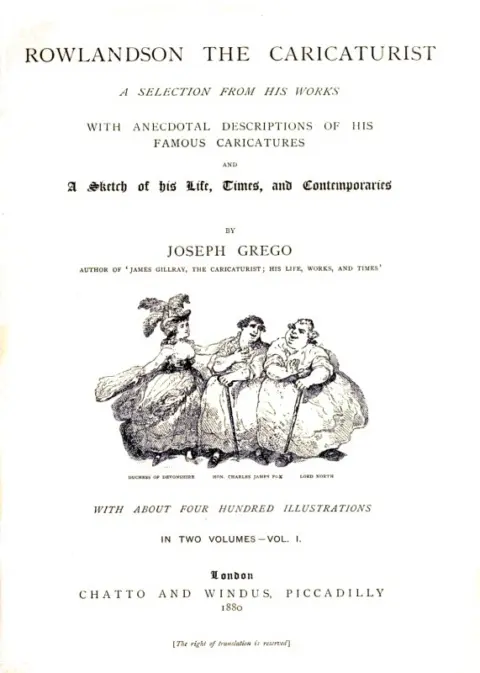
Rowlandson the Caricaturist; a Selection from His Works. Vol. 2
Joseph Grego
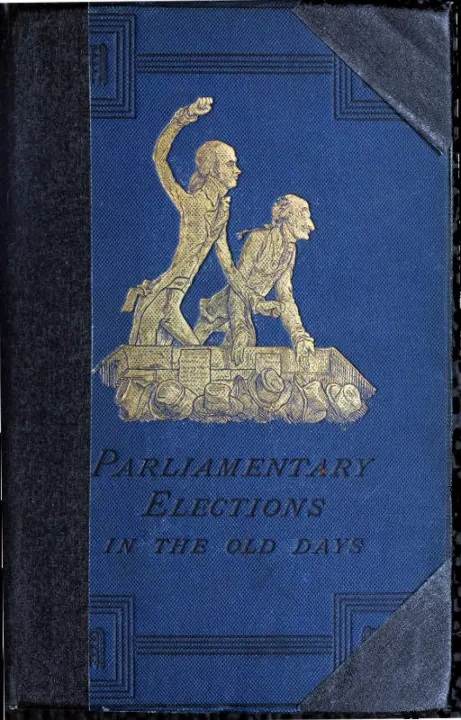
THE CLASSIC COLLECTION · 1886
"A History of Parliamentary Elections and Electioneering in the Old Days" by Joseph Grego is a historical account written in the late 19th century. This work explores the evolution of parliamentary elections and the various methods of electioneering in Britain from the time of the Stuarts to the reign of Queen Victoria. The text likely examines the intricate relationships between social classes, political parties, and the electoral process, centering on themes of corruption, representation, and civic engagement. The opening of the book delves into the origins of parliamentary assemblies and the complex rules governing elections, starting from early medieval practices to the formalization of the House of Commons. It highlights the role of key figures and evolving practices, touching upon concepts such as electoral qualifications, bribery, and the increasing power dynamics in electioneering. Grego establishes a historical context that underpins the development of Britain's parliamentary system, setting the stage for the ensuing chapters that promise to detail the vivid and often tumultuous political landscape of earlier centuries.
Introduction adapted from the source catalogue; source summaries may be automatically generated.
Free to read · English · 157,851 words · No account needed
MAKE TIME FOR A GOOD BOOK
On by default. Untick to stop anonymous reading totals. Each page counts after 10 seconds in view. How this works.
Anonymous counting is on unless you have switched it off.
Charles II.’s third, or Habeas Corpus Parliament, showed a determination to exceed its predecessor in opposing the Court, and seemed ambitious of imitating that of 1640, the reminiscences of which were still of a portentous character, and filled with dread as regarded the survivors of those uncompromising times:--
“The Habeas Corpus act is past,
And so far we are safe;
He can’t imprison us so fast,
But straight we have relief;
He can’t deny us aught we ask,
In so much need he stands;
And before that we do money give,
We’ll tie up both his hands.”
Charles very naturally found this parliament beyond his control, so it was prorogued May 27, 1679, to the 14th of August, but dissolved on the 10th of July. The whole country was in commotion during August and September in electioneering contests, preparing for the fourth parliament. It is to be regretted that electioneering broadsides have, as a rule, been allowed to perish; they would prove a mine of curious information.
The following is a pertinent allusion to the eventualities of the
“poll:”--
“But most men did think
He had not so much chink,
Nor could pay for the poll of the County,
And therefore did fear
It would cost them too dear
Should they accept of his Bounty.”
(The Worcestershire Ballad.)
The opprobrious terms of Whigs and Tories were freely exchanged. Here is a Whig’s view of the “king’s men:”--
“As Rascals changing rags for scarlet coats, Cudgell’d before, set up to cut Whig throats.”
The wit lay rather with the Cavaliers, though it must be confessed their opponents had the best of the argument when reasoning on facts.
The definition of the nickname Tory, as it originally arose, is given in “A New Ballad” (Narcissus Luttrell’s Collection):--
“The word Tory’s of Irish Extraction,
’Tis a Legacy that they have left here,
They came here in their brogues,
And have acted like Rogues,
In endeavouring to learn us to Swear.”
By way of answer, the Tories exulted in their loyalty:--
“Let Tories guard the King,
Let Whigs on halters swing.”
The Court party denounced--
“Visions, Seditions,
And railing Petitions.”
The designs of the various factions were thus summed up:--
“Sir Tom would hang the Tory,
And let the Whig go free:
Sir Bob would have a Commonwealth
And cry down Monarchy.”
The Tories retaliated upon their antagonists with interest, though they feared the zealots not a little, as the following ballad illustrates:--
Your reading position is saved on this browser. Take it to another device with a library code. Reading pages adapt to text, rather than matching a printed edition.
BEHIND THE BOOK
This eBook is for the use of anyone anywhere in the United States and most other parts of the world at no cost and with almost no restrictions whatsoever. You may copy it, give it away or re-use it under the terms of the Project Gutenberg License included with this eBook or online at www.gutenberg.org. If you are not located in the United States, you will have to check the laws of the country where you are located before using this eBook. Read the source licence.
The original source file, including credits and licence, is retained by this library. Request an original-format copy at no charge. Please include the book title and Project Gutenberg identifier #52156.
KEEP YOUR CURIOSITY GOING
Cécile Tormay

Moritz Busch
John L. Ransom
Frances Wright
Cécile Tormay

Mabel Potter Daggett