THE CLASSIC COLLECTION✦An outlaw’s diary: the CommuneCLASSIC FREE BOOKS
An outlaw’s diary: the Commune
Cécile Tormay
THE CLASSIC COLLECTION · 1909
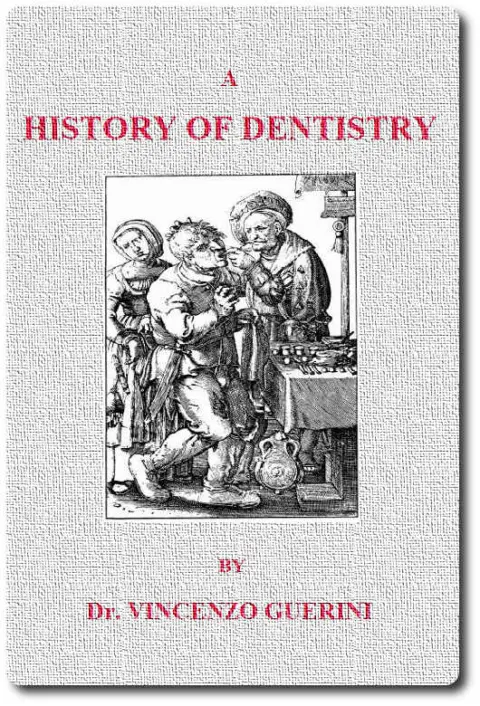
"A History of Dentistry from the Most Ancient Times until the End of the Eighteenth Century" by Dr. Vincenzo Guerini is a historical account written in the early 20th century. The work delves into the development of dental practices and knowledge across different civilizations, tracing its roots from ancient eras through to the 18th century. The book aims to compile comprehensive information on the evolution of dentistry, based on thorough research and primary sources, offering a detailed view of this specialized field. The opening of the book introduces the author's motivations for writing a complete history of dentistry and outlines the structure of the work. Dr. Guerini conveys his commitment to providing a thorough narrative that incorporates both historical data and his personal research efforts, which he began after participating in the Eleventh International Congress of Medicine. He expresses the importance of documenting the advancements in dental science, likening its historical significance to that of medicine as a whole. The initial chapters promise a rich exploration of the practices among ancient peoples, including Egyptians, Hebrews, and Chinese, setting the groundwork for understanding how dentistry was perceived and developed over thousands of years.
Introduction adapted from the source catalogue; source summaries may be automatically generated.
Free to read · English · 140,838 words · No account needed
MAKE TIME FOR A GOOD BOOK
On by default. Untick to stop anonymous reading totals. Each page counts after 10 seconds in view. How this works.
Anonymous counting is on unless you have switched it off.
[283] De humani corporis fabrica libri septem, cap. xi, De dentibus, pp. 40 to 42 (complete edition of the works of Vesalius, published at Leyden in 1725).
[284] Lib. i, cap. xlii, p. 141.
[285] From gena, a cheek.
[286] Blandin, Anatomie du système dentaire, Paris, 1836, p. 19.
[287] Portal, Histoire de l’anatomie et de la chirurgie, tome i, p. 545.
[288] Observationes anatomicæ, p. 39, et seq.
[289] In utero duodecim dentes formantur in malis, et totidem in maxilla (in the uterus are formed twelve teeth in the upper jaw and as many in the lower). Fallopii Gabrielis observationes anatomicæ, Venetiis, 1562, p. 39.
[290] This sharp reproof and accusation of ignorance are made for the benefit of the immortal anatomist Andreas Vesalius, to the number of whose adversaries Eustachius likewise belonged. What unjust fury of party passion!
[291] Chap. xviii, p. 54.
[292] Chap. xxii, p. 65.
[293] Chap. xxiii, p. 70.
[294] Chap. xxv, xxvi.
[295] Chap. xxvii, xxviii.
[296] The inferior orifice of the foramen incisivum.
[297] It is superfluous to say that these cases are unreal and simply dependent upon erroneous observations; for instance, in the case of the second molar being extracted before the erupting of the third, the second molar figured as, and supposed to be, the latter, when, finally, the wisdom tooth appeared, it was believed to be the last molar renewed. It is no rare thing, also, in these days, not only for unprofessional persons, but also for medical practitioners, to fall into errors of this kind, especially because, in similar cases, the wisdom tooth, having but a limited space in which to erupt, is in the habit of filling the void left by the second molar, where it meets with less resistance.
[298] Page 93.
[299] Œuvres complètes d’Ambroise Paré, accompagnées de notes
historiques et critiques, par J. F. Malgaigne, Paris, 1840, vol. i, p.
231.
[300] The lower molars, being seated on the roots and not suspended like those of the upper jaw, are not in want of so many roots to assure their stability.
[301] Vol. ii, p. 307.
[302] ... if they are divided, shaken, or separated from their alveoli or little cavities, they must be reduced into their places and should be bound and fastened against those that are firm with a thread of gold, silver, or flax. And they must be held thus until they are quite firm and the callus is formed and have become solid.
[303] Lib. xv, ch. xvi, vol. ii, p. 443.
[304] Lib. xv, cap. xxvii, vol. ii, p. 448.
[305] A man, worthy of being believed, has assured me that a certain princess having had a tooth taken out, immediately had it replaced by another supplied by one of her ladies, which took root, and after a time she masticated with it as well as she had done with the former one.
[306] Lib. xv, cap. xxviii.
Your reading position is saved on this browser. Take it to another device with a library code. Reading pages adapt to text, rather than matching a printed edition.
BEHIND THE BOOK
This eBook is for the use of anyone anywhere in the United States and most other parts of the world at no cost and with almost no restrictions whatsoever. You may copy it, give it away or re-use it under the terms of the Project Gutenberg License included with this eBook or online at www.gutenberg.org. If you are not located in the United States, you will have to check the laws of the country where you are located before using this eBook. Read the source licence.
The original source file, including credits and licence, is retained by this library. Request an original-format copy at no charge. Please include the book title and Project Gutenberg identifier #51991.
KEEP YOUR CURIOSITY GOING
Cécile Tormay

Moritz Busch
John L. Ransom
Frances Wright
Cécile Tormay

Mabel Potter Daggett