THE CLASSIC COLLECTION✦An outlaw’s diary: the CommuneCLASSIC FREE BOOKS
An outlaw’s diary: the Commune
Cécile Tormay
THE CLASSIC COLLECTION · 1909
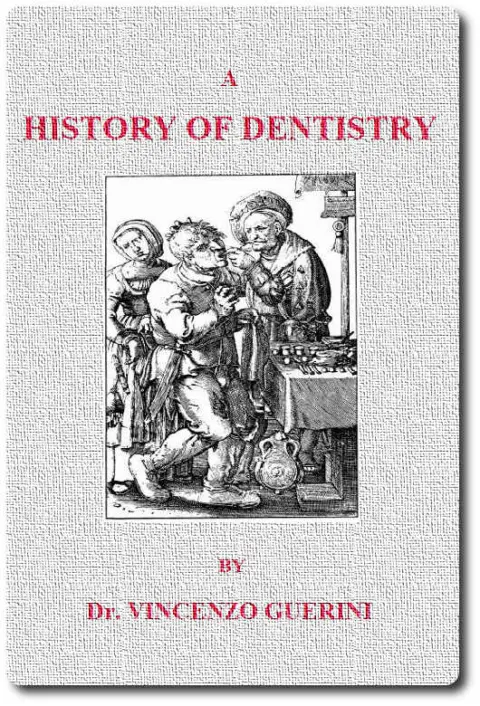
"A History of Dentistry from the Most Ancient Times until the End of the Eighteenth Century" by Dr. Vincenzo Guerini is a historical account written in the early 20th century. The work delves into the development of dental practices and knowledge across different civilizations, tracing its roots from ancient eras through to the 18th century. The book aims to compile comprehensive information on the evolution of dentistry, based on thorough research and primary sources, offering a detailed view of this specialized field. The opening of the book introduces the author's motivations for writing a complete history of dentistry and outlines the structure of the work. Dr. Guerini conveys his commitment to providing a thorough narrative that incorporates both historical data and his personal research efforts, which he began after participating in the Eleventh International Congress of Medicine. He expresses the importance of documenting the advancements in dental science, likening its historical significance to that of medicine as a whole. The initial chapters promise a rich exploration of the practices among ancient peoples, including Egyptians, Hebrews, and Chinese, setting the groundwork for understanding how dentistry was perceived and developed over thousands of years.
Introduction adapted from the source catalogue; source summaries may be automatically generated.
Free to read · English · 140,838 words · No account needed
MAKE TIME FOR A GOOD BOOK
On by default. Untick to stop anonymous reading totals. Each page counts after 10 seconds in view. How this works.
Anonymous counting is on unless you have switched it off.
[257] “Materia lapidea paullatim abradatur ferro et dentifriciis partim mundificativis, et partim stypticis. Deinde colluantur denies sæpe vino albo, et fricentur sale torrefacto.” Cap. lxvii, De colore dentium præter naturam, p. 202.
[258] “Quoniam, licet ex parte corrosi sint, attamen dolore sedato masticationem iuvant, et alios firmiores reddunt.” Appendices, p. 205.
[259] “Ossa fiunt ex spermate et sanguine menstruo; dentes autem ex sanguine, in quo remansit virtus spermatis.” Appendices, p. 205.
[260] Petri de Largelata chirurgiæ libri sex, Venetiis, 1480.
[261] Bartolomæi Montagnanæ Consilia, Venetiis, 1497.
[262] Johannis Platearii Salernitani practica brevis, Lugduni, 1525.
[263] Joannis Arculani commentaria in nonum librum Rasis ad regem Almansorem, etc., Venetiis, 1542.
[264] This Arabian word was used to indicate the last molars.
[265] “Regimen autem implendo dentem corrosum est, ut impleatur in causa calida cum frigidis, et in frigida cum calidis. Secundo, ut non impleatur cum labore et vehementia addente in dolore, et ex propriis est gallia cum ciperis aut cum mastiche, et eligantur ex suprascriptis, calida aut frigida secundum opportunitatem, in contrarium dyscrasiæ dentis, sed ubi non fuerit multus recessus a mediocritate impleatur cum foliis auri.” Cap. xlviii, p. 195.
[266] In the Venetian edition (1542), however, all the figures which Arculanus inserted in his work are found in the beginning of the book, in a single table, together with the indication of the use to which each single instrument was destined.
[267] Alexandri Benedicti Veronensis de re medica opus, lib. vi, de
affectibus dentium.
[268] Opera domini Joannis de Vigo in chyrurgia. Lugduni, 1521, lib. ii, tract. iii, cap. xiv, fol. 40.
[269] [The editions and translations of Vigo seem to have been endless. A French translation of his treatise on the wounds caused by firearms is said to have fallen into the hands of Paré, and had an inspiring influence upon the barber’s boy.—C. M.]
[270] Lib. v, cap. v, De doloribus dentium, fol. cxvii to cxix.
[271] Handbuch der Zahnheilkunde, Berlin, 1848, ii, 406.
[272] Geist-Jacobi, Geschichte der Zahnheilkunde, p. 80.
[273] A religious order of knights, established toward the close of the twelfth century, viz., during the third crusade. The original object of the association was to defend the Christian religion against the infidels, and to take care of the sick in the Holy Land.
[274] Geist-Jacobi, Geschichte der Zahnheilkunde, p. 82.
[275] Geist-Jacobi, p. 88.
[276] Albert von Haller, Bibliotheca chirurgica, i, 190.
[277] Nuetzlicher Bericht, wie man die Augen und das Gesicht schaerfen und gesund erhalten, die Zaehne frisch und fest erhalten soll. Würzburg, 1548.
[278] See Giornale di Corrispondenza pei dentisti, 1895, xxiv, 289.
[279] Joannis Arculani. Commentaria, Venetiis, 1542, cap. xlviii, De
dolore dentium, p. 192.
[280] “The first dental book in the German language” (see Giornale di Corrispondenza pei dentisti, loc. cit.).
[281] A Latin translation of the French name Du bois.
[282] De humani corporis fabrica, libri septem.
Your reading position is saved on this browser. Take it to another device with a library code. Reading pages adapt to text, rather than matching a printed edition.
BEHIND THE BOOK
This eBook is for the use of anyone anywhere in the United States and most other parts of the world at no cost and with almost no restrictions whatsoever. You may copy it, give it away or re-use it under the terms of the Project Gutenberg License included with this eBook or online at www.gutenberg.org. If you are not located in the United States, you will have to check the laws of the country where you are located before using this eBook. Read the source licence.
The original source file, including credits and licence, is retained by this library. Request an original-format copy at no charge. Please include the book title and Project Gutenberg identifier #51991.
KEEP YOUR CURIOSITY GOING
Cécile Tormay

Moritz Busch
John L. Ransom
Frances Wright
Cécile Tormay

Mabel Potter Daggett