THE CLASSIC COLLECTION✦An outlaw’s diary: the CommuneCLASSIC FREE BOOKS
An outlaw’s diary: the Commune
Cécile Tormay
THE CLASSIC COLLECTION · 1909
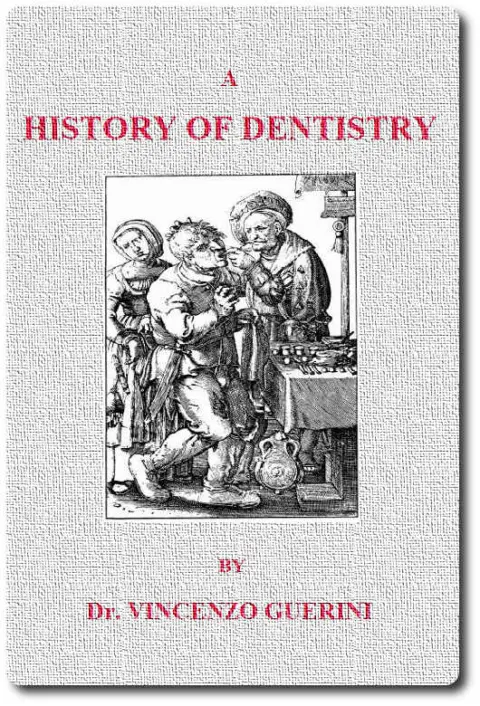
"A History of Dentistry from the Most Ancient Times until the End of the Eighteenth Century" by Dr. Vincenzo Guerini is a historical account written in the early 20th century. The work delves into the development of dental practices and knowledge across different civilizations, tracing its roots from ancient eras through to the 18th century. The book aims to compile comprehensive information on the evolution of dentistry, based on thorough research and primary sources, offering a detailed view of this specialized field. The opening of the book introduces the author's motivations for writing a complete history of dentistry and outlines the structure of the work. Dr. Guerini conveys his commitment to providing a thorough narrative that incorporates both historical data and his personal research efforts, which he began after participating in the Eleventh International Congress of Medicine. He expresses the importance of documenting the advancements in dental science, likening its historical significance to that of medicine as a whole. The initial chapters promise a rich exploration of the practices among ancient peoples, including Egyptians, Hebrews, and Chinese, setting the groundwork for understanding how dentistry was perceived and developed over thousands of years.
Introduction adapted from the source catalogue; source summaries may be automatically generated.
Free to read · English · 140,838 words · No account needed
MAKE TIME FOR A GOOD BOOK
On by default. Untick to stop anonymous reading totals. Each page counts after 10 seconds in view. How this works.
Anonymous counting is on unless you have switched it off.
“The fat of the green frog which lives upon the trees breaks teeth which are anointed with it the same as when you anoint them with milk of alscebram or titimallo, and similarly also the milk of celso with yellow arsenic.”
In this connection it is also interesting to note that the ancient Arabian medical writers referred to the red sulphide of arsenic or realgar as sandarach. The term Sandarach was clearly used by these writers to designate two different medicaments—one the gum-vernix, exudate of the Juniper tree, and which we now know as Sandarach gum. They also apply the term to red arsenic, as above stated. Avicenna clearly distinguishes between the two kinds of Sandarach, and says with regard to the gum-vernix or Juniper Sandarach that it is the best of all known remedies for toothache. While, as shown by Dr. Guerini, many of the medicaments used as topical applications to facilitate the extraction of teeth were wholly without any possible effect of that character, it cannot be doubted that the application of arsenical preparations, such as those referred to by Mesue, could not fail to set up an arsenical necrosis about the roots of the tooth, rendering it loose and easy of removal, but necessarily with the disadvantage of producing a dangerously extensive necrosis of the tissues.
Mesue Vulgar.—Impresso in Venitia per Cesaro Arrivabeno Venitiano a di vinti octubrio, mille cinquecento e vintiuno.
Delle Medicini Particulare, Libro Quarto, Capitolo XLI.—E. C. K.]
[224] Joannis Mesue opera, Venetiis, 1562.
[225] Sprengel, Geschichte der Chirurgie, Part II, p. 279.
[226] Linderer, Handbuch der Zahnheilkunde, Berlin, 1848, ii, 403.
[227] Bruni Chirurgia magna.
[228] Sprengel, Geschichte der Chirurgie, Part II, p. 280.
[229] Sprengel, loc. cit.
[230] Sprengel, loc. cit.
[231] La Grande Chirurgie de Guy de Chauliac, chirurgien maistre en médecine de l’Université de Montpellier, composée en l’an 1363, revue et collationnée sur les manuscrits et imprimés latins et français par E. Nicaise, 1890.
[232] Of these copies, twenty-two are written in Latin, four in French, two in Provençal, three in English, one in Netherlandish (Dutch), one in Italian, and one in Hebrew.
[233] Nicaise, La Grande Chirurgie de Guy de Chauliac, Second Chapitre: De l’Anatomie de la face et de ses parties, p. 47.
[234] Here, as elsewhere, is preserved the old orthography of the text.
[235] Nicaise, p. 711.
[236] Teeth may be produced not only in infancy, but also at a later
age.
[237] Nicaise, p. 205.
[238] Pietro of Albano (1250 to 1316), the writer of many books, among which one bearing the title of Conciliator differentiorum philosophorum et præcipue medicorum, is often quoted by Guy de Chauliac and by many others under the name of Conciliator.
[239] Nicaise, p. 505.
[240] Appropriatæ barbitonsoribus et dentatoribus.
Your reading position is saved on this browser. Take it to another device with a library code. Reading pages adapt to text, rather than matching a printed edition.
BEHIND THE BOOK
This eBook is for the use of anyone anywhere in the United States and most other parts of the world at no cost and with almost no restrictions whatsoever. You may copy it, give it away or re-use it under the terms of the Project Gutenberg License included with this eBook or online at www.gutenberg.org. If you are not located in the United States, you will have to check the laws of the country where you are located before using this eBook. Read the source licence.
The original source file, including credits and licence, is retained by this library. Request an original-format copy at no charge. Please include the book title and Project Gutenberg identifier #51991.
KEEP YOUR CURIOSITY GOING
Cécile Tormay

Moritz Busch
John L. Ransom
Frances Wright
Cécile Tormay

Mabel Potter Daggett