THE CLASSIC COLLECTION✦An outlaw’s diary: the CommuneCLASSIC FREE BOOKS
An outlaw’s diary: the Commune
Cécile Tormay
THE CLASSIC COLLECTION · 1909
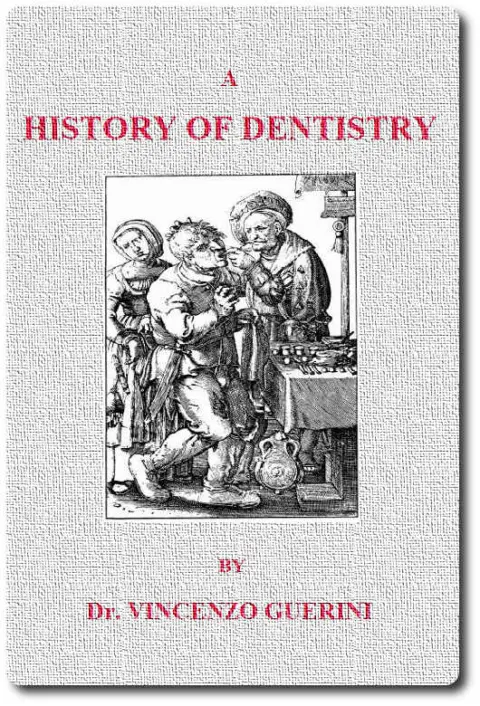
"A History of Dentistry from the Most Ancient Times until the End of the Eighteenth Century" by Dr. Vincenzo Guerini is a historical account written in the early 20th century. The work delves into the development of dental practices and knowledge across different civilizations, tracing its roots from ancient eras through to the 18th century. The book aims to compile comprehensive information on the evolution of dentistry, based on thorough research and primary sources, offering a detailed view of this specialized field. The opening of the book introduces the author's motivations for writing a complete history of dentistry and outlines the structure of the work. Dr. Guerini conveys his commitment to providing a thorough narrative that incorporates both historical data and his personal research efforts, which he began after participating in the Eleventh International Congress of Medicine. He expresses the importance of documenting the advancements in dental science, likening its historical significance to that of medicine as a whole. The initial chapters promise a rich exploration of the practices among ancient peoples, including Egyptians, Hebrews, and Chinese, setting the groundwork for understanding how dentistry was perceived and developed over thousands of years.
Introduction adapted from the source catalogue; source summaries may be automatically generated.
Free to read · English · 140,838 words · No account needed
MAKE TIME FOR A GOOD BOOK
On by default. Untick to stop anonymous reading totals. Each page counts after 10 seconds in view. How this works.
Anonymous counting is on unless you have switched it off.
[196] [The author quoted directs hydromel to be made from one part of honey and eight parts of water boiled until it has ceased frothing.—E. C. K.]
[197] Pauli Æginetæ de re medica, lib. vi, cap. xxvii.
[198] Lib. vi, cap. xxviii.
[199] Ibid., cap. ix.
[200] Ibid., cap. xxix.
[201] Rasis opera, Venetiis, 1508.
[202] Haly Abbas Pract., lib. v, cap. lxxviii.
[203] Ibid., cap. xxxiii.
[204] Serapionis practica, Venetiis, 1503.
[205] Avicennæ opera in re medica, Venetiis, 1564.
[206] Abulcasis de Chirurgia, lib. i, cap. xix, p. 47; Latin translation by Channing with the Arabic text in front, Oxford, 1778.
[207] Cap. xx, p. 47.
[208] Cap. xxi, p. 49.
[209] Zegi was the name given by the Arabs to blue vitriol.
[210] Lib. ii, cap. xxviii, p. 181.
[211] Lib. ii, cap. xxix, pp. 181 to 183.
[212] This great Mahommedan surgeon was, it seems, very religious. His book begins with the words: “In the name of the merciful God, Lord perfect in goodness,” and almost every chapter ends with “If God so wills,” and the like.
[213] These two manuscript codices are found in the Bodleian Library at
Oxford.
[214] Lib. ii, cap. xxx, p. 185.
[215] The Arabic word used by the author means more precisely “those who apply cupping glasses.” Channing has translated it by tonsores, barbers.
[216] An advice already given by Celsus.
[217] Lib. ii, cap. xxxi, p. 191.
[218] Silly barbers.
[219] Lib. ii, cap. xxxi, p. 187.
[220] Lib. ii, cap. xxxii, p. 193.
[221] Lib. ii, cap. xxxv, p. 197.
[222] Lib. iii, cap. iv, p. 545.
[223] [In connection with the practice of applying medicines to the teeth or upon the gums, with the object of rendering the operation of tooth extraction less difficult, the use of arsenical compounds as an ingredient of these topical applications is of peculiar interest. In an Italian translation of the writings of Johannes Mesue, published at Venice in 1521, the following interesting reference to the use of arsenic appears:
“The son of Zachariah Arazi compounds a medicine to assist the extraction of the teeth. ℞—Pyrethrum, colquintida root and the bark of the mulberry root, the seed and leaves of almezeron, huruc, and yellow arsenic, milk of alscebram or pieces of it, ground very thoroughly with vinegar; then pour some of it over bdellium and halasce, of each, equal parts, dry and dissolve in strong vinegar and make trochisi of it, and with them anoint the roots of the tooth from hour to hour; this facilitates the extraction of it.
“There is also another medicine with which one fills the decayed tooth and breaks it: ℞—Seeds of almezeron and milk of alscebram compounded with liquid pitch, and fill with it the decayed tooth. Another one: ℞—Bauras, bark of the willow, of each, one part; yellow arsenic, two parts; compound with honey and place it upon and around the tooth and immediately extract it.
Your reading position is saved on this browser. Take it to another device with a library code. Reading pages adapt to text, rather than matching a printed edition.
BEHIND THE BOOK
This eBook is for the use of anyone anywhere in the United States and most other parts of the world at no cost and with almost no restrictions whatsoever. You may copy it, give it away or re-use it under the terms of the Project Gutenberg License included with this eBook or online at www.gutenberg.org. If you are not located in the United States, you will have to check the laws of the country where you are located before using this eBook. Read the source licence.
The original source file, including credits and licence, is retained by this library. Request an original-format copy at no charge. Please include the book title and Project Gutenberg identifier #51991.
KEEP YOUR CURIOSITY GOING
Cécile Tormay

Moritz Busch
John L. Ransom
Frances Wright
Cécile Tormay

Mabel Potter Daggett