THE CLASSIC COLLECTION✦An outlaw’s diary: the CommuneCLASSIC FREE BOOKS
An outlaw’s diary: the Commune
Cécile Tormay
THE CLASSIC COLLECTION · 1909
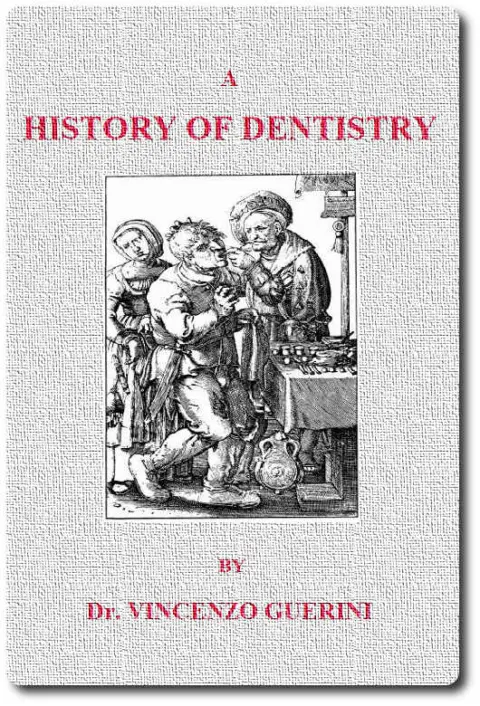
"A History of Dentistry from the Most Ancient Times until the End of the Eighteenth Century" by Dr. Vincenzo Guerini is a historical account written in the early 20th century. The work delves into the development of dental practices and knowledge across different civilizations, tracing its roots from ancient eras through to the 18th century. The book aims to compile comprehensive information on the evolution of dentistry, based on thorough research and primary sources, offering a detailed view of this specialized field. The opening of the book introduces the author's motivations for writing a complete history of dentistry and outlines the structure of the work. Dr. Guerini conveys his commitment to providing a thorough narrative that incorporates both historical data and his personal research efforts, which he began after participating in the Eleventh International Congress of Medicine. He expresses the importance of documenting the advancements in dental science, likening its historical significance to that of medicine as a whole. The initial chapters promise a rich exploration of the practices among ancient peoples, including Egyptians, Hebrews, and Chinese, setting the groundwork for understanding how dentistry was perceived and developed over thousands of years.
Introduction adapted from the source catalogue; source summaries may be automatically generated.
Free to read · English · 140,838 words · No account needed
MAKE TIME FOR A GOOD BOOK
On by default. Untick to stop anonymous reading totals. Each page counts after 10 seconds in view. How this works.
Anonymous counting is on unless you have switched it off.
[155] Ignatius, because he has white teeth, is always laughing; if he be present at the felon’s trial, whilst the counsel is moving all to tears, he laughs; he laughs even when everyone is mourning at the funeral pyre of a dutiful son, whilst the mother is weeping for her only child. He laughs at everything, everywhere, and whatever he be doing; this is his weakness, which methinks is neither polite nor elegant. Wherefore, I must tell thee, O good Ignatius, even if thou wert a citizen of Rome, or a Sabine, or of Tibur, or one of the thrifty Umbrians, or of the fat Etruscans, or wert thou a black and large-toothed Lanuvin, or a Transpadane, if I may speak of my own people, or belonging to any people that cleanly wash their teeth; even then I would not have thee be always laughing; for nothing is more silly than a silly laugh. Now, O Celtiberian, in thy Celtiberian land, each is accustomed, with the water he has himself emitted, to rub his teeth and gums. Wherefore the cleaner are thy teeth, the more surely stale dost thou accuse thyself of having drunk.
[156] Rerum geographicarum libri. Lutetiæ Parisiorum, 1620. Lib. iii, p. 164; quippe qui urina in cisternis inveterata laventur, eaque cum ipsi, tum eorum uxores dentes tergant; quod Cantabros facere et eorum confines ajunt (Carabelli, Systematisches Handbuch der Zahnheilkunde, Wien, 1844, i, 12).
[157] Handbuch der Zahnheilkunde, Berlin, 1848, ii, 412.
[158] Medio recumbit imus ille qui lecto, Calvam trifilem segmentatus unguento, Foditque tonsis ora laxa lentiscis; Mentitur, Esculane; non habet dentes.
[159] Lentiscum melius; sed si tibi frondea cuspis Defuerit, dentes penna
levare potest.
[160] Antiq. du Bosphore au Musée de l’Ermitage, pl. xxx, 8 et 9 (Dictionnaire des antiquités grecques et romaines, par Daremberg, Saglio, etc.).
[161] Mittheilung. d. antiq. Gesellschaft in Zürich, xv, pl. xi, 32 (Daremberg and Saglio, ibid.)
[162] Caylus, vol. vi, pl. cxxx, 5.
[163] Dentifricium ad edentulam: Quid mecum est tibi? me puella sumat, Emptos non soleo polire dentes.
[164] Lib. xii, epig. xxiii.
[165] Dentibus atque comis, nec te pudet, uteris emptis. Quid facies oculo,
Lælia? non emitur.
[166] Nostris versibus esse te poetam, Fidentine, putas, cupisque eredi? Sic dentata sic videtur Ægle, Emptis ossibus, indicoque cornu. (Lib. i, epig. lxxii.)
[167] Lib. ix, epig. xxxviii.
[168] Nec dentes aliter quam serica nocte reponas.
[169] Horat. Sat. viii, lib. i.
[170] Eximit aut reficit dentem Cascellius ægrum.
[171] Suffire autem oportet ore aperto alterci semine carbonibus asperso, subinde os colluere aqua calida; interdum enim quasi vermiculi quidam eiciuntur.
[172] Gum of the cedar tree.
[173] Dentifricium, quod splendidos facit dentes et confirmat, chap.
xi, lix.
[174] A Roman measure of capacity, equal to a little more than half a
liter.
Your reading position is saved on this browser. Take it to another device with a library code. Reading pages adapt to text, rather than matching a printed edition.
BEHIND THE BOOK
This eBook is for the use of anyone anywhere in the United States and most other parts of the world at no cost and with almost no restrictions whatsoever. You may copy it, give it away or re-use it under the terms of the Project Gutenberg License included with this eBook or online at www.gutenberg.org. If you are not located in the United States, you will have to check the laws of the country where you are located before using this eBook. Read the source licence.
The original source file, including credits and licence, is retained by this library. Request an original-format copy at no charge. Please include the book title and Project Gutenberg identifier #51991.
KEEP YOUR CURIOSITY GOING
Cécile Tormay

Moritz Busch
John L. Ransom
Frances Wright
Cécile Tormay

Mabel Potter Daggett