THE CLASSIC COLLECTION✦An outlaw’s diary: the CommuneCLASSIC FREE BOOKS
An outlaw’s diary: the Commune
Cécile Tormay
THE CLASSIC COLLECTION · 1909
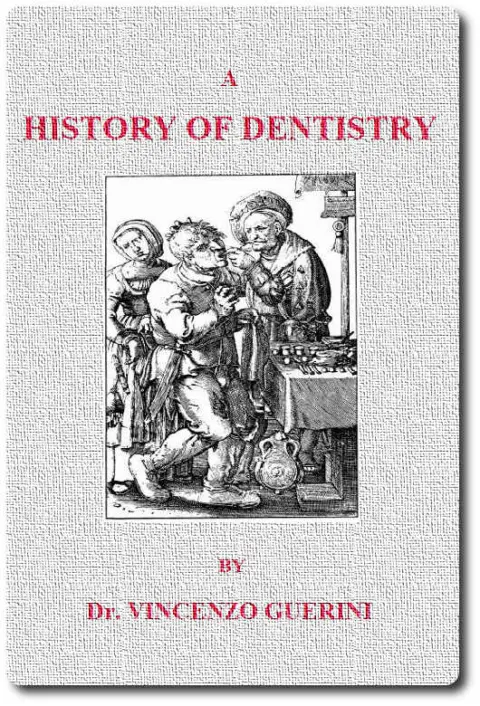
"A History of Dentistry from the Most Ancient Times until the End of the Eighteenth Century" by Dr. Vincenzo Guerini is a historical account written in the early 20th century. The work delves into the development of dental practices and knowledge across different civilizations, tracing its roots from ancient eras through to the 18th century. The book aims to compile comprehensive information on the evolution of dentistry, based on thorough research and primary sources, offering a detailed view of this specialized field. The opening of the book introduces the author's motivations for writing a complete history of dentistry and outlines the structure of the work. Dr. Guerini conveys his commitment to providing a thorough narrative that incorporates both historical data and his personal research efforts, which he began after participating in the Eleventh International Congress of Medicine. He expresses the importance of documenting the advancements in dental science, likening its historical significance to that of medicine as a whole. The initial chapters promise a rich exploration of the practices among ancient peoples, including Egyptians, Hebrews, and Chinese, setting the groundwork for understanding how dentistry was perceived and developed over thousands of years.
Introduction adapted from the source catalogue; source summaries may be automatically generated.
Free to read · English · 140,838 words · No account needed
MAKE TIME FOR A GOOD BOOK
On by default. Untick to stop anonymous reading totals. Each page counts after 10 seconds in view. How this works.
Anonymous counting is on unless you have switched it off.
[114] Celsus, lib. i, Preface.
[115] Wine with honey.
[116] [Minium is an ancient name for red oxide of lead; it was also applied to mercuric sulphide or vermilion, and the term vermilion was also used as a designation for granum tinctorum or kermes, the coccus ilicis, a variety of cochineal extolled by Galen for its medicinal properties. The exact nature of the meaning of minium in this connection is not altogether clear.—E. C. K.]
[117] A species of herb (all-heal).
[118] Peucedanum officinale, hog’s fennel.
[119] A species of wild grape thus called because it is red like minium
(vermilion).
[120] Species of mineral. [An impure copper sulphide.—E. C. K.]
[121] Condensed juice of the seeds of the momordica elaterium, a bitter, irritating, and drastic substance.
[122] According to De Giorgi (Sinonimia chimico-farmacotecnica, Milan, 1889), scissile alum is one of the many names for blue vitriol or sulphate of copper.
[123] [The cyperus rotundus, recommended by Dioscorides in the treatment of ulcers in the mouth. Esteemed also by the Arab medical writers Serapion, Avicenna, and Rhazes. Not the cypress, cupressus sempervirens.—E. C. K.]
[124] Here is meant the paper made of papyrus and called in Latin
charta.
[125] Trisulphide of arsenic.
[126] Celsus did not know of the upper maxillary bones as distinct bones. The same may be said of the other bones of the head. Celsus speaks of the osseous sutures and openings, but not of the different bones of the skull and face.
[127] C. Plinii Secundi, Historiæ Mundi, lib. vii, cap. ii.
[128] Lib. xxiv, cap. cxi.
[129] Lib. xi, cap. lxiii.
[130] Lib. xi, cap. lxiv.
[131] Cap. cvi.
[132] Dipsacus fullonum.
[133] Cap. cviii.
[134] Lib. xxviii, cap. ii.
[135] Lib. xxviii, cap. xi.
[136] Lib. xxviii, cap. xiv.
[137] Ibid., cap. xxvii.
[138] Ibid., cap. xxix.
[139] Ibid., cap. xlix.
[140] Ibid., cap. lxxviii.
[141] Lib. xxix, cap. ix.
[142] Lib. xxix, cap. x.
[143] Lib. xxix, cap. xi.
[144] Lib. xxx, cap. viii.
[145] Lib. xxx, cap. ix.
[146] Lib. xxx, cap. xlvii.
[147] Lib. xxxi, cap. xlv, xlvi.
[148] Lib. xxxii, cap. xiv.
[149] Trygon pastinaca, a large fish whose tail is armed with sharp and
strong bones.
[150] A measure equal to 0.274 liter.
[151] [The sextarius was accorded different values, thus a sextary of oil was ℥xviij, of wine ℥xx, and of honey, ℥xvij.—E. C. K.]
[152] [Lat., the purple fish, a carnivorous marine mollusk.—E. C. K.]
[153] Lib. xxxii, cap. xlviii.
[154] A kind of lignite, now called jet.
Your reading position is saved on this browser. Take it to another device with a library code. Reading pages adapt to text, rather than matching a printed edition.
BEHIND THE BOOK
This eBook is for the use of anyone anywhere in the United States and most other parts of the world at no cost and with almost no restrictions whatsoever. You may copy it, give it away or re-use it under the terms of the Project Gutenberg License included with this eBook or online at www.gutenberg.org. If you are not located in the United States, you will have to check the laws of the country where you are located before using this eBook. Read the source licence.
The original source file, including credits and licence, is retained by this library. Request an original-format copy at no charge. Please include the book title and Project Gutenberg identifier #51991.
KEEP YOUR CURIOSITY GOING
Cécile Tormay

Moritz Busch
John L. Ransom
Frances Wright
Cécile Tormay

Mabel Potter Daggett