THE CLASSIC COLLECTION✦Ten Years Near the German Frontier: A Retrospect and a WarningCLASSIC FREE BOOKS
Ten Years Near the German Frontier: A Retrospect and a Warning
Maurice Francis Egan
THE CLASSIC COLLECTION · 1893
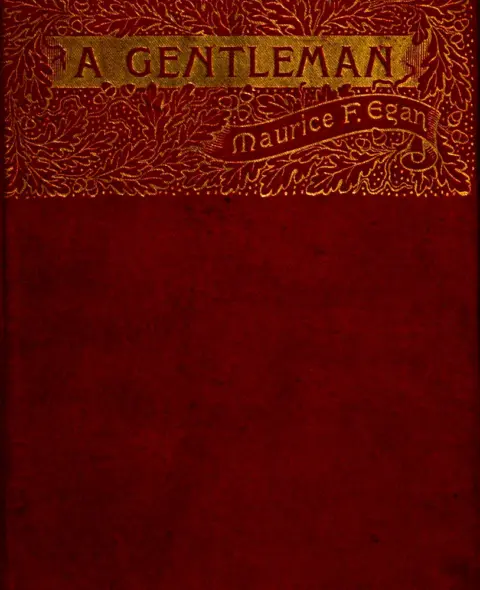
"A Gentleman" by Maurice Francis Egan is a guidebook on manners and etiquette written in the late 19th century. Aimed primarily at young men between the ages of fifteen and twenty, the book emphasizes the significance of good manners as essential for success in social and professional life. Through practical advice and examples, Egan outlines the qualities that define a gentleman, suggesting that they come from both heart and intellect. The opening of the book sets the tone for this instructive journey, as Egan reflects on the importance of good manners and specific social rules that contribute to personal success. He explains that while the practice of etiquette may seem trivial, it plays a crucial role in establishing one's place in society. Emphasizing that behaviors like being considerate and respectful can open doors, Egan shares anecdotes, contrasting the serious importance of manners against the seemingly mundane aspects of social interactions. The author asserts that by mastering these small details, young men can distinguish themselves and build a foundation for a successful and respectable life.
Introduction adapted from the source catalogue; source summaries may be automatically generated.
Free to read · English · 36,632 words · No account needed
MAKE TIME FOR A GOOD BOOK
On by default. Untick to stop anonymous reading totals. Each page counts after 10 seconds in view. How this works.
Anonymous counting is on unless you have switched it off.
Cardinal Newman made a famous definition and description, both in the same paragraph, of a gentleman. “It is almost,” he said, in his “Idea of a University,” “a definition of a gentleman to say he is one who never inflicts pain.” And this truth will be found to be the basis of all really good manners. Good manners come from the heart, while etiquette is only an invention of wise heads to prevent social friction, or to keep fools at a distance. Nobody but an idiot will slap a man on the back unless the man invites the slap by his own familiarity. It seems to me that the primary rule which, according to Cardinal Newman, makes a gentleman is more disregarded in large schools than anywhere else. There is no sign which indicates ignorance or lack of culture so plainly as the tendency to censure, to jibe, to sneer,—to be always on the alert to find faults and defects. On the other hand, a true gentleman does not censure, if he can help it: he prefers to discover virtues rather than faults; and, if he sees a defect, he is silent about it until he can gently suggest a remedy.
The school-boy is not remarkable for such reticence. And this may be one of the reasons why he has the reputation of being selfish, ungrateful, and sometimes cruel. He is not any of these things; he is, as a rule, only thoughtless. It has been said that a blunder is often worse than a crime; and thoughtlessness sometimes produces effects that are more enduringly disastrous than crimes. Forgetfulness among boys or young men is thoughtlessness. If an engineer forget for a moment, his train may go to RUIN. If a telegrapher forget to send a message, death may be the result; but neither of them can acquire such control over himself that he will always remember, if he does not practise the art of thinking every day of his life. It is thoughtfulness, consideration, that makes life not only endurable, but pleasant. As Christians, we are bound to do to others as we would have them do to us. But as members of a great society, in which each person must be a factor even more important than he imagines, we shall find that, even if our Christianity did not move us to bear and forbear from the highest motives, ordinary prudence and regard for our own comfort and reputation should lead us to do these things. The Christian gentleman is the highest type: he may be a hero as well as a gentleman. Culture produces another type, and Cardinal Newman thus describes him. The Cardinal begins by saying that “it is almost a definition of a gentleman to say he is one who never inflicts pain. This description,” he continues, “is both refined and, as far as it goes, accurate. The gentleman is mainly occupied in merely removing the obstacles which hinder the free and unembarrassed action of those about him; and he concurs with their movements rather than takes the initiative himself. The benefits may be considered as parallel to what are called comforts or conveniences in arrangements of a personal nature: like an easy-chair or a good fire, which do their part in dispelling cold or fatigue, though nature provides both means of rest and animal heat without them. The true gentleman in like manner carefully avoids whatever may cause a jar or a jolt in the minds of those with whom he is cast,—all clashing of opinion or collision of feeling, all restraint or suspicion or gloom or resentment,—his great concern being to make every one at their ease or at home. He has his eyes on all the company: he is tender towards the bashful, gentle toward the distant, and merciful towards the absurd; he can recollect to whom he is speaking; he guards against unreasonable allusions or topics which may irritate; he is seldom prominent in conversation, and never wearisome. He makes light of favors which he does them, and seems to be receiving when he is conferring. He never speaks of himself except when compelled, never defends himself by a mere retort; he has no ears for slander or gossip, is scrupulous in imputing motives to those who interfere with him, and interprets everything for the best. He is never mean or little in his disputes, never takes unfair advantage, never mistakes personalities or sharp sayings for arguments, or insinuates evil which he dare not say out. From a long-sighted prudence he observes the maxim of the ancient sage, that we should ever conduct ourselves towards our enemy as if he were one day to be our friend.”
Your reading position is saved on this browser. Take it to another device with a library code. Reading pages adapt to text, rather than matching a printed edition.
Maurice Francis Egan
Maurice Francis Egan
BEHIND THE BOOK
This eBook is for the use of anyone anywhere in the United States and most other parts of the world at no cost and with almost no restrictions whatsoever. You may copy it, give it away or re-use it under the terms of the Project Gutenberg License included with this eBook or online at www.gutenberg.org. If you are not located in the United States, you will have to check the laws of the country where you are located before using this eBook. Read the source licence.
The original source file, including credits and licence, is retained by this library. Request an original-format copy at no charge. Please include the book title and Project Gutenberg identifier #62712.
KEEP YOUR CURIOSITY GOING

Charles G. (Charles Griffith) Ross
Hannah Webster Foster

Emily Lawless
Edwin Hamlin Carr

Charles De Lano Hine
Andrew Ure