THE CLASSIC COLLECTION✦A dead man’s diaryCLASSIC FREE BOOKS
A dead man’s diary
Coulson Kernahan
THE CLASSIC COLLECTION · 1910
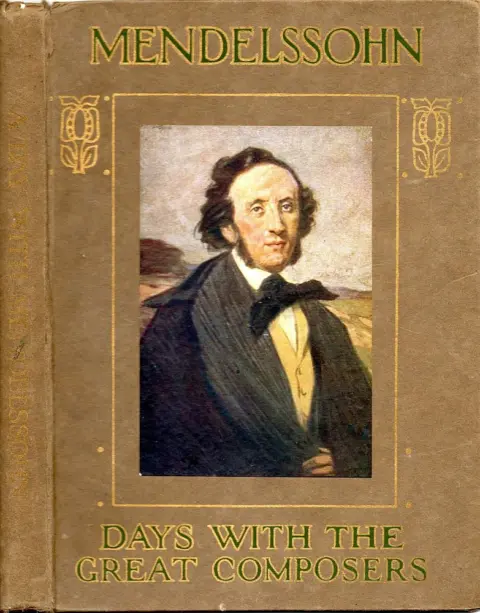
"A Day with Felix Mendelssohn Bartholdy" by George Sampson is a biographical account written in the early 20th century. This engaging book captures a personal encounter with the renowned composer Felix Mendelssohn, portraying not just his musical genius but also his charming personality and thoughts on music. It delves into the life and works of Mendelssohn, framed by the author’s experiences during a visit to Leipzig. The narrative unfolds as Sampson, a young singer visiting Leipzig in 1840, meets Mendelssohn in his immaculate workroom. The composer engages in delightful conversation, reflecting on his love for England and his significant musical contributions, including discussions about his Hebrides Overture and the piece he is composing, a Violin Concerto. Through the dialogue among Mendelssohn, fellow composers, and musicians like Robert Schumann and Ferdinand David, readers gain insight into Mendelssohn's creative process, his philosophical musings on music, and his relationships with other prominent figures in the musical world. This snapshot of Mendelssohn's life offers a rich understanding of his legacy and the artistic environment of his time.
Introduction adapted from the source catalogue; source summaries may be automatically generated.
Free to read · English · 5,619 words · No account needed
MAKE TIME FOR A GOOD BOOK
On by default. Untick to stop anonymous reading totals. Each page counts after 10 seconds in view. How this works.
Anonymous counting is on unless you have switched it off.
"Yes, yes," assented Schumann; "you are the Fairies' Laureate."
"Hear, hear!" cried David. "Now could anything be finer in its way than the Midsummer Night's Dream music? And the wondrous brat wrote it at seventeen!"
Mendelssohn laughingly acknowledged the compliments.
"That is a beautiful fairy song of yours," I said, "the one to Heine's verses about the fairies riding their tiny steeds through the wood."
"Oh, yes," said Schumann; "will you sing it to us?"
"I am afraid it requires much lighter singing than I can give it," I replied; "but I will try, if you wish."
"We shall all be glad if you will," said Mendelssohn, as he turned once more to the key-board. The bright staccato rhythm flashed out from his fingers so gaily that I was swept into the song without time for hesitation:
The Fairy Love.
"Through the woods the moon was glancing;
There I saw the Fays advancing;
On they bounded, gaily singing,
Horns resounded, bells were ringing.
Tiny steeds with antlers growing
On their foreheads brightly glowing,
Bore them swift as falcons speeding
Fly to strike the game receding.
Passing, Queen Titania sweetly
Deigned with nods and smiles to greet me.
Means this, love will be requited?
Or, will hope by death be blighted?"
"You have greatly obliged us," said Schumann courteously.
"It reminds me, though I don't know why," said David, "of that fairy-like duet about Jack Frost and the dancing flowers."
"Come along and play it with me," said Mendelssohn to Bennett; "you've been hiding your talents all day."
Bennett joined him at the piano, and the two began to romp like
schoolboys.
The simple duet was woven into a brilliant fantasia, but always in the gay spring-like spirit of the poem.
The Maybells and the Flowers.
"Young Maybells ring throughout the vale
And sound so sweet and clear,
The dance begins, ye flowers all,
Come with a merry cheer!
The flowers red and white and blue,
Merrily flock around,
Forget-me-nots of heavenly hue,
And violets, too, abound.
Young Maybells play a sprightly tune,
And all begin to dance,
While o'er them smiles the gentle moon,
With her soft silvery glance.
This Master Frost offended sore;
He in the vale appeared:
Young Maybells ring the dance no more--
Gone are the flowers seared!
But Frost has scarcely taken flight,
When well-known sounds we hear:
The Maybells with renewed delight,
Are ringing doubly clear!
Now I no more can stay at home,
The Maybells call me so:
The flowers to the dance all roam,
Then why should I not go?"
"Really," said David; "it's quite infectious"; and jumping up he began to pirouette, exclaiming, "Then why should I not go!"
Your reading position is saved on this browser. Take it to another device with a library code. Reading pages adapt to text, rather than matching a printed edition.
BEHIND THE BOOK
This eBook is for the use of anyone anywhere in the United States and most other parts of the world at no cost and with almost no restrictions whatsoever. You may copy it, give it away or re-use it under the terms of the Project Gutenberg License included with this eBook or online at www.gutenberg.org. If you are not located in the United States, you will have to check the laws of the country where you are located before using this eBook. Read the source licence.
The original source file, including credits and licence, is retained by this library. Request an original-format copy at no charge. Please include the book title and Project Gutenberg identifier #29361.
KEEP YOUR CURIOSITY GOING
Coulson Kernahan

Maurice Baring
Frances Wright
Cécile Tormay

Frederic Jesup Stimson

W. H. P. (William Henry Pope) Jarvis