THE CLASSIC COLLECTION✦A dead man’s diaryCLASSIC FREE BOOKS
A dead man’s diary
Coulson Kernahan
THE CLASSIC COLLECTION · 1910
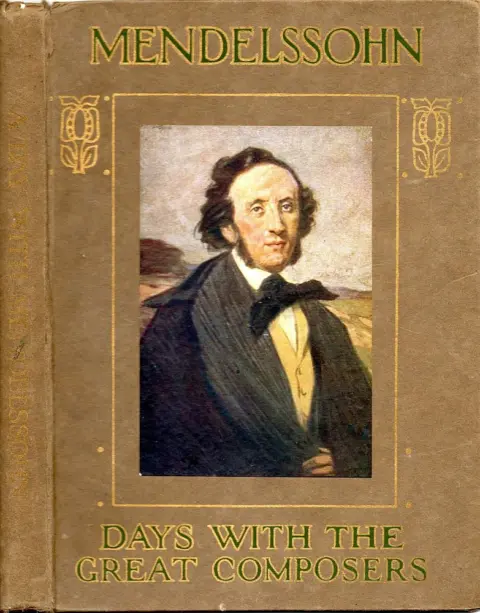
"A Day with Felix Mendelssohn Bartholdy" by George Sampson is a biographical account written in the early 20th century. This engaging book captures a personal encounter with the renowned composer Felix Mendelssohn, portraying not just his musical genius but also his charming personality and thoughts on music. It delves into the life and works of Mendelssohn, framed by the author’s experiences during a visit to Leipzig. The narrative unfolds as Sampson, a young singer visiting Leipzig in 1840, meets Mendelssohn in his immaculate workroom. The composer engages in delightful conversation, reflecting on his love for England and his significant musical contributions, including discussions about his Hebrides Overture and the piece he is composing, a Violin Concerto. Through the dialogue among Mendelssohn, fellow composers, and musicians like Robert Schumann and Ferdinand David, readers gain insight into Mendelssohn's creative process, his philosophical musings on music, and his relationships with other prominent figures in the musical world. This snapshot of Mendelssohn's life offers a rich understanding of his legacy and the artistic environment of his time.
Introduction adapted from the source catalogue; source summaries may be automatically generated.
Free to read · English · 5,619 words · No account needed
MAKE TIME FOR A GOOD BOOK
On by default. Untick to stop anonymous reading totals. Each page counts after 10 seconds in view. How this works.
Anonymous counting is on unless you have switched it off.
"Yes I do," said David, "and so do the manners of all of you, for no one introduces our singer;" and turning to me he added, "this is Mr. Robert Schumann who divides the musical firmament of Leipzig with Mendelssohn."
"You forget to add," said Mendelssohn, "that Schumann conquers in
literature as well as in music. No one has written better musical
critiques."
"Yes, yes," grumbled David; "I wish he wouldn't do so much of it. If he scribbled less he'd compose more. The cobbler should stick to his last, and the musician shouldn't relinquish the music-pen for the goose quill."
"But what of Mendelssohn himself," urged Schumann; "he, in a special sense, is a man of letters; for if there's one thing as good as being with him, it is being away from him, and receiving his delightful epistles."
"Not the same thing," said David, shaking his head.
"And then," said Schumann, waving his hand comprehensively around the room, "observe his works of art."
I was about to express my astonishment at finding that Mendelssohn himself had produced these admirable pictures; but David suddenly addressed me: "By the way, don't let Mendelssohn decoy you into playing billiards with him; or if you do weakly yield, insist on fifty in the hundred--unless, of course, you have misspent your time, too, in gaining disreputable proficiency;" and he shook his head at the thought of many defeats.
"Certainly," exclaimed Schumann, "Mendelssohn does all things well."
"That's a handsome admission from a rival," said David.
"A rival!" answered Schumann with spirit. "There can be no talk of rivalry between us. I know my place. Mendelssohn and I differ about things, sometimes; but who could quarrel with him?"
"I could!" exclaimed David, jumping up, and striking an heroic attitude.
"You!" laughed Schumann; "You quarrel, you dear old scraper of
unmentionable strings!"
"Ah, ha! my boy," chuckled David, "you can't write for them."
"You mean I don't write for them," said Schumann; "I admit that I don't provide much for you to do. I leave that to my betters."
"Never mind," said David, giving his shoulder a friendly pat; "at least you can write for the piano. I believe in you, and your queer music."
"That's nice of you, David," replied Schumann, "but as to Mendelssohn and me, who shall decide which of us is right? He believes in making music as pellucid to the hearers as clear water. Now I like to baffle them--to leave them something to struggle with. Music is never the worse for being obscure at first."
Mendelssohn shook his head and smiled. "You state your case eloquently, Schumann," he said, "but my feelings revolt against darkness and indefiniteness."
Your reading position is saved on this browser. Take it to another device with a library code. Reading pages adapt to text, rather than matching a printed edition.
BEHIND THE BOOK
This eBook is for the use of anyone anywhere in the United States and most other parts of the world at no cost and with almost no restrictions whatsoever. You may copy it, give it away or re-use it under the terms of the Project Gutenberg License included with this eBook or online at www.gutenberg.org. If you are not located in the United States, you will have to check the laws of the country where you are located before using this eBook. Read the source licence.
The original source file, including credits and licence, is retained by this library. Request an original-format copy at no charge. Please include the book title and Project Gutenberg identifier #29361.
KEEP YOUR CURIOSITY GOING
Coulson Kernahan

Maurice Baring
Frances Wright
Cécile Tormay

Frederic Jesup Stimson

W. H. P. (William Henry Pope) Jarvis