THE CLASSIC COLLECTION✦Found in the Philippines: The Story of a Woman’s LettersCLASSIC FREE BOOKS
Found in the Philippines: The Story of a Woman’s Letters
Charles King
THE CLASSIC COLLECTION · 1902
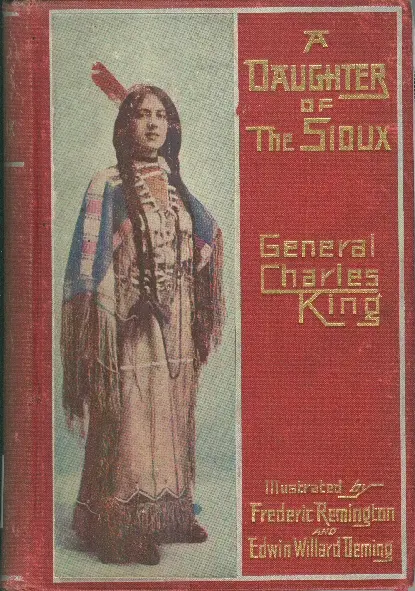
"A Daughter of the Sioux: A Tale of the Indian Frontier" by Charles King is a historical novel set in the late 19th century. The story takes place on the American frontier and follows the life of Lieutenant Beverly Field as he navigates the complexities of military duty and personal relationships amidst the rising tensions with Native American tribes. Key characters include Field, who is dedicated but distracted by his feelings for Esther Dade, and the captivating newcomer, Nanette Flower, who adds to the drama at Fort Frayne. The opening of the narrative introduces us to Major Webb and Lieutenant Field as they grapple with the lieutenant's frequent requests for absences to spend time with the lovely Esther Dade. The tension grows as it becomes evident that another woman, Nanette Flower, who has just arrived at Fort Frayne, captivates the attention of Field and other officers, inciting jealousy from Esther. As the chapter unfolds, it sets the stage for a sense of impending conflict, both personal and in terms of the looming threat from hostile Sioux forces. The relationships between the characters, particularly the dynamics between Field, Esther, and Nanette, foreshadow deeper complications that are likely to influence the unfolding story.
Introduction adapted from the source catalogue; source summaries may be automatically generated.
Free to read · English · 76,142 words · No account needed
MAKE TIME FOR A GOOD BOOK
On by default. Untick to stop anonymous reading totals. Each page counts after 10 seconds in view. How this works.
Anonymous counting is on unless you have switched it off.
Sore in soul and body was Kennedy, and sore and stiff was his gallant bay, Kilmaine, when these comrades of over three years' service shook the spray of the Platte from their legs and started doggedly northward on the trail. Northward they went for full three miles, Kilmaine sulky and protesting. The dust cloud was only partially visible now, hidden by the ridge a few miles ahead, when, over that very ridge, probably four miles away to the right front, Kennedy saw coming at speed a single rider, and reined to the northeast to meet him. Blake and his men had gone far in that direction. Two of their number, with horses too slow for a chase after nimble ponies, had, as we have seen, drifted back, and joined, unprepared though they were for the field, the rear of Webb's column. But now came another, not aiming for Webb, but heading for Frayne. It meant news from the chase that might be important. It would take him but little from the direct line to the north, why not meet him and hear? Kennedy reined to the right, riding slowly now and seeking the higher level from which he could command the better view.
At last they neared each other, the little Irish veteran, sore-headed and in evil mood, and a big, wild-eyed, scare-faced trooper new to the frontier, spurring homeward with panic in every feature, but rejoicing at sight of a comrade soldier.
"Git back; git back!" he began to shout, as soon as he got within hailing distance. "There's a million Indians just over the ridge. They've got the captain----"
"What captain?" yelled Kennedy, all ablaze at the instant. "Spake up, ye
shiverin' loon!"
"Blake! He got way ahead of us----"
"Then it's to him you should be runnin', not home, ye cur! Turn about now! Turn about or I'll----" And in a fury Pat had seized the other's rein, and, spurring savagely at Kilmaine,--both horses instantly waking, as though responsive to the wrath and fervor of their little master,--he fairly whirled the big trooper around and, despite fearsome protests, bore him onward toward the ridge, swift questioning as they rode. How came they to send a raw rookie on such a quest? Why, the rookie gasped in explanation that he was on stable guard, and the captain took the first six men in sight. How happened it that the captain got so far ahead of him? There was no keepin' up with the captain. He was on his big, raw-boned race horse, chasin' three Indians that was firin' and had hit Meisner, but there was still three of the troop to follow him, and the captain ordered "come ahead," until all of a sudden, as they filed round a little knoll, the three Indians they'd been chasin' turned about and let 'em have it, and down went another horse, and Corporal Feeney was killed sure, and he, the poor young rookie, saw Indians in every direction, "comin' straight at 'em," and what else could he do but gallop for home--and help? All this, told with much gasping on his part, and heard with much blasphemy by Kennedy, brought the strangely assorted pair at swift gallop over the springy turf back along the line of that panicky, yet most natural retreat. Twice would the big fellow have broken away and again spurred for home, but the little game cock held him savagely to his work and so, together, at last they neared the curtaining ridge. "Now, damn you!" howled Kennedy, "whip out your carbine and play you're a man till we see what's in front! an' if ye play false, the first shot from this barker," with a slap at the butt of his Springfield, "goes through your heart."
Your reading position is saved on this browser. Take it to another device with a library code. Reading pages adapt to text, rather than matching a printed edition.
Charles King

Charles King

Charles King

Charles King
BEHIND THE BOOK
This eBook is for the use of anyone anywhere in the United States and most other parts of the world at no cost and with almost no restrictions whatsoever. You may copy it, give it away or re-use it under the terms of the Project Gutenberg License included with this eBook or online at www.gutenberg.org. If you are not located in the United States, you will have to check the laws of the country where you are located before using this eBook. Read the source licence.
The original source file, including credits and licence, is retained by this library. Request an original-format copy at no charge. Please include the book title and Project Gutenberg identifier #19023.
KEEP YOUR CURIOSITY GOING
Cécile Tormay

Moritz Busch
Coulson Kernahan
John L. Ransom

Maurice Baring
Frances Wright