THE CLASSIC COLLECTION✦Found in the Philippines: The Story of a Woman’s LettersCLASSIC FREE BOOKS
Found in the Philippines: The Story of a Woman’s Letters
Charles King
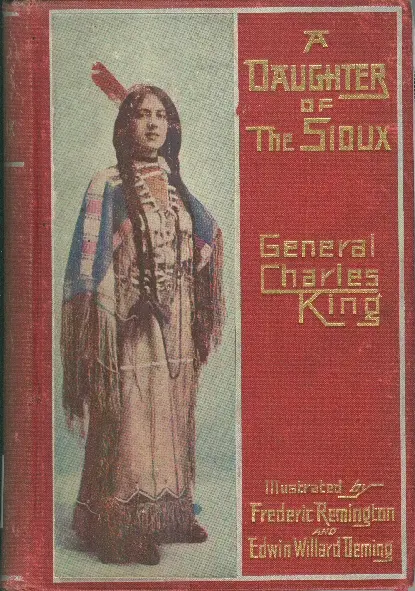
THE CLASSIC COLLECTION · 1902
"A Daughter of the Sioux: A Tale of the Indian Frontier" by Charles King is a historical novel set in the late 19th century. The story takes place on the American frontier and follows the life of Lieutenant Beverly Field as he navigates the complexities of military duty and personal relationships amidst the rising tensions with Native American tribes. Key characters include Field, who is dedicated but distracted by his feelings for Esther Dade, and the captivating newcomer, Nanette Flower, who adds to the drama at Fort Frayne. The opening of the narrative introduces us to Major Webb and Lieutenant Field as they grapple with the lieutenant's frequent requests for absences to spend time with the lovely Esther Dade. The tension grows as it becomes evident that another woman, Nanette Flower, who has just arrived at Fort Frayne, captivates the attention of Field and other officers, inciting jealousy from Esther. As the chapter unfolds, it sets the stage for a sense of impending conflict, both personal and in terms of the looming threat from hostile Sioux forces. The relationships between the characters, particularly the dynamics between Field, Esther, and Nanette, foreshadow deeper complications that are likely to influence the unfolding story.
Introduction adapted from the source catalogue; source summaries may be automatically generated.
Free to read · English · 76,142 words · No account needed
MAKE TIME FOR A GOOD BOOK
On by default. Untick to stop anonymous reading totals. Each page counts after 10 seconds in view. How this works.
Anonymous counting is on unless you have switched it off.
Flint was thinking of them this very evening when Dr. Waller, happening to meet him on his way from hospital briefly said that General Field should be with them on the morrow. "He leaves Rock Creek to-night, having hired transportation there. I had hoped our lad might be in better spirits by this time."
The major answered vaguely. How could a lad with all these sins upon his soul be in anything but low spirits? Here was a brand to be snatched from the burning, a youth whom prompt, stern measures might redeem and restore, one who should be taught the error of his ways forthwith; only, the coming of the member of the Military Committee of the House of Representatives might make the process embarrassing. There were other ways, therefore and however, in which this valuable information in the major's possession might be put to use, and of these was the major thinking, more than of the condition of the wounded lad, physical or spiritual, as homeward through the gloaming he wended his way.
Might it not be well to wait until this important and influential personage had reached the post before proceeding further? Might it not be well, confidentially and gradually, as it were, to permit the Honorable M. C. to know that grave irregularities had occurred?--that up to this moment the complete knowledge thereof was locked in the breast of the present post commander?--that the suppression or presentation of the facts depended solely upon that post commander? and then if the member of the House Committee on Military Affairs proved receptive, appreciative, in fact responsive, might not the ends of justice better be subserved by leaving to the parent the duty of personally and privately correcting the son? and, in consideration of the post commander's wisdom and continence, pledging the influence of the Military Committee to certain delectable ends in the major's behalf? Long had Flint had his eye on a certain desirable berth in the distant East--at the national capitol in fact--but never yet had he found statesman or soldier inclined to further his desire. That night the major bade Mr. and Mrs. Wilkins hold their peace as to Field's peccadilloes until further leave was given them to speak. That night the major, calling at Captain Dade's, was concerned to hear that Mrs. Dade was not at home. "Gone over to the hospital with Mrs. Blake and the doctor," was the explanation, and these gentle-hearted women, it seems, were striving to do something to rouse the lad from the slough of despond which had engulfed him. That night "Pink" Marble, Hay's faithful book-keeper and clerk for many a year, a one-armed veteran of the civil war, calling, as was his invariable custom when the trader was absent, to leave the keys of the safe and desks with Mrs. Hay, was surprised to find her in a flood of tears, for which she declined all explanation; yet the sight of Pete, the half breed, slouching away toward the stables as Marble closed the gate, more than suggested cause, for "Pink" had long disapproved of that young man. That night Crapaud, the other stableman, had scandalized Jerry Sullivan, the bar-keeper, and old McGann, Webb's Hibernian major domo, by interrupting their game of Old Sledge with a demand for a quart of whiskey on top of all that he had obviously and surreptitiously been drinking, and by further indulging in furious threats, in a sputtering mixture of Dakota French and French Dakota, when summarily kicked out. That night, late as twelve o'clock, Mrs. Ray, aroused by the infantile demands of the fourth of the olive branches, and further disturbed by the suspicious growlings and challenge of old Tonto, Blake's veteran mastiff, peeped from the second story window and plainly saw two forms in soldier overcoats at the back fence, and wondered what the sentries found about Blake's quarters to require so much attention. Then she became aware of a third form, rifle-bearing, and slowly pacing the curving line of the bluff--the sentry beyond doubt. Who, then, were these others who had now totally disappeared? She thought to speak of it to Nannie in the morning, and then thought not. There were reasons why nervous alarm of any kind were best averted then from Mrs. Blake. But there came reason speedily why Mrs. Ray could not forget it.
Your reading position is saved on this browser. Take it to another device with a library code. Reading pages adapt to text, rather than matching a printed edition.
Charles King

Charles King

Charles King

Charles King
BEHIND THE BOOK
This eBook is for the use of anyone anywhere in the United States and most other parts of the world at no cost and with almost no restrictions whatsoever. You may copy it, give it away or re-use it under the terms of the Project Gutenberg License included with this eBook or online at www.gutenberg.org. If you are not located in the United States, you will have to check the laws of the country where you are located before using this eBook. Read the source licence.
The original source file, including credits and licence, is retained by this library. Request an original-format copy at no charge. Please include the book title and Project Gutenberg identifier #19023.
KEEP YOUR CURIOSITY GOING
Cécile Tormay

Moritz Busch
Coulson Kernahan
John L. Ransom

Maurice Baring
Frances Wright