THE CLASSIC COLLECTION✦An outlaw’s diary: the CommuneCLASSIC FREE BOOKS
An outlaw’s diary: the Commune
Cécile Tormay
THE CLASSIC COLLECTION · 1890
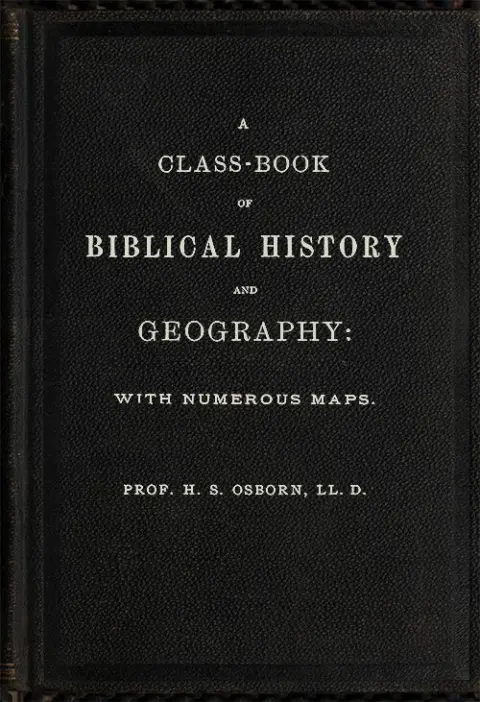
"A Class-Book of Biblical History and Geography" by H. S. Osborn is an educational text that presents a structured historical account of the Bible, focusing on both the Old and New Testaments, and was written in the late 19th century. This work aims to provide a comprehensive overview of biblical events through a historical lens, including the significant periods of Jewish history that bridge the timeframe from the Old Testament's conclusion to the advent of the New Testament. The book also incorporates geographical insights, with maps intended to enhance the reader's understanding of the events discussed. The opening of this class-book begins with a preface outlining its objectives and structure, emphasizing a historical approach devoid of speculative opinions. It introduces the initial chapters by summarizing biblical accounts such as the Creation, the Garden of Eden, and the early generations of humanity, including significant lineage details that contribute to understanding biblical narratives. Moreover, it details the chronological framework utilized to analyze Biblical events and introduces the notion that names and their meanings are crucial for grasping the scriptural context. The narrative is designed to guide readers—especially educators and students—through biblical history in a clear and engaging manner, setting the stage for a deeper exploration of the text's historical richness.
Introduction adapted from the source catalogue; source summaries may be automatically generated.
Free to read · English · 67,754 words · No account needed
MAKE TIME FOR A GOOD BOOK
On by default. Untick to stop anonymous reading totals. Each page counts after 10 seconds in view. How this works.
Anonymous counting is on unless you have switched it off.
=Jerusalem.= He makes a triumphal entry into Jerusalem and visits the Temple, Matt. 21:12‒17. This passage includes the statement of the overturning the money-changers’ tables on the first day. Mark 11:12 states that this act was performed on the day following. As he performed the same act at his first Passover, two years before, John 2:13‒17, he may have done the same thing twice, on two successive days. Also read Luke 19:45.
=Bethany.= He retires at evening to Bethany, Matt. 21:17; Mark 11:11.
=17. Bethany= was a little over a mile east of the lower part of the city, about a mile and a half southeast from St. Stephen’s gate, if measured along the road.
=Bethphage= has not been certainly identified, but it was probably at a place one half-mile south of the Church of the Ascension, which is on the top of the Mount of Olives. It was on the way from Bethany to Jerusalem, where the road from Bethany winds around the south of the highest part of the Mount of Olives. This was the supposition of Dr. Barclay, and seems probable to the writer, who visited the place.
=On the way from Bethany to Jerusalem.= The fig-tree cursed, Matt.
21:19; Mark 11:12.
=18. Jerusalem.= Christ’s authority demanded, Matt. 21:23; Mark 11:27;
Luke 20:1.
Parable of the two sons, Matt. 21:28.
Parable of the wicked husbandmen, Matt. 21:33‒41; Mark 12:1; Luke 20:9.
Of the marriage of the king’s son, Matt. 22:2.
The cunning of the Pharisees regarding tribute to Cæsar, Matt. 22:15;
Mark 12:13; Luke 20:21.
The artful question of the Sadducees answered in respect to the resurrection, Matt. 22:23; Mark 12:18; Luke 20:27.
A lawyer’s question, Which is the greatest commandment? Matt. 22:35;
Mark 12:28.
Jesus’ question as to why David calls the son Lord, Matt. 22:42; Mark
12:35; Luke 20:41.
He warns them against the scribes and Pharisees, Matt. 23:2‒36; Mark 12:38‒40; Luke 20:46, 47.
The widow’s two mites, Mark 12:41; Luke 21:1.
Some Greeks desire to see Jesus, John 12:20.
=19. Mount of Olives.= Warnings and foretelling of the destruction of Jerusalem, Matt. 24:3‒51; Mark 13:3‒37; Luke 21:7‒36.
The ten virgins and the parable of the five talents, Matt. 25:1‒30.
A distinct announcement that he shall come in glory with the angels, Matt. 25:31‒46; such an announcement was made before his transfiguration, but only in brief allusion, see Mark 8:38.
=Jerusalem.= The chief priests, scribes, and elders of the people take counsel to destroy Jesus, Matt. 26:3; Mark 14:1, 2; Luke 22:2.
Jesus appoints a place where he shall eat the passover, Matt. 26:17;
Mark 14:12; Luke 22:7.
The Lord’s Supper instituted at the close of the eating of the passover, Matt. 26:26‒29; Mark 14:22‒26; Luke 22:19, 20. From the last quotation, with its context both before and after, it is plain that the institution followed the passover; read also from John 13:2.
Jesus washes his disciples’ feet. This includes Judas’ feet, as seen in the record by John, 13:4‒30.
Your reading position is saved on this browser. Take it to another device with a library code. Reading pages adapt to text, rather than matching a printed edition.
BEHIND THE BOOK
This eBook is for the use of anyone anywhere in the United States and most other parts of the world at no cost and with almost no restrictions whatsoever. You may copy it, give it away or re-use it under the terms of the Project Gutenberg License included with this eBook or online at www.gutenberg.org. If you are not located in the United States, you will have to check the laws of the country where you are located before using this eBook. Read the source licence.
The original source file, including credits and licence, is retained by this library. Request an original-format copy at no charge. Please include the book title and Project Gutenberg identifier #56019.
KEEP YOUR CURIOSITY GOING
Cécile Tormay

Moritz Busch
John L. Ransom
Frances Wright
Cécile Tormay

Mabel Potter Daggett