THE CLASSIC COLLECTION✦An American tragedy, v. 2CLASSIC FREE BOOKS
An American tragedy, v. 2
Theodore Dreiser
THE CLASSIC COLLECTION · 1922
"A Book About Myself" by Theodore Dreiser is a memoir written in the early 20th century. This autobiographical account delves into Dreiser's formative years, exploring his aspirations, encounters, and the complexities of life in late 19th-century Chicago. Dreiser reflects deeply on his desire to become a writer, capturing the vibrant, raw essence of the city that inspired his work, as well as his youthful romantic entanglements. At the start of the memoir, Dreiser recounts his early dreams of writing stirred by the works of local author Eugene Field. Living in Chicago during its rapid growth, he vividly describes the city’s unique atmosphere, blending its bustling life with personal reflections on his ambitions. As he navigates his role as a collector for a furniture company, he yearns to document the life around him and slowly formulates a plan to break into journalism. His encounters with various characters and his infatuation with a young girl named Alice add layers to his journey, highlighting both his aspirations and the challenges he faces, including family dynamics and the harsh realities of economic struggle. This opening sets the tone for a candid exploration of Dreiser's life and ambitions.
Introduction adapted from the source catalogue; source summaries may be automatically generated.
Free to read · English · 181,596 words · No account needed
MAKE TIME FOR A GOOD BOOK
On by default. Untick to stop anonymous reading totals. Each page counts after 10 seconds in view. How this works.
Anonymous counting is on unless you have switched it off.
Just at this time St. Louis seemed to be upon the verge of change and improvement. An old section of mansions bordering on the business center was rapidly giving way to a rabble of small stores and cheap factories. Already several new buildings of the Chicago style of skyscraper were either contemplated or in process of construction. There was a new club, the Mercantile, the largest in the city, composed entirely of merchants in the downtown section, which had just been opened and about which the papers were making a great stir. There was a new depot contracted for, one of the finest in all the country, so I was told, which was to house all the roads entering the city. A new city hall was being talked of, an enormous thing-to-be. Out in the west end, where progress seemed the most vital, were new streets and truly magnificent residence “places,” parked and guarded areas these, in which were ranged many residences of the ultra-rich. The first time I saw one of these places I was staggered by its exclusive air and the beauty and even grandeur of some of the great houses in it—newly manufactured exclusiveness. Here were great gray or white or brownstone affairs, bright, almost gaudy, with great verandas, astonishing doorways, flights of stone steps, heavily and richly draped windows, immense carriage-houses, parked and flowered lawns.
By degrees I came to know the trade and poor sections of the city. Here were long throbbing wholesale streets, crowded with successful companies; along the waterfront was a mill area backed up by wretched tenements, as poor and grimy and dingy as any I have ever seen; elsewhere were long streets of middle-class families, all alike, all with white stone doorsteps or windowsills and tiny front yards.
The atmosphere of the Globe-Democrat after a time came to have a peculiar appeal for me because it was dominated so completely by the robust personality of McCullagh. He was so natural, unaffected, rugged. As time passed he steadily grew in my estimation and by degrees, as I read his paper, his powerful, brilliant editorials, and saw how systematically and forcefully he managed all things in connection with himself and his men, the very air of St. Louis became redolent of him. He was a real force, a great man. So famous was he already that men came to St. Louis from the Southwest and elsewhere just to see him and his office. I often think of him in that small office, sitting waist-deep among his papers, his heavy head sunk on his pouter-like chest, his feet incased in white socks and low slipper-like shoes, his whole air one of complete mental and physical absorption in his work. A few years later he committed suicide, out of sheer weariness, I assume, tired of an inane world. Yet it was not until long after, when I was much better able to judge him and his achievements, that I understood what a really big thing he had done: built up a journal of national and even international significance in a region which, one would have supposed, could never have supported anything more than a mediocre panderer to trade interests. As Hazard had proudly informed me, the annual bill for telegraph news alone was $400,000: a sum which, in the light of subsequent journalistic achievements in America, may seem insignificant but which at that time meant a great deal. He seemed to have a desire to make the paper not only good (as that word is used in connection with newspapers) but great, and from my own memory and impression I can testify that it was both. It had catholicity and solidity in editorials and news. The whole of Europe, as well as America, was combed and reflected in order that his readers might be entertained and retained, and each day one could read news of curious as well as of scientific interest from all over the world. Its editorials were in the main wise and jovial, often beautifully written by McCullagh himself. Of assumed Republican tendencies, it was much more a party leader than follower, both in national and in State affairs. The rawest of raw youths, I barely sensed this at the time, and yet I felt something of the wonder and beauty of it all. I knew him to be a great man because I could feel it. There was something of dignity and force about all that was connected with him. Later it became a fact of some importance to me that I had been called to a paper of so much true worth, by a man so wise, so truly able.
Your reading position is saved on this browser. Take it to another device with a library code. Reading pages adapt to text, rather than matching a printed edition.
Theodore Dreiser
Theodore Dreiser
Theodore Dreiser
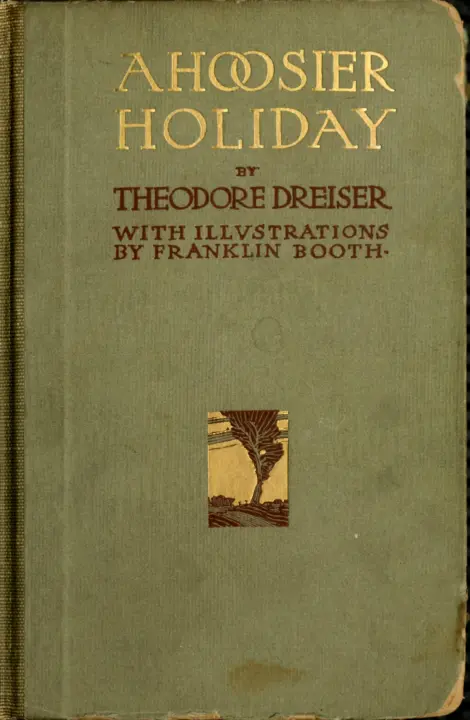
Theodore Dreiser
BEHIND THE BOOK
This eBook is for the use of anyone anywhere in the United States and most other parts of the world at no cost and with almost no restrictions whatsoever. You may copy it, give it away or re-use it under the terms of the Project Gutenberg License included with this eBook or online at www.gutenberg.org. If you are not located in the United States, you will have to check the laws of the country where you are located before using this eBook. Read the source licence.
The original source file, including credits and licence, is retained by this library. Request an original-format copy at no charge. Please include the book title and Project Gutenberg identifier #62995.
KEEP YOUR CURIOSITY GOING
John L. Ransom

Herman W. Mudgett

Harriet Monroe
Daniel Dulany Addison
Charles Lanman

Harold Rosher