A Son of Ishmael: A Novel
L. T. Meade
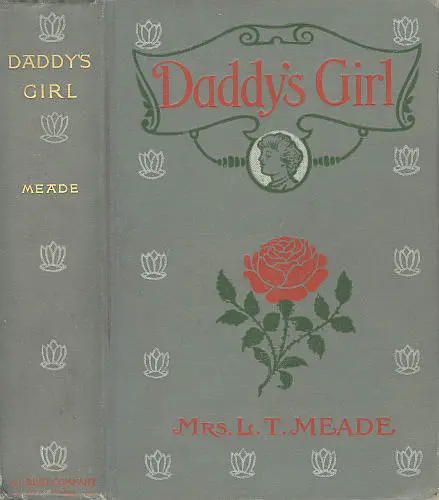
THE CLASSIC COLLECTION · 1900
"Daddy's Girl" by L. T. Meade is a novel written during the late 19th century. The story revolves around an eight-year-old girl named Sibyl Ogilvie, affectionately referred to as "the Angel," who navigates the complexities of her family dynamics, including her quarrelling parents and her own understanding of love, beauty, and perfection. The book explores themes of innocence, the longing for parental approval, and the perceived perfection of childhood versus the reality of adult relationships. At the start of the novel, we are introduced to young Sibyl, who remains blissfully unaware of the discord between her parents, Philip and Mildred Ogilvie. While her father seems to cherish her without any conditions, her mother only doles out affection when Sibyl presents herself as pretty, leading the child to reflect deeply on relationships and her own self-worth. As Sibyl prepares for an important occasion, her innocent thoughts are colored by the stark realities of her parents’ marriage, setting the stage for a narrative rich in emotional complexity and the exploration of familial love.
Introduction adapted from the source catalogue; source summaries may be automatically generated.
Free to read · English · 75,662 words · No account needed
MAKE TIME FOR A GOOD BOOK
On by default. Untick to stop anonymous reading totals. Each page counts after 10 seconds in view. How this works.
Anonymous counting is on unless you have switched it off.
Philip Ogilvie and his pretty wife were quarrelling, as their custom was, in the drawing-room of the great house in Belgrave Square, but the Angel in the nursery upstairs knew nothing at all about that. She was eight years old, and was, at that critical moment when her father and mother were having words which might embitter all their lives, and perhaps sever them for ever, unconsciously and happily decorating herself before the nursery looking-glass.
The occasion was an important one, and the Angel's rosebud lips were pursed up in her anxiety, and her dark, pretty brows were somewhat raised, and her very blue eyes were fixed on her own charming little reflection.
"Shall it be buttercups, or daisies, or both?" thought the Angel to
herself.
A box of wild flowers, which had come up from the country that day, lay handy. There were violets and primroses, and quantities of buttercups and daisies, amongst these treasures.
"Mother likes me when I am pretty, father likes me anyhow," she thought, and then she stood and contemplated herself, and pensively took up a bunch of daisies and held them against her small, slightly flushed cheek, and then tried the effect of the buttercups in her golden brown hair. By-and-by, she skipped away from the looking-glass, and ran up to a tall, somewhat austere lady, who was seated at a round table, writing busily.
"What do you want, Sibyl? Don't disturb me now," said this individual.
"It is only just for a moment," replied the Angel, knitting her brows, and standing in such a position that she excluded all light from falling on the severe-looking lady's writing-pad.
"Which is the prettiest, buttercups or daisies, or the two twisted up
together?" she said.
"Oh, don't worry me, child, I want to catch this post. My brother is very ill, and he'll be so annoyed if he doesn't hear from me. Did you say buttercups and daisies mixed? Yes, of course, mix them, that is the old nursery rhyme."
The little Sibyl stamped a small foot encased in a red shoe with an impatient movement, and turned once more to contemplate herself in the glass. Miss Winstead, the governess, resumed her letter, and a clock on the mantelpiece struck out seven silvery chimes.
"They'll be going in to dinner; I must be very quick indeed," thought the child. She began to pull out the flowers, to arrange them in little groups, and presently, by the aid of numerous pins, to deck her small person.
Your reading position is saved on this browser. Take it to another device with a library code. Reading pages adapt to text, rather than matching a printed edition.
BEHIND THE BOOK
This eBook is for the use of anyone anywhere in the United States and most other parts of the world at no cost and with almost no restrictions whatsoever. You may copy it, give it away or re-use it under the terms of the Project Gutenberg License included with this eBook or online at www.gutenberg.org. If you are not located in the United States, you will have to check the laws of the country where you are located before using this eBook. Read the source licence.
The original source file, including credits and licence, is retained by this library. Request an original-format copy at no charge. Please include the book title and Project Gutenberg identifier #30333.
KEEP YOUR CURIOSITY GOING
Coulson Kernahan

Maurice Baring
Frances Wright
Cécile Tormay

Frederic Jesup Stimson

W. H. P. (William Henry Pope) Jarvis