
Our Part in the Great War
Arthur Gleason
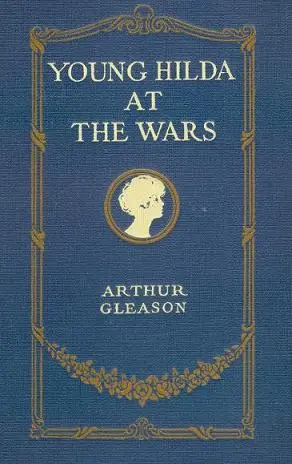
THE CLASSIC COLLECTION · 1915
"Young Hilda at the Wars" by Arthur H. Gleason is a historical novel written in the early 20th century. The story centers around Hilda, an American girl from Iowa, who is compelled to join the war effort in Belgium during World War I. Eager to experience the reality of war and help those in need, she volunteers with a Red Cross motor ambulance corps, navigating the harrowing landscapes of war-torn Belgium. The opening portion introduces us to Hilda's character, emphasizing her determination and adventurous spirit. Following her arrival in London at the onset of the war, Hilda actively seeks a way to contribute to the war effort, eventually securing a position in an ambulance corps. The narrative captures her transition from a sheltered life to the brutal realities of war as she faces challenges and trauma in caring for the wounded. Gleason's vivid descriptions convey both the stark devastation of the landscape and the resilience of the individuals involved, hinting at the emotional and physical trials that await Hilda as she steps into this new world of chaos and courage.
Introduction adapted from the source catalogue; source summaries may be automatically generated.
Free to read · English · 30,754 words · No account needed
MAKE TIME FOR A GOOD BOOK
On by default. Untick to stop anonymous reading totals. Each page counts after 10 seconds in view. How this works.
Anonymous counting is on unless you have switched it off.
"All right," she answered, obediently, and played on. The music died away, and the girl in her fought against the response that she knew was coming. She began turning over sheets of music on the rack. But the Commandant was not to be balked.
"Parlez-vous francais?" he inquired, "vous, Mademoiselle Hilda."
"Oui, mon Commandant," she answered.
"Chere artiste," he said; "chere artiste."
"Ah, those two voices," he went on with a sigh; "they go with you,
wherever you are. It is music, that night of love and joy. And here we
sit--"
"Yes, yes," interrupted Mrs. Bracher, who did not care to have an evening of gaiety sag to melancholy; "how about a little Cesar Franck?"
"Yes, surely," agreed the Commandant, cheerily; "our own composer, you know, though we never gave him his due."
Hilda ran through the opening of the D Minor.
"Now it is your turn," said she.
"My fingers are something stiff, with these cold nights by the window," replied the Commandant, "but certainly I will endeavor to play."
He seated himself at the instrument.
"Chere artiste," he murmured to the girl, who was retreating to the
lounge.
The Commandant played well. He needed no notes, for he was stored with remembered bits. He often played to them of an evening, before he took his turn on watch. He played quietly along for a little. Out of the dark at their north window, there came the piping of a night bird. Birds were the only creatures seemingly untouched by the war. The fields were crowded thick with the bodies of faithful cavalry and artillery horses. Dogs and cats had wasted away in the seared area. Cattle had been mowed down by machine guns. Heavy sows and their tiny yelping litter, were shot as they trundled about, or, surviving the far-cast invisible death, were spitted for soldiers' rations. And with men, the church-yard and the fields, and even the running streams, were choked. Only birds of the air, of all the living, had remained free of their element, floating over the battling below them, as blithe as if men had not sown the lower spaces with slaughter.
And now in this night of spring, one was calling to its mate. The Commandant heard it, and struck its note on the upper keyboard.
"Every sound in nature has its key," he said; "the cry of the little bird has it, and the surf at Nieuport."
"And the shells?" asked Hilda.
"Yes, the shells, they have it," he answered gravely; "each one of them, as it whistles in the air, is giving its note. You have heard it?"
"Yes," answered Hilda.
Your reading position is saved on this browser. Take it to another device with a library code. Reading pages adapt to text, rather than matching a printed edition.
Arthur Gleason
BEHIND THE BOOK
This eBook is for the use of anyone anywhere in the United States and most other parts of the world at no cost and with almost no restrictions whatsoever. You may copy it, give it away or re-use it under the terms of the Project Gutenberg License included with this eBook or online at www.gutenberg.org. If you are not located in the United States, you will have to check the laws of the country where you are located before using this eBook. Read the source licence.
The original source file, including credits and licence, is retained by this library. Request an original-format copy at no charge. Please include the book title and Project Gutenberg identifier #25836.
KEEP YOUR CURIOSITY GOING
Cécile Tormay

Moritz Busch
Coulson Kernahan
John L. Ransom

Maurice Baring
Frances Wright