
Our Part in the Great War
Arthur Gleason
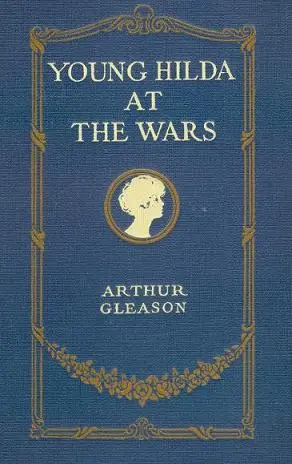
THE CLASSIC COLLECTION · 1915
"Young Hilda at the Wars" by Arthur H. Gleason is a historical novel written in the early 20th century. The story centers around Hilda, an American girl from Iowa, who is compelled to join the war effort in Belgium during World War I. Eager to experience the reality of war and help those in need, she volunteers with a Red Cross motor ambulance corps, navigating the harrowing landscapes of war-torn Belgium. The opening portion introduces us to Hilda's character, emphasizing her determination and adventurous spirit. Following her arrival in London at the onset of the war, Hilda actively seeks a way to contribute to the war effort, eventually securing a position in an ambulance corps. The narrative captures her transition from a sheltered life to the brutal realities of war as she faces challenges and trauma in caring for the wounded. Gleason's vivid descriptions convey both the stark devastation of the landscape and the resilience of the individuals involved, hinting at the emotional and physical trials that await Hilda as she steps into this new world of chaos and courage.
Introduction adapted from the source catalogue; source summaries may be automatically generated.
Free to read · English · 30,754 words · No account needed
MAKE TIME FOR A GOOD BOOK
On by default. Untick to stop anonymous reading totals. Each page counts after 10 seconds in view. How this works.
Anonymous counting is on unless you have switched it off.
"There'll be no job for you, if the enemy come through to-night," returned the Commandant; "they'll do the job. But listen, you'll have a little time. If you hear rifle fire or mitrailleuse fire on the trenches, then go, as fast as you can run. If you hear as few as only four soldiers running down this road, take to your heels after them. That will be your last chance."
The bell tinkled again. The orderly called the Commandant into the hall. Jost returned with a message. He read it, and pulled out a note-book from his pocket. He consulted it with care. He sat down at the table, wrote his reply, and gave it to the messenger. He returned, shrugged his shoulders, and went silent. All waited for him to speak. Finally he roused himself.
"The mitrailleuse have only 3500 rounds left to each gun," he said, "and there are no cartridges in the trenches."
"That means," prompted Hilda.
"Four hundred cartridges a minute, those guns fire," he said, "that means eight or nine minutes, and then the Germans."
A pounding came at the front door. A captain entered, throwing his long
cape over his shoulder.
"We have no ammunition," he said--"the men have nothing. I've just come
from the Colonel."
The Captain was excited, the Commandant silent.
"Shall we evacuate?" Hilda pressed her question with him.
"I cannot answer for you," the Captain said. "If the enemy attack, there's nothing to hold them. They'll come through. If they come, they'll take you women prisoners or kill you. You'll have to make your choice now. There will be no choice then."
"Furnes isn't so prosperous, you know," said Hilda, "even if we did run
back there."
Only the day before, Furnes had received a long-distance bombardment that had killed thirty persons and wounded one hundred.
At a word from the Commandant, the orderly left the room. The women heard him drive their ambulance out from shelter, crank up the engine, and run it for five minutes to get it thoroughly heated. Then he turned the engine off, and put a blanket over the radiator, tucking it well in to preserve the heat.
"Let's put what we need into the car," suggested Mrs. Bracher.
They picked up their bags, and went toward the ambulance.
It was pleasant to do something active under that tension. They stepped out into a night of chill and blackness. They could not see ten feet in front of them. It was moon-time but no moon. Heavy clouds were in possession of the sky, weaving a thick texture of darkness.
"There they start," said the Commandant.
Your reading position is saved on this browser. Take it to another device with a library code. Reading pages adapt to text, rather than matching a printed edition.
Arthur Gleason
BEHIND THE BOOK
This eBook is for the use of anyone anywhere in the United States and most other parts of the world at no cost and with almost no restrictions whatsoever. You may copy it, give it away or re-use it under the terms of the Project Gutenberg License included with this eBook or online at www.gutenberg.org. If you are not located in the United States, you will have to check the laws of the country where you are located before using this eBook. Read the source licence.
The original source file, including credits and licence, is retained by this library. Request an original-format copy at no charge. Please include the book title and Project Gutenberg identifier #25836.
KEEP YOUR CURIOSITY GOING
Cécile Tormay

Moritz Busch
Coulson Kernahan
John L. Ransom

Maurice Baring
Frances Wright