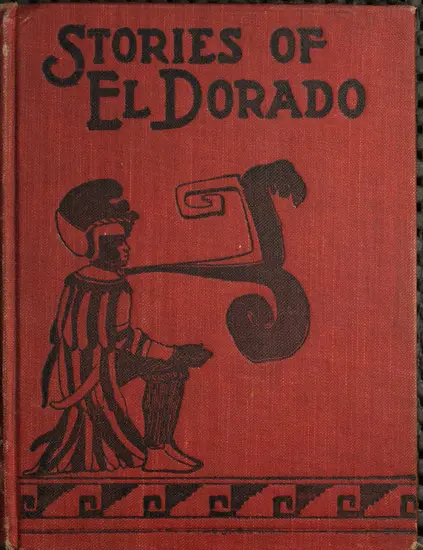
The Stories of El Dorado
Frona Eunice Wait
THE CLASSIC COLLECTION · 1897
"Yermah the Dorado: The story of a lost race" by Frona Eunice Wait is a fantasy novel written in the late 19th century. The story unfolds in the mythical Llama city of Tlamco, depicting the life of the protagonist, Yermah, who emerged from Atlantis and embraces his role as a leader in a civilization that blends magic and spirituality with the enigmatic landscapes of ancient California. The opening of the novel introduces readers to Yermah, who begins his day with a spirited ride accompanied by his horse, Cibolo, and his ocelot, Oghi. The scene sets the stage for the richly imaginative world of Tlamco, highlighting the lush natural environment and the civilization's complex societal structure that links it to Atlantis. Through vivid descriptions and the narrator's reflections on the city's historical significance, readers are drawn into Yermah's life as he navigates his responsibilities amidst the echoes of a lost lineage. As various characters are introduced, including his advisors and companions, the groundwork is laid for an adventure that intertwines themes of exploration, loyalty, and the pursuit of knowledge against a backdrop of both wonder and danger.
Introduction adapted from the source catalogue; source summaries may be automatically generated.
Free to read · English · 110,782 words · No account needed
MAKE TIME FOR A GOOD BOOK
On by default. Untick to stop anonymous reading totals. Each page counts after 10 seconds in view. How this works.
Anonymous counting is on unless you have switched it off.
“The astral key to arcane knowledge is in thy hands. As thou valuest happiness, let no unclean thought steal in and pollute the fountain-head,” solemnly warned the reader of magic, as she invoked the genii of the day and hour.
The signs by which Orondo sought to divine the future, are found to-day in the scepter of Osiris, long the prerogative of kings and emperors. The pontifical staff, the eucharistic chalice, the cross and Divine Host, the patera cup containing the manna, and the dish of offerings were borrowed from the four aces of the ancient tarot and its central disk. These cards were never used for games of chance or for amusement but always for purposes of divination, and they were held sacred.
“Now place the ace of diamonds—the royal chalice of life—on the ruby square, which corresponds to the principle of motion, action, and will,” directed Rahula. “The blossoming rod of the ace of clubs place on the topaz square, which is the trine of power, influence and right. Then cover the emerald square with the ace of cups, the trine of love, service and favor. Lastly, cover the sapphires with the ace of swords, which pierces the crown of physical being, the trine of evil, malice and death.”
When the four squares were covered, she continued:
“This forms the quaternary of Life, Power, Love and Affection. Before I place the cards on these trines, tell me what color best pleases thee.”
“I am fond of red—and blue, also,” returned Orondo.
“Then thou art materialistic and passionate on the one hand, and an idealist on the other. This will keep thee warring with self; and if the former predominates, will tend to weaken the heart-action. What flower dost thou hold sacred?”
“The delicate flax-blossom is a symbol of my love.”
“And by this token thy ideal woman must be constant in conjugal fidelity. Excess in this direction leads to jealousy, the very epitome of selfishness. But what flower dost thou love for its own sake?”
“Myrtle, sprig and blossom, are always endeared to me.”
“Then thou hast the redeeming grace of brotherly love. Of the three animals—the horse, the dog, the cat—which dost thou like the best?”
“The horse first, and then the dog.”
“Which tells me that thou art capable of a noble, affectionate, and faithful friendship. Trial lies along this line. Give me leave to judge thy antipathies.”
“Rats and mice offend me much.”
“Upright and fastidious,” she murmured. “Nor does thy frank and open nature warm to spiders, nor thy proud spirit willingly tolerate serpents.”
Your reading position is saved on this browser. Take it to another device with a library code. Reading pages adapt to text, rather than matching a printed edition.
Frona Eunice Wait
BEHIND THE BOOK
This eBook is for the use of anyone anywhere in the United States and most other parts of the world at no cost and with almost no restrictions whatsoever. You may copy it, give it away or re-use it under the terms of the Project Gutenberg License included with this eBook or online at www.gutenberg.org. If you are not located in the United States, you will have to check the laws of the country where you are located before using this eBook. Read the source licence.
The original source file, including credits and licence, is retained by this library. Request an original-format copy at no charge. Please include the book title and Project Gutenberg identifier #68101.
KEEP YOUR CURIOSITY GOING
Coulson Kernahan

Maurice Baring
Frances Wright
Cécile Tormay
Francis Greenleaf Allinson & Anne C. E. (Anne Crosby Emery) Allinson

Frederic Jesup Stimson