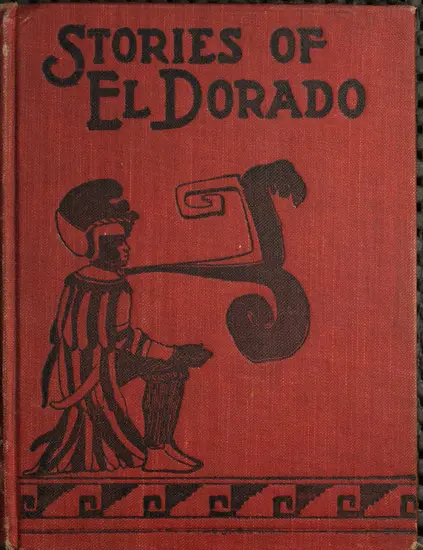
The Stories of El Dorado
Frona Eunice Wait
THE CLASSIC COLLECTION · 1897
"Yermah the Dorado: The story of a lost race" by Frona Eunice Wait is a fantasy novel written in the late 19th century. The story unfolds in the mythical Llama city of Tlamco, depicting the life of the protagonist, Yermah, who emerged from Atlantis and embraces his role as a leader in a civilization that blends magic and spirituality with the enigmatic landscapes of ancient California. The opening of the novel introduces readers to Yermah, who begins his day with a spirited ride accompanied by his horse, Cibolo, and his ocelot, Oghi. The scene sets the stage for the richly imaginative world of Tlamco, highlighting the lush natural environment and the civilization's complex societal structure that links it to Atlantis. Through vivid descriptions and the narrator's reflections on the city's historical significance, readers are drawn into Yermah's life as he navigates his responsibilities amidst the echoes of a lost lineage. As various characters are introduced, including his advisors and companions, the groundwork is laid for an adventure that intertwines themes of exploration, loyalty, and the pursuit of knowledge against a backdrop of both wonder and danger.
Introduction adapted from the source catalogue; source summaries may be automatically generated.
Free to read · English · 110,782 words · No account needed
MAKE TIME FOR A GOOD BOOK
On by default. Untick to stop anonymous reading totals. Each page counts after 10 seconds in view. How this works.
Anonymous counting is on unless you have switched it off.
Gautama, too, had prostrated himself, while a stifled, smothered feeling kept him silent. For a time, Yermah forgot that the three bronzed men who stood looking at the shepherds gathered about the shore were not Atlantians.
It seemed doubtful what kind of a reception they were to receive, until Yermah called to the natives in their own tongue.
“Our Dorado! Come to us out of the sea!” they shouted almost beside
themselves with joy.
“O thou blessed one! Dost thou see the scourge laid upon us?
“Thy father, Poseidon, and all thy countrymen, save us, poor Guanches, are perished. Evil days have fallen on Majorata. Dost thou not see the new mountain choking and filling her wide-open mouth? Tell us how thou art come.”
“Thy servant brother, Hanabusa, skilled in sailcraft, is my deliverer.”
“The sun and stars lent countenance to our venture,” said he, “save when obscured by a passing shadow. Then the corposant ran in balls and spirals from sheet to sheet, and we could not fail.”
“I am of the Monbas,” said Ben Hu Barabe, “far to the west, and I am brother to thee in sorrow. The destructive power of the Divine took all my people.”
“And I am of the Mazamas,” said Cezardis, coming forward. “My country lies under sheets of ice mountains high, and no living thing is there.”
“Misfortune is known in the land of Mexi, whence I come,” said Gautama. “Flood and fire hidden in the earth made us tremble for days lest we all should perish.”
“The Azes, too—” Hanabusa was not allowed to finish his sentence.
“Thou art of our blood!” exclaimed the Guanches, in a breath.
“Never again shalt thou depart from us. Thou wert with the Dorado?”
“From the beginning,” he answered.
These Guanches were splendid specimens of manhood, the remote forefathers of the warriors who, five hundred years ago, held their European conquerors at bay for more than a hundred years—never more than a handful of men at any time.
First the fierce and ruthless Normans, then the Portuguese, and lastly the Spanish, laid a destroying hand on the brave Guanches. Now, there is but little more than their goats left of the surviving Atlantians. These goats are of a Vandyke brown, with long twisted horns, venerable beards, and hair lengthening almost to a lion’s mane.
Teneriffe was the Island of the Blessed of the Hindus, the Elysian Fields of the Greeks, and the Tlapallapan of the Aztecs.
The Greeks had their Hermes; the Norsemen, Ymer; the Egyptians, Kema; all words correlated to, and having the same significance as Yermah,[30] which means the Divine Germ incarnate.
Your reading position is saved on this browser. Take it to another device with a library code. Reading pages adapt to text, rather than matching a printed edition.
Frona Eunice Wait
BEHIND THE BOOK
This eBook is for the use of anyone anywhere in the United States and most other parts of the world at no cost and with almost no restrictions whatsoever. You may copy it, give it away or re-use it under the terms of the Project Gutenberg License included with this eBook or online at www.gutenberg.org. If you are not located in the United States, you will have to check the laws of the country where you are located before using this eBook. Read the source licence.
The original source file, including credits and licence, is retained by this library. Request an original-format copy at no charge. Please include the book title and Project Gutenberg identifier #68101.
KEEP YOUR CURIOSITY GOING
Coulson Kernahan

Maurice Baring
Frances Wright
Cécile Tormay
Francis Greenleaf Allinson & Anne C. E. (Anne Crosby Emery) Allinson

Frederic Jesup Stimson