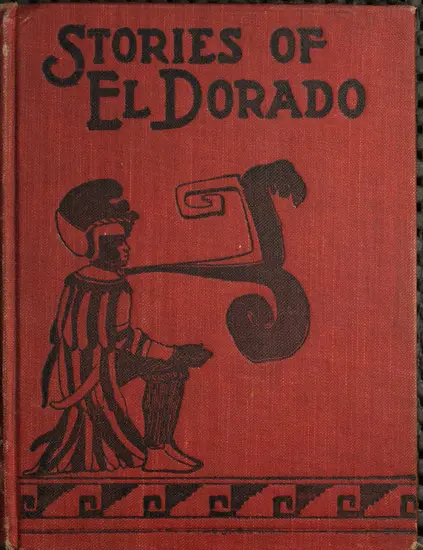
The Stories of El Dorado
Frona Eunice Wait
THE CLASSIC COLLECTION · 1897
"Yermah the Dorado: The story of a lost race" by Frona Eunice Wait is a fantasy novel written in the late 19th century. The story unfolds in the mythical Llama city of Tlamco, depicting the life of the protagonist, Yermah, who emerged from Atlantis and embraces his role as a leader in a civilization that blends magic and spirituality with the enigmatic landscapes of ancient California. The opening of the novel introduces readers to Yermah, who begins his day with a spirited ride accompanied by his horse, Cibolo, and his ocelot, Oghi. The scene sets the stage for the richly imaginative world of Tlamco, highlighting the lush natural environment and the civilization's complex societal structure that links it to Atlantis. Through vivid descriptions and the narrator's reflections on the city's historical significance, readers are drawn into Yermah's life as he navigates his responsibilities amidst the echoes of a lost lineage. As various characters are introduced, including his advisors and companions, the groundwork is laid for an adventure that intertwines themes of exploration, loyalty, and the pursuit of knowledge against a backdrop of both wonder and danger.
Introduction adapted from the source catalogue; source summaries may be automatically generated.
Free to read · English · 110,782 words · No account needed
MAKE TIME FOR A GOOD BOOK
On by default. Untick to stop anonymous reading totals. Each page counts after 10 seconds in view. How this works.
Anonymous counting is on unless you have switched it off.
The sun was inclining well toward the west, and there was a savory smell of roasted meats, steaming vegetables and ripe fruits assailing the olfactory nerves, and appealing strongly to the inner man—the unchained tiger of the stomach.
The children set up an impatient clamor for something to eat, as they caught sight of the long, low tables spread under the trees; but, there was a decorum to be observed, which the elders rigidly enforced.
Whole animals had been roasting through the previous night in trenches twelve feet long, two feet wide, and two feet deep. Fires were built in them, and when thoroughly dried out, great spits were put in half-way to the top, and over a bed of red-hot charcoal the meat was cooked. During this process it was moistened frequently with spiced vinegar, and a sauce piquante of chili, with which salt had been freely mixed.
Beef, venison and bear-meat were prepared in this way, while rabbits, wild turkeys, geese, ducks, quail and small birds were roasted and stewed by separate methods. Near the trenches, pots of curry, rice and mutton were simmering over slow fires. Deep brass cylinders, with glowing charcoal in the bottom, kept steaming tamales ready for instant service.
There were great ash-heaps filled with sweet potatoes roasted to a turn. Huge chafing-dishes contained beans, tomatoes, stuffed cucumbers and stews of all kinds, while lettuce, cresses, red peppers, radishes, leeks and onions were heaped upon the tables in profusion.
Nasturtium seeds, capers and olives were among the relishes. Great brick ovens hid many a fruit confection and pastry, and there were stacks of tortillas fresh from the hands of the baker. Fresh curds and honey were in liberal allowance on each table, while large wicker baskets groaned with their burden of ripe peaches, pears, apples, guavas, bananas, tunas and pineapples.
On clean grass mats were water-melons, cantaloupes and grapes while oranges, lemons, pomegranates and quinces were among the candied and preserved fruits.
Walnuts, peanuts, filberts and pine-nuts by the bushel, were at hand for service, while immense jars were filled with pulque, metheglin, tequila and koumiss. These drinks were called “zadar” meaning to spin, as the head feels after indulging in them. For the more soberly inclined there was chocolate flavored with vanilla, and piled high with whipped cream, served either hot or cold.
Cotton napkins and pottery ewers filled with water were beside each earthenware plate. Despite their impatience, the children were compelled to perform ablutions the same as their elders, before sitting to eat. For their use, lacquerware dishes were provided.
Your reading position is saved on this browser. Take it to another device with a library code. Reading pages adapt to text, rather than matching a printed edition.
Frona Eunice Wait
BEHIND THE BOOK
This eBook is for the use of anyone anywhere in the United States and most other parts of the world at no cost and with almost no restrictions whatsoever. You may copy it, give it away or re-use it under the terms of the Project Gutenberg License included with this eBook or online at www.gutenberg.org. If you are not located in the United States, you will have to check the laws of the country where you are located before using this eBook. Read the source licence.
The original source file, including credits and licence, is retained by this library. Request an original-format copy at no charge. Please include the book title and Project Gutenberg identifier #68101.
KEEP YOUR CURIOSITY GOING
Coulson Kernahan

Maurice Baring
Frances Wright
Cécile Tormay
Francis Greenleaf Allinson & Anne C. E. (Anne Crosby Emery) Allinson

Frederic Jesup Stimson